 travelandlearns
Related Articles



Planning a trip is exciting, but one of the first questions that comes to mind is usually how much the trip will cost. I believe your budget should not stop you from traveling. Instead, it should help you decide where to go, when to go, and how to plan your experience.
There are expensive destinations, affordable destinations, and places that can be either expensive or budget friendly depending on how you travel. The important thing is understanding your total travel budget before choosing a destination.
If you are wondering how to choose a destination based on your budget, this guide will help you look at the most important costs and make a smarter travel decision without making your trip feel unnecessarily complicated.
Start With Your Total Travel Budget
Before choosing a destination, I recommend deciding how much money you can comfortably spend on the entire trip.
Do not only think about the flight or hotel. Your total travel budget should include transportation, accommodation, food, activities, travel insurance, shopping, entrance fees, and an emergency amount.
For example, a destination may have cheap flights but expensive hotels and restaurants. Another destination may have slightly more expensive flights but much cheaper accommodation and food.
This is why I prefer looking at the total cost of a trip instead of judging a destination by one expense.
Write down an approximate amount you can spend and then divide it into different categories. This gives you a realistic idea of which destinations are within your reach.
Decide How Many Days You Can Travel
The length of your trip has a major effect on your budget.
A short trip to an expensive destination can sometimes cost less than a long trip to a cheaper country. When you stay for several weeks, accommodation, food, transportation, and activities continue adding to the total cost.
If your budget is limited, consider taking a shorter trip to a destination where you can experience the highlights without spending too much.
For example, instead of staying two weeks in an expensive city, you could spend four or five days there and focus on the attractions that interest you most.
I think a shorter, well planned trip is often better than a long trip where you constantly worry about money.
Compare Flight Costs
Flights can take up a large portion of an international travel budget, so I always recommend checking airfare before becoming too attached to a particular destination.
Look at several nearby airports if possible and compare different travel dates. Sometimes changing your departure date by a day or two can make a noticeable difference.
Also consider destinations that are closer to home. A nearby international destination may offer a much lower transportation cost than a faraway country.
When comparing flights, remember to look at the complete price. Baggage fees, seat charges, airport transfers, and other additional costs can change the final amount.
Consider Accommodation Prices
Accommodation is another major factor when choosing a destination based on your budget.
Some cities are expensive even if other daily expenses are reasonable. Popular tourist areas often have higher hotel prices, especially during peak travel seasons.
When researching a destination, compare hotels, guesthouses, hostels, apartments, and other accommodation options.
If you are traveling with family or a group of friends, an apartment or larger room may sometimes provide better value than booking several separate hotel rooms.
I also recommend checking the location carefully. A cheap hotel far from the attractions may require expensive transportation every day. Sometimes paying a little more for a central location can actually save money.
Research the Cost of Food
Food is an important part of every trip, and prices can vary dramatically between countries and cities.
Before choosing your destination, research the average cost of breakfast, lunch, dinner, snacks, and drinks.
You do not need to eat at expensive restaurants every day to enjoy local cuisine. In many destinations, local markets, small restaurants, food stalls, and neighborhood cafes offer delicious meals at reasonable prices.
Personally, I like trying local food because it gives me a better understanding of the destination while often costing less than eating at restaurants designed mainly for tourists.
If you have a limited budget, consider booking accommodation that includes breakfast or provides access to a kitchen.
Look at Local Transportation Costs
Transportation inside a destination can have a surprisingly large impact on your travel budget.
A city with affordable public transportation can be much easier to explore than a destination where you need taxis or private transportation for every trip.
Research local buses, trains, metro systems, and other transportation options before booking your trip.
Walking is another excellent way to save money, especially in historic city centers. It can also help you discover small streets, local shops, parks, and restaurants that you might miss while traveling by car.
When choosing between destinations, I recommend considering not only how much it costs to reach the country but also how much it will cost to move around once you arrive.
Think About the Travel Season
The time of year you travel can make a huge difference in the overall cost.
Peak travel seasons usually bring higher prices for flights, hotels, and popular attractions. Holidays and major events can make prices even higher.
Traveling during a destination’s shoulder season can sometimes provide a better balance between weather, crowds, and prices.
For example, if your destination is famous for summer tourism, visiting just before or after the busiest season may allow you to experience similar attractions at a lower cost.
I believe flexible travel dates are one of the best tools for budget travelers.
Choose Destinations With Free Activities
A destination does not have to be expensive to be interesting.
When comparing places, look for destinations with free or inexpensive attractions. Public parks, beaches, walking tours, historic neighborhoods, viewpoints, markets, and outdoor areas can provide memorable experiences without requiring a large budget.
Some museums and attractions also offer free admission on specific days or during certain hours.
Before traveling, make a list of free things to do in your destination. This gives you options if you want to enjoy the city without spending money every day.
Consider the Exchange Rate
Currency exchange rates can affect how expensive a destination feels.
A country may appear expensive when you look at hotel prices in your own currency, but everyday expenses could still be manageable. On the other hand, a destination with inexpensive accommodation may have high prices for transportation or activities.
Instead of focusing only on the currency conversion, research typical daily expenses.
Look at the approximate cost of a simple meal, public transportation, coffee, accommodation, and popular activities. This gives you a much clearer picture of what your money can actually buy.
Look for Affordable Alternatives
Sometimes you do not have to completely change your travel plans. You simply need to find an alternative destination.
If a famous city is outside your budget, look at nearby cities or smaller towns. They may offer similar architecture, food, culture, or natural scenery at a lower price.
For example, instead of staying in the most expensive area of a popular destination, you could stay in a nearby neighborhood and use public transportation.
This approach allows you to experience the destination without paying the highest tourist prices.
Plan Your Activities Before You Go
Activities and attractions can quickly increase your travel expenses if you do not plan ahead.
Before booking your trip, make a list of the things you really want to experience. Then check their prices.
You may discover that some activities are inexpensive while others require a significant part of your budget.
I recommend choosing a few experiences that are genuinely important to you and avoiding the temptation to pay for every available attraction.
A trip does not become better simply because you spend more money. Sometimes walking around a beautiful city or watching a sunset can be more memorable than an expensive activity.
Always Keep Emergency Money
One of the most important parts of budget travel planning is keeping some money aside for unexpected expenses.
Flights can be delayed, transportation can become more expensive, or you may need to replace something important. You might also discover an experience you really want to try that was not included in your original plan.
I recommend keeping an emergency amount separate from your main daily spending budget.
This gives you peace of mind and prevents one unexpected expense from ruining the rest of your trip.
Create a Daily Travel Budget
Once you have chosen a destination, create a simple daily spending limit.
Your daily budget can include food, transportation, activities, and small purchases. Accommodation and flights can be calculated separately.
You do not have to follow the number perfectly every day. Some days you may spend more, while other days you may spend less.
The purpose is simply to understand where your money is going.
I find this approach much easier than constantly worrying about every individual purchase.
Choose Experiences Over Luxury
When traveling on a budget, I believe experiences should be more important than luxury.
You do not need the most expensive hotel room, the newest rental car, or a fancy restaurant every evening to have a great trip.
Spend your money on the things that matter most to you. If you love history, spend money on museums and historic tours. If you love nature, prioritize national parks and outdoor activities. If food is important to you, save money elsewhere and enjoy local restaurants.
Your travel budget should reflect your personal interests.
Final Thoughts
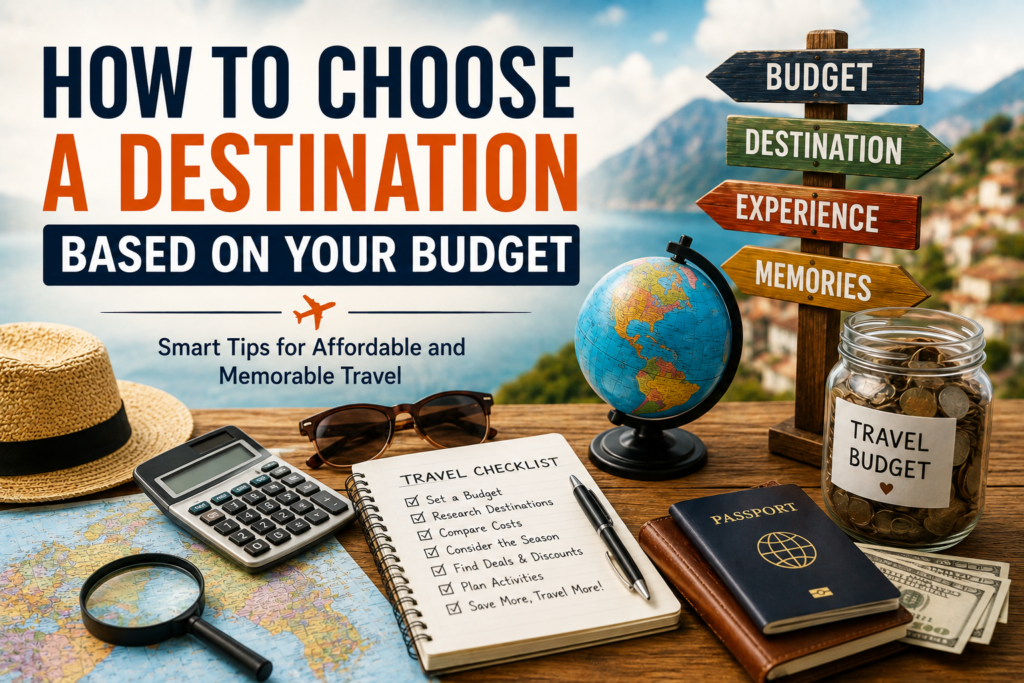
Learning how to choose a destination based on your budget is really about understanding the complete cost of travel rather than focusing on one expense.
Consider flights, accommodation, food, transportation, activities, travel season, exchange rates, and unexpected costs before making your final decision.
Most importantly, do not assume that budget travel means having a boring vacation. Some of the most memorable travel experiences can cost very little. Exploring a local market, walking through an old neighborhood, watching a beautiful sunset, meeting local people, or discovering a quiet natural area can become the highlights of your trip.
For me, the best destination is not necessarily the cheapest one. It is the place where my budget allows me to enjoy the experiences that matter most without creating financial stress.
Set a realistic budget, compare your options, stay flexible with your dates, and choose a destination that fits both your wallet and your interests. With thoughtful planning, you can enjoy an amazing trip without spending more than you can comfortably afford.