 travelandlearns
Related Articles


Traveling internationally is exciting, but staying connected can sometimes become a challenge. When I travel to another country, I want to be able to contact my family, use maps, check travel information, book transportation, and stay updated without worrying about losing internet access. A reliable phone connection can make a trip much easier and more comfortable.
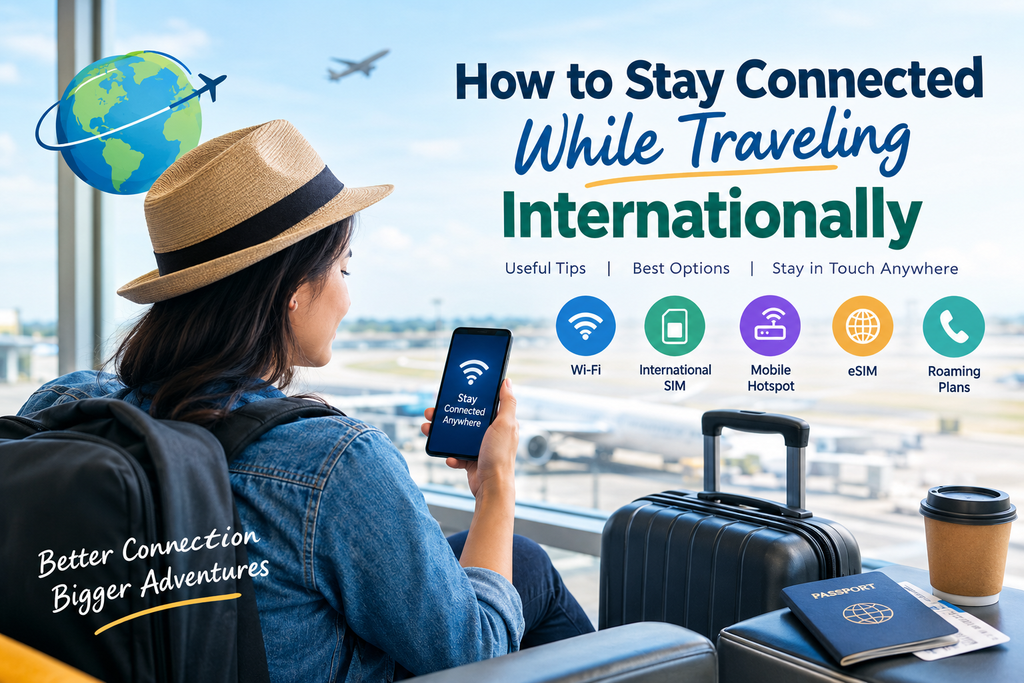
The good news is that there are several simple ways to stay connected while traveling internationally. You can use an international SIM card, an eSIM, a local SIM card, international roaming, portable WiFi, or trusted public WiFi. In my experience, the best option depends on the destination, length of the trip, budget, and how much mobile data you normally use.
In this guide, I will explain some practical ways to stay connected while traveling internationally and share the things I think travelers should consider before leaving home.
Check Your Phone Before Traveling
Before traveling internationally, I recommend checking your phone and mobile plan. Not every phone works with every network in every country, so it is important to know whether your device is unlocked and compatible with the networks at your destination.
I also check whether my current mobile provider offers international roaming. Some providers have international packages that include calls, text messages, and mobile data. These plans can be convenient because you can often use your existing number without changing your SIM card.
However, international roaming costs can vary significantly. I always check the price before activating roaming so there are no unpleasant surprises later.
Consider an International SIM Card
An international SIM card can be a practical option for people visiting several countries. Instead of buying a separate SIM card in every destination, you can use one international SIM that works across multiple locations.
This can be useful for travelers taking a long trip through different countries. It may also save time because you do not have to search for a mobile store after arriving at every destination.
Before purchasing one, I recommend checking which countries are covered, how much data is included, how long the package lasts, and whether calls and text messages are included.
Try an eSIM for International Travel
An eSIM is another convenient way to stay connected while traveling internationally. An eSIM is a digital SIM that can be activated on compatible phones without inserting a physical card.
I particularly like the convenience of eSIM technology because you can often purchase a travel data plan before leaving home and activate it when you arrive. This means you can potentially have internet access as soon as you reach your destination.
However, not every phone supports eSIM functionality. Before buying an eSIM plan, check your phone model and make sure the device is compatible.
It is also important to understand whether the eSIM provides data only or includes calls and text messages. Many travel eSIM plans focus mainly on mobile data.
Buy a Local SIM Card
For longer international trips, buying a local SIM card can be a useful choice. Many countries have local mobile providers that offer prepaid SIM cards with different data packages.
A local SIM may provide good value if you plan to stay in one country for several weeks. You can usually purchase one at an airport, mobile store, or other authorized retailer.
If you choose this option, I recommend using an official provider or trusted retailer. Keep your original SIM card somewhere safe because you may need it when you return home.
You should also make sure your phone is unlocked before trying to use a local SIM.
Use International Roaming Carefully
International roaming is probably one of the easiest ways to stay connected because you can continue using your existing phone number. You do not need to find a local SIM card or change your phone settings significantly.
The main thing I would suggest is checking the roaming rates before your trip. Data usage can become expensive if you do not have an international package.
If your provider offers a travel package, compare the amount of data, number of days, calls, and texts included. This makes it easier to understand exactly what you are paying for.
Use Public WiFi When Appropriate
Public WiFi can help reduce mobile data usage. Hotels, cafes, restaurants, airports, libraries, and other public places may offer WiFi for customers.
I often find WiFi useful when I need to download maps, check emails, update travel plans, or make internet calls.
However, I avoid using public WiFi for sensitive activities whenever possible. I also make sure websites use secure connections and avoid entering important financial information on unfamiliar networks.
A useful habit is to download important information before leaving your hotel or another trusted connection.
Download Maps Before You Travel
Maps are one of the most useful tools when traveling internationally. Losing your internet connection while trying to find your hotel or transportation can be stressful.
For this reason, I recommend downloading offline maps before visiting a new destination. This allows you to access important map information even when mobile data is unavailable.
I also save important locations such as my hotel, airport, train station, and nearby emergency services. Having this information available offline can save time when you need it.
Use Messaging Apps to Stay in Touch
Traditional international calls can sometimes be expensive. Messaging apps can provide a more affordable way to stay in contact with family and friends when you have an internet connection.
Apps that support text messages, voice calls, and video calls can be especially useful during international trips.
Before leaving home, I make sure the people I need to contact already have the messaging apps I plan to use. I also test them before traveling so I know everything works properly.
Carry a Portable Power Bank
Staying connected is not only about having internet access. Your phone also needs enough battery power to keep working.
When traveling, I recommend carrying a reliable power bank. Your phone may be used frequently for maps, translation, tickets, hotel information, photos, communication, and transportation.
A power bank can be particularly useful during long flights, road trips, airport transfers, or sightseeing days when you may not have access to a power outlet.
I also charge my phone before leaving my accommodation because I never know when I will need it.
Save Important Information Offline
Internet access can sometimes disappear unexpectedly. Your phone may lose signal, a WiFi network may stop working, or your mobile data package may run out.
For this reason, I like to save important travel information offline. This can include hotel addresses, reservation details, flight information, transportation instructions, emergency contacts, and copies of important documents.
You do not want your entire trip to depend on having an internet connection.
Be Careful With Mobile Data
Mobile data can disappear quickly when you use video streaming, social media, automatic updates, cloud backups, or high quality maps.
Before traveling, I check which apps are using the most mobile data. I also turn off unnecessary automatic updates and background data where appropriate.
Downloading music, videos, maps, and other large files while connected to trusted WiFi can help reduce mobile data usage.
This simple habit can make a travel data package last much longer.
Keep Your Main Number Active When Possible
Your regular phone number may still be important while traveling. You may need it for receiving verification messages, accessing accounts, or communicating with people at home.
If you use a second SIM or eSIM for travel data, check whether your phone allows multiple SIMs to remain active. The exact options depend on your phone and mobile provider.
I recommend understanding these settings before your trip rather than trying to figure everything out after landing.
Think About Your Travel Style
There is no single best way to stay connected internationally. The right option depends on how you travel.
If you are taking a short trip, an international roaming package or eSIM may be convenient. If you are staying in one country for several weeks, a local SIM may offer better value. If you are visiting several countries, an international SIM or regional eSIM may be worth considering.
For travelers who mainly need occasional internet access, hotel and public WiFi combined with offline maps may be enough.
The important thing is to choose a solution that matches your actual needs instead of paying for services you will not use.
Final Thoughts
Staying connected while traveling internationally has become much easier because travelers now have many options. From eSIMs and local SIM cards to international roaming, portable WiFi, and public internet, there is a solution for almost every type of traveler.
From my point of view, the best approach is to prepare before leaving home. Check your phone compatibility, understand your mobile plan, arrange your preferred internet option, download offline maps, save important travel information, and carry a charged power bank.
A little preparation can prevent many communication problems during your trip. When your phone and internet connection are ready, you can spend less time worrying about connectivity and more time enjoying your international adventure.