 travelandlearns
Related Articles



Planning a trip is exciting, but managing each day during the trip can sometimes become confusing. There may be many places to visit, restaurants to try, activities to enjoy, and transportation options to manage. Without a simple plan, it is easy to waste time or miss something important. This is why I believe creating a daily travel schedule can make a trip much easier and more enjoyable.
A daily travel schedule does not mean planning every minute of your vacation. Instead, it gives you a clear idea of what you want to do, when you want to do it, and how much time you should allow for each activity. In my experience, a flexible schedule works better than a strict one because travel does not always go exactly as planned.
In this guide, I will explain how to create a daily travel schedule that is practical, flexible, and easy to follow.
Why You Need a Daily Travel Schedule
A daily travel schedule helps you organize your travel plans before you leave. When you know what you want to do each day, you can spend less time making decisions and more time enjoying your destination.
A good travel schedule can also help you manage your travel budget. For example, you can plan free activities on one day and paid attractions on another day. You can also organize activities based on location, which may reduce unnecessary transportation costs.
Another benefit is that a schedule helps you avoid trying to visit too many places in one day. I have found that a relaxed day often becomes more memorable than a day packed with too many activities.
Start With Your Main Travel Goals
Before creating your daily itinerary, think about what you actually want from the trip.
Some travelers enjoy museums and historical places. Others prefer beaches, shopping, nature, food, photography, or outdoor activities. Your schedule should reflect your interests.
I recommend choosing two or three main priorities for each day. You can then add smaller activities around them.
For example, if you are visiting a city for three days, you might plan one day around historical attractions, another around local food and shopping, and the third around parks and scenic locations.
This approach makes your travel schedule more personal instead of simply copying a popular tourist itinerary.
Check Your Trip Dates
The next step is to write down your exact travel dates and available hours.
Your first day may not be a full day because of your arrival time. Your final day may also be shorter because of your departure.
For example, if you arrive at your hotel at 5 PM, it would not make sense to plan five major attractions for that day. You could instead plan dinner, a short walk, and a nearby attraction.
I always recommend considering arrival and departure times before filling your schedule with activities.
Make a List of Places You Want to Visit
Create a simple list of all the places you would like to visit. Do not worry about putting them in order at first.
Write down attractions, restaurants, markets, parks, museums, shopping areas, viewpoints, beaches, and other activities that interest you.
Once you have your list, divide the places according to their location.
For example, if three attractions are located close to each other, try to visit them on the same day. This can save transportation time and make your daily travel schedule much more efficient.
Group Nearby Attractions Together
Location is one of the most important parts of travel planning.
Imagine visiting an attraction on the east side of a city in the morning and then traveling to the opposite side for lunch. Later, you return to the first area for another attraction. This can waste several hours.
Instead, look at your destinations on a map and group nearby places together.
I personally prefer planning one area of a city at a time. This keeps the day simple and reduces unnecessary travel.
Choose Your Main Activity for Each Day
After grouping your destinations, choose the most important activity for each day.
This should be something you would be disappointed to miss.
For example, if you are visiting a famous museum, make it the main activity of that day. You can then plan a nearby restaurant, park, or shopping area around it.
Having one main activity gives your day structure without making your schedule feel too strict.
Create a Simple Morning Plan
Your morning can set the tone for the entire day.
Start by deciding what time you want to wake up. Then allow enough time for breakfast, getting ready, and traveling to your first destination.
You do not always need to wake up extremely early. If you are on vacation, getting enough rest is also important.
For example, your morning schedule might look like this:
8:00 AM: Wake up and get ready
8:30 AM: Breakfast
9:30 AM: Leave the hotel
10:00 AM: Visit the first attraction
This gives you a clear starting point while still leaving some breathing room.
Plan Your Afternoon Carefully
The afternoon is often when travelers become tired, especially after walking for several hours.
For this reason, I recommend keeping your afternoon schedule realistic.
You can plan lunch followed by one or two activities. If you have been walking all morning, consider adding a relaxing activity such as visiting a cafe, sitting in a park, or returning to your hotel for a short rest.
A travel schedule should help you enjoy your trip, not make you feel like you are completing a list of tasks.
Leave Space for Unexpected Activities
One of the biggest mistakes I see in travel planning is filling every available hour.
Travel can be unpredictable. A restaurant may take longer than expected. Public transportation may be delayed. You may discover an interesting local market or meet someone who recommends a place you had never heard about.
Leaving free time allows you to enjoy these unexpected moments.
I usually recommend leaving at least a few open periods during the day, especially when visiting a new destination.
Plan Your Meals
Food is an important part of most trips, so I recommend including meal times in your daily travel schedule.
You do not need to choose every restaurant before your trip. Instead, identify a few options near the areas you plan to visit.
This makes your day easier because you will not have to spend a lot of time searching for food when you are hungry.
You can also include one local food experience in your itinerary. This could be a traditional restaurant, local market, bakery, or popular street food area.
Consider Transportation Time
When creating a daily travel schedule, never look only at the time required for an attraction.
You should also consider how long it will take to reach the location.
For example, an attraction may take only one hour to explore, but if it requires an hour of transportation each way, it will take much more time from your day.
Include transportation time between activities. This will make your itinerary more realistic.
Keep Your Daily Schedule Flexible
A flexible travel itinerary is usually better than a strict schedule.
Instead of writing exact times for every single minute, create blocks of time.
For example, you could write:
9 AM to 12 PM: Explore the city center
12 PM to 1 PM: Lunch
1 PM to 3 PM: Visit a museum
3 PM to 5 PM: Free time
5 PM to 7 PM: Scenic area
This gives you structure while allowing you to adjust the timing when necessary.
Use a Travel Planning App or Notebook
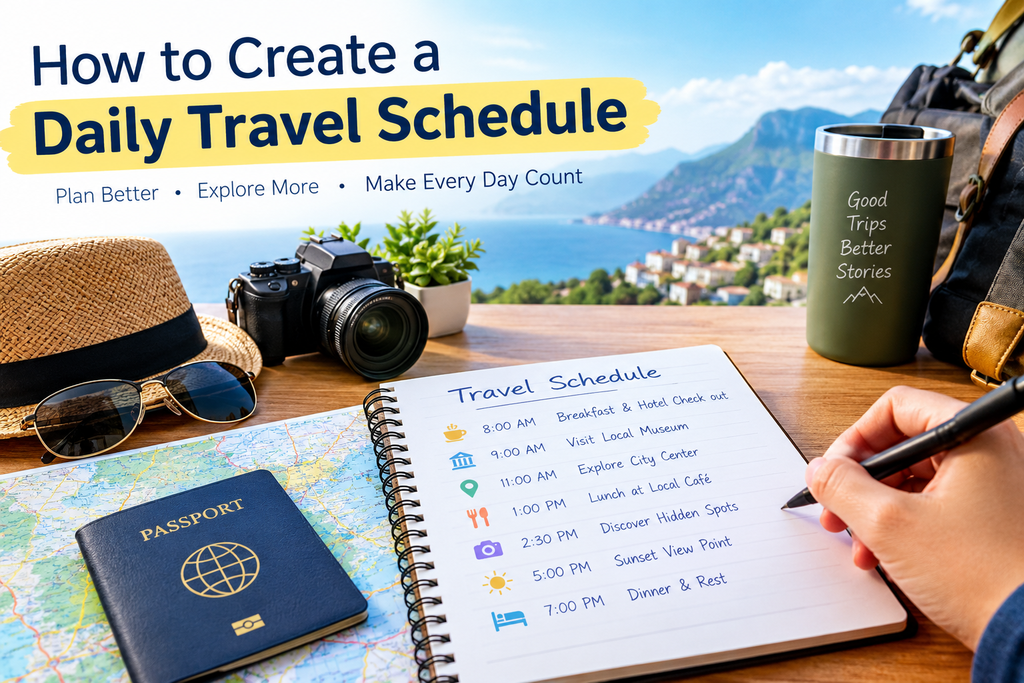
You can create your daily travel schedule using a notebook, spreadsheet, calendar, or travel planning app.
I personally like keeping the important information in one place. Your schedule can include the attraction name, address, opening hours, estimated visit time, transportation information, and notes.
If you prefer a physical notebook, you can create one page for each day of your trip.
The most important thing is that your schedule should be easy for you to understand quickly.
Check Opening Hours Before Your Trip
Before finalizing your schedule, check the opening hours of important attractions.
Some museums, restaurants, and tourist attractions may have specific opening days or limited hours.
Planning a destination on a day when it is closed can create unnecessary problems.
Also check whether you need advance reservations or tickets. Popular attractions may require you to book before arriving.
Add Rest Time to Your Schedule
Rest is an important part of travel planning.
If you spend the entire day walking, taking transportation, and visiting attractions, you may become exhausted after a few days.
Include short breaks during your day. You can sit at a cafe, return to your hotel, relax in a park, or simply enjoy the destination without doing anything specific.
In my opinion, these quiet moments are sometimes just as valuable as visiting major attractions.
Create a Backup Plan
It is also smart to have a backup plan.
Bad weather, transportation delays, closures, or unexpected changes can affect your itinerary.
For example, if you planned to visit an outdoor attraction, keep an indoor activity as an alternative.
You do not need a backup plan for every small detail. Just have a few alternative activities available.
Review Your Schedule Every Evening
At the end of each day, spend a few minutes reviewing the next day’s plan.
Check the weather, transportation, opening hours, reservations, and locations.
If you are tired or something has changed, adjust your schedule.
There is nothing wrong with changing your itinerary. A good travel schedule should support your trip rather than control it.
Example of a Simple Daily Travel Schedule
Here is a basic example of how I would organize a day during a city vacation:
8:00 AM: Wake up
8:30 AM: Breakfast
9:30 AM: Travel to the main attraction
10:00 AM: Explore the attraction
12:00 PM: Lunch
1:00 PM: Visit nearby attractions
3:00 PM: Coffee and rest
4:00 PM: Explore a local market
6:00 PM: Visit a scenic location
7:30 PM: Dinner
9:00 PM: Return to the hotel
This schedule is only an example. You can change the timing according to your destination, interests, energy level, and travel style.
Final Thoughts
Creating a daily travel schedule is one of the simplest ways to make your trip more organized. It helps you decide where to go, manage your time, control your travel budget, and avoid unnecessary stress.
At the same time, I believe a travel schedule should never become a burden. Do not try to visit every attraction or fill every minute of your day. Give yourself time to relax, explore, enjoy local food, and experience unexpected moments.
The best daily travel schedule is one that gives you direction while still allowing freedom. Start with your main priorities, group nearby attractions together, consider transportation time, plan your meals, include rest periods, and keep your itinerary flexible.
With a little preparation, you can create a practical daily travel schedule that makes your vacation smoother and more enjoyable.