 travelandlearns
Related Articles

Long flights can be exciting because they take us to new places, but getting enough sleep on an airplane can be a real challenge. The limited space, cabin noise, bright lights, uncomfortable seats, and changing time zones can make it difficult to relax. I have found that sleeping well during a long flight is less about getting everything perfect and more about preparing yourself before you even board the plane.
If you are wondering how to sleep better during long flights, there are several simple habits that can make a noticeable difference. Choosing the right seat, preparing comfortable travel items, controlling light and noise, staying hydrated, and adjusting your routine can all help you get better rest in the air.
Choose the Right Seat
Your seat can have a major effect on your ability to sleep during a long flight. Personally, I prefer a window seat when I know I want to rest. A window seat gives you something to lean against and means you do not have to move every time another passenger wants to leave the row.
The aisle seat can be convenient, but it may have more interruptions because passengers and cabin crew frequently move through the aisle. You may also have to get up more often when your seatmate needs to leave.
If possible, check the aircraft seating arrangement before choosing your seat. Some seats may have extra space, while others may be close to bathrooms or busy areas. Avoiding high traffic areas can make your flight quieter and more comfortable.
Prepare for Sleep Before Boarding
Good sleep during a flight starts before you get on the airplane. If I know I have a long overnight flight ahead, I try to avoid arriving at the airport already exhausted.
Getting reasonable sleep the night before can help you feel better throughout the journey. I also like to organize everything I need for sleeping before leaving home.
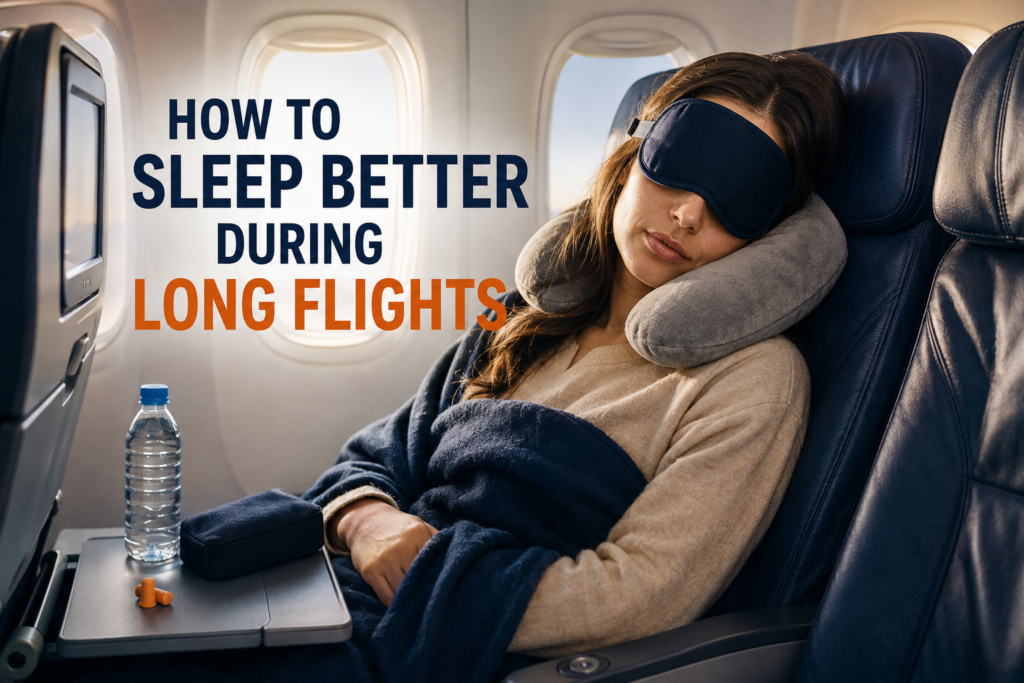
Keep your sleep mask, neck pillow, headphones, earplugs, water bottle, and other useful items somewhere easy to reach. There is nothing more annoying than putting your bag under the seat and then realizing that the item you need is at the bottom.
Being prepared allows you to create a comfortable sleep environment without constantly searching through your luggage.
Wear Comfortable Clothing
Comfortable clothing is one of the simplest ways to improve your chances of sleeping on a long flight. Tight clothing can become uncomfortable after several hours of sitting.
I prefer loose and breathable clothes for long journeys. Comfortable socks can also help keep your feet warm because airplane cabins can sometimes feel cold.
It is also useful to bring an extra layer such as a light sweater or comfortable jacket. Instead of depending completely on the cabin temperature, you can adjust your clothing when necessary.
Comfort should be your priority when choosing what to wear for an overnight flight.
Use a Good Neck Pillow
A neck pillow can be helpful because your head naturally falls forward or sideways when you become sleepy. This can lead to an uncomfortable neck position and may wake you repeatedly.
There are many types of travel pillows available, so choose one that supports your neck without feeling too bulky.
I recommend testing your pillow at home before taking it on a long journey. Something that looks comfortable online may not actually suit your sleeping position.
A good neck pillow should help you relax rather than make you feel restricted.
Block Out Light
Light can make it harder to fall asleep, especially when passengers are using screens or when cabin lights are turned on during the flight.
A comfortable sleep mask can help create a darker environment. I find this especially useful when traveling during daytime hours or when the cabin lighting does not match my normal sleeping schedule.
If you use a sleep mask, choose one that feels comfortable around your eyes and does not put unnecessary pressure on your face.
You can also reduce the brightness of your own phone or tablet before trying to sleep.
Reduce Cabin Noise
Airplane cabins are rarely completely quiet. You may hear engine noise, conversations, children, announcements, meal carts, or other passengers moving around.
Noise cancelling headphones or comfortable earplugs can help reduce these distractions.
Some travelers also prefer listening to calm music, white noise, or relaxing sounds. If you use headphones, make sure the volume is comfortable and not excessively loud.
The goal is not necessarily to eliminate every sound. Instead, creating a consistent and relaxing background can make it easier for your mind to settle down.
Limit Caffeine Before Sleeping
Caffeine can stay in the body for several hours and may make it harder to fall asleep. Coffee, tea, energy drinks, and some soft drinks contain caffeine.
If you plan to sleep during the flight, consider limiting caffeine before your intended sleep period.
I still enjoy coffee when traveling, but I try to think about the timing. Drinking a large coffee shortly before trying to sleep may leave me feeling tired but unable to actually fall asleep.
If you need a drink, water is often a simple choice.
Be Careful With Alcohol
Some travelers believe alcohol helps them fall asleep on airplanes. Although it may make you feel sleepy initially, it can interfere with the quality of your sleep and may leave you feeling worse after waking.
For this reason, I prefer not to depend on alcohol as a way to sleep during a flight.
If you choose to drink, moderation is important. Remember that flying can already be dehydrating, so drinking water is also important.
Stay Hydrated
The dry cabin environment can leave you feeling uncomfortable during a long flight. Drinking enough water can help you feel better during the journey.
At the same time, you do not need to drink excessive amounts immediately before sleeping because frequent bathroom trips can interrupt your rest.
I usually try to stay reasonably hydrated throughout the flight while avoiding large amounts of liquid right before I want to sleep.
Keeping a water bottle nearby makes it easier to take small amounts when needed.
Eat Light Before Sleeping
A very heavy meal can make some people feel uncomfortable when they are trying to sleep. If you plan to sleep after the meal service, consider choosing food that you know sits comfortably with you.
Avoid experimenting with unfamiliar foods immediately before trying to sleep. Your travel day is not always the best time to discover that a particular meal does not agree with you.
A comfortable stomach can make it easier to relax.
Adjust Your Sleep Schedule
Jet lag can make long distance travel especially difficult because your body has to adjust to a different time zone.
One useful strategy is to start thinking about your destination’s local time before you arrive. If it is nighttime at your destination, sleeping during the flight may help you begin adjusting.
If it is daytime at your destination, staying awake during some or all of the flight may be more useful.
You do not have to change your schedule dramatically before every trip. Even gradually shifting your sleep routine can sometimes make the transition easier.
Avoid Too Much Screen Time
Watching movies can make a long flight pass quickly, but staring at a bright screen immediately before trying to sleep may not be ideal for everyone.
If I want to sleep, I prefer switching from entertainment to something calmer. I might listen to relaxing audio, read a few pages of a book, or simply close my eyes.
Lowering the screen brightness and using a night mode can also make your device more comfortable to use before sleeping.
Make Your Seat Feel Like a Sleep Space
You cannot completely recreate your bedroom on an airplane, but you can make your seat more comfortable.
Lower your tray table if needed, arrange your pillow, put on your sleep mask, adjust your headphones, and make sure your seatbelt is positioned comfortably.
If you are traveling overnight, wearing your seatbelt visibly over your blanket can be helpful because the crew may be able to see it without waking you unnecessarily.
Small details can make the difference between constantly adjusting yourself and actually relaxing.
Do Not Force Yourself to Sleep
One mistake I think many travelers make is becoming frustrated because they cannot fall asleep immediately.
Airplane sleep is different from sleeping in your own bed. You may wake up several times or sleep for shorter periods.
Instead of constantly checking the time and worrying about how many hours remain, try to relax. Even resting with your eyes closed can feel better than staying focused on the clock.
If you cannot sleep, listen to something calming or read quietly for a while and then try again.
Consider Sleep Aids Carefully
Some travelers consider using medication or supplements to sleep during long flights. This is something that should not be treated casually.
If you are considering a sleep medication or supplement, especially if you take other medicines or have a health condition, speak with a qualified healthcare professional first. Avoid trying something for the first time while traveling without knowing how it affects you.
Natural habits such as comfortable clothing, reduced light, less noise, and a consistent sleep routine are good places to start.
Move Around When You Are Awake
Sleeping comfortably is important, but you should also avoid remaining in one position for the entire flight.
When you are awake and it is safe to do so, get up occasionally and move around the cabin. Simple movement can help you feel less stiff after several hours of sitting.
Follow the cabin crew’s instructions and keep your seatbelt fastened when required.
Final Thoughts
Learning how to sleep better during long flights is mostly about creating the best conditions for rest. You cannot control every part of an airplane journey, but you can control many small things.
Choose a comfortable seat, prepare your sleep essentials, wear comfortable clothing, use a neck pillow, block out light, reduce noise, and be thoughtful about caffeine and alcohol. Staying hydrated and adjusting your sleep schedule to your destination can also make the journey easier.
Most importantly, do not put too much pressure on yourself to sleep perfectly. Even a few hours of quality rest can make a long journey feel much easier.
For me, the biggest lesson is simple: prepare before boarding and make comfort a priority. When you create a calm environment and give your body a chance to relax, sleeping during a long flight becomes much more achievable.