 travelandlearns
Related Articles



When I travel, one of the things that can quickly become messy inside my bag is my collection of cables and chargers. A phone charger, laptop cable, power bank cable, earbuds charger, smartwatch cable, and travel adapter can easily turn into one confusing bundle. If everything is packed together without a system, finding the right cable can become frustrating, especially when I need it quickly at an airport, hotel, or during a long journey.
Over time, I have learned that organizing cables and chargers before traveling can save space, protect electronics, and make the entire trip easier. You do not need an expensive setup either. With a few simple habits and the right travel accessories, it is possible to keep your electronics organized from the beginning of the trip until you return home.
In this guide, I will share the methods I find most useful for organizing cables and chargers while traveling. These tips can help whether you are taking a short weekend trip or going on a longer international journey.
Why Cable Organization Matters When Traveling
Cable organization may seem like a small part of travel preparation, but it can make a noticeable difference. When cables are mixed together, they can become tangled, damaged, or difficult to identify.
I have found that organized cables also make packing easier. Instead of throwing everything into different pockets of my luggage, I can keep all my electronics accessories in one place.
Good cable organization also reduces the chance of leaving something behind. When every charger and cable has its own place, it becomes easier to check everything before leaving a hotel.
For me, the main goal is simple. I want to know exactly where my cables are and be able to find the one I need without emptying my entire bag.
Start With Only the Cables You Need
One of the biggest mistakes travelers make is packing every cable they own.
Before I start packing, I look at the devices I am actually taking with me. If I am not carrying a particular device, there is usually no reason to bring its charger.
Make a simple list of your travel electronics. This might include your smartphone, tablet, laptop, smartwatch, camera, headphones, or power bank.
Then identify which devices use the same type of charging cable. This can help reduce the number of cables you need to carry.
Packing fewer cables makes organization much easier and can also reduce unnecessary weight in your luggage.
Use a Dedicated Electronics Organizer
In my opinion, an electronics organizer is one of the easiest ways to organize cables and chargers while traveling.
These organizers usually have several compartments, elastic loops, mesh pockets, and small sections for different accessories. Instead of putting cables inside your main luggage, you can keep them together in one compact case.
I particularly like organizers with separate sections because they allow me to see everything quickly. A small compartment can hold charging plugs, while longer sections can hold cables.
Choose an organizer that fits the amount of equipment you normally carry. A huge case is not always better because it can take up valuable luggage space.
Label Your Cables
If you carry several cables that look similar, labeling them can save a surprising amount of time.
For example, you might have two or three USB cables that look almost identical but support different devices or charging speeds. Once they are mixed together, it can be difficult to know which one you need.
Simple labels can solve this problem. You can use small cable tags or write short descriptions on removable labels.
I prefer simple labels such as phone, laptop, watch, or power bank. The goal is not to make your setup complicated. It is simply to make identification easier.
Coil Cables Properly
How you wrap a cable can affect how easy it is to store and how long it lasts.
Instead of tightly wrapping cables around your hand and pulling them into a knot, use a loose and consistent loop. Then secure the cable with a reusable strap.
Velcro cable ties are especially useful for travel because they are adjustable and easy to reuse.
I also try to avoid putting too much pressure on the ends of cables. Repeatedly bending a cable sharply near the connector can eventually cause damage.
A little care when packing can help keep your charging cables in better condition.
Use Cable Ties or Reusable Straps
Cable ties are among the simplest travel accessories I recommend for cable organization.
They keep each cable neatly wrapped and prevent several cables from becoming one tangled group.
Reusable Velcro straps are particularly convenient because you can open and close them many times. Some cables also come with built in straps, which can make packing even easier.
I like using one strap for each cable instead of tying several cables together. This makes it easier to remove one cable without disturbing everything else.
Keep Chargers Separate From Small Accessories
Chargers and cables are often packed together, but small accessories can make the organizer difficult to manage.
Things such as memory cards, USB drives, SIM tools, adapters, and small connectors should ideally have their own compartments.
A mesh pocket can be useful for these small items because you can see what is inside without opening multiple sections.
Separating accessories also reduces the chance of losing tiny items inside a larger bag.
Keep Frequently Used Cables Easy to Reach
Not every cable needs to be buried at the bottom of your luggage.
Think about which electronics you use most often during travel. Your phone charging cable is probably something you may need at the airport or during a long journey.
I usually recommend keeping frequently used cables in an easy to reach section of your electronics organizer or backpack.
This simple change can save time when you need to charge your phone quickly.
Keep Your Power Adapter Organized
A wall charger or power adapter can take up more space than a cable, so it deserves its own place.
If your charger has multiple ports, keep it in a section where it will not press heavily against delicate cables.
For international travel, a travel adapter may also be necessary depending on your destination. Keeping the adapter together with your main charging equipment can make it easier to remember.
However, I would avoid putting every electrical accessory into one oversized compartment. Dividing heavier adapters from thin cables can make the organizer easier to use.
Consider a Multi Port Charger
If you regularly travel with several devices, a multi port charger can help reduce the number of charging plugs you need.
Instead of carrying separate wall chargers for every device, one suitable multi port charger may allow you to charge several compatible devices from one power source.
This can significantly simplify your electronics bag.
However, always make sure the charger is appropriate for your devices and supports the charging requirements you need. A compact charger is only useful if it can properly handle your travel electronics.
Use Shorter Cables When Possible
Long cables can be convenient at home, but they are not always practical while traveling.
If you only need a cable for charging your phone next to your seat, an extremely long cable may simply create extra bulk.
Shorter cables can take up less room and are often easier to organize inside an electronics pouch.
That does not mean you should replace every cable you own. I simply recommend considering cable length based on how you actually use each device.
Protect Delicate Cables
Some cables are more delicate than others. Camera cables, specialized computer cables, and certain connectors may require extra care.
Avoid placing heavy objects directly on top of delicate cables inside your luggage.
If a cable has a fragile connector, keep it in a small compartment where it will not get crushed or bent.
A good electronics organizer can provide some protection, but careful packing is still important.
Create a Simple Packing System
The best organization system is one that you can repeat every time you travel.
I recommend creating a basic routine. First, collect all the electronics you plan to take. Then match each device with its charger and cable. Remove anything you do not need.
After that, wrap the cables neatly, secure them with reusable straps, and place everything into your electronics organizer.
Once you develop this habit, packing your cables can take only a few minutes.
Check Your Cables Before Leaving Home
Before putting your electronics organizer into your luggage, check that every important cable is working.
There is nothing more frustrating than discovering at your destination that a charging cable has stopped working.
If you have time, connect each important charger to the appropriate device and make sure it works properly.
It is also worth checking connectors for visible damage.
This small step can prevent a lot of trouble during your trip.
Keep a Small Backup Cable
For longer journeys, carrying one backup cable can be a smart idea, especially if your phone is essential for navigation, communication, boarding passes, or travel information.
I would not recommend carrying backups of everything because that defeats the purpose of packing efficiently.
Instead, consider one reliable backup for the device you depend on most.
Keep it separate from your main cable so you know exactly where it is if your primary cable becomes damaged or misplaced.
Make Your Electronics Bag Easy to Check
When organizing cables and chargers while traveling, I think visibility is extremely useful.
An organizer with clear sections allows you to quickly see whether something is missing.
This becomes particularly helpful when packing up after staying in a hotel. Before leaving the room, you can open your electronics organizer and quickly check the main compartments.
I find this much easier than searching through several pockets of a backpack.
Final Thoughts
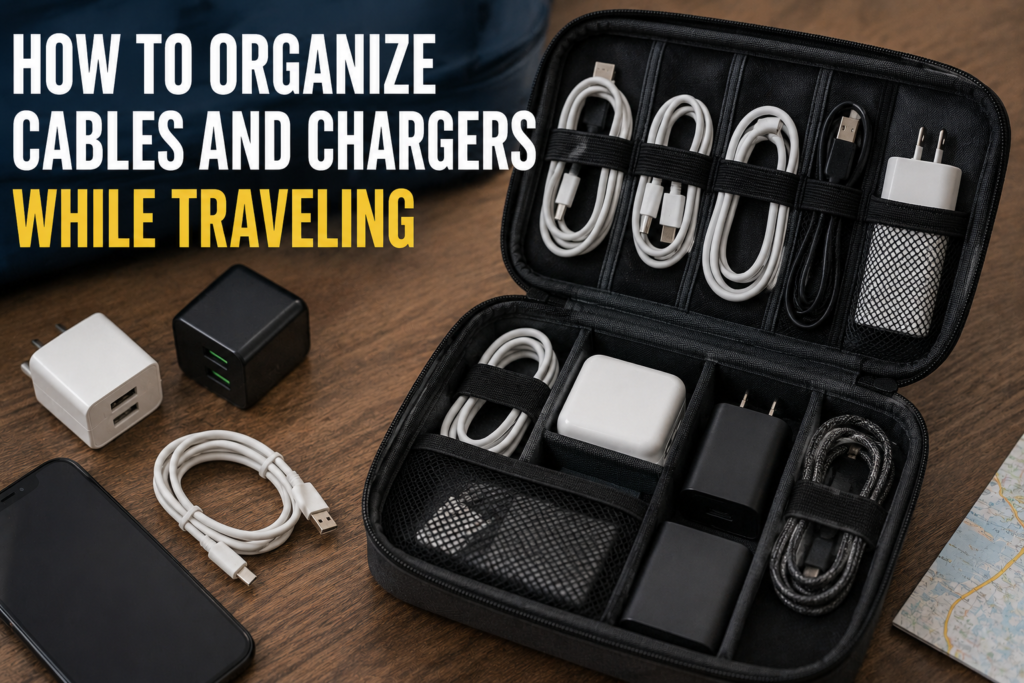
Learning how to organize cables and chargers while traveling does not have to be complicated. The key is to reduce what you carry, keep similar items together, and give every cable a specific place.
A dedicated electronics organizer, reusable cable ties, simple labels, and properly coiled cables can make a big difference. I also recommend choosing shorter cables when practical, keeping frequently used chargers easy to reach, and checking everything before leaving home.
The biggest lesson I have learned is that good organization starts before the trip. If I simply throw cables into my luggage at the last minute, I usually end up dealing with tangled wires and missing accessories later.
A few minutes spent organizing your cables and chargers can save much more time during your journey. Once you develop a simple system and use it consistently, your electronics can stay neat, accessible, and protected throughout your travels.
For me, the ideal travel electronics setup is not the one with the most accessories. It is the one where every necessary cable and charger has a clear purpose and a specific place. That makes packing lighter, finding things easier, and traveling much less stressful.