 travelandlearns
Related Articles
Choosing the right travel backpack can make a big difference in how comfortable and organized a trip feels. I have always believed that a good backpack should make traveling easier rather than give you another thing to worry about. Whether you are planning a weekend trip, a long journey, a city break, or an outdoor adventure, the right travel backpack should match the way you travel.
There are many backpack styles, sizes, materials, and designs available today. Because of this, choosing one can sometimes feel confusing. A backpack that works perfectly for one traveler may not be suitable for someone else. In my opinion, the best approach is to think about your travel plans first and then choose a backpack based on your actual needs.
Think About Your Type of Travel
Before buying a travel backpack, I recommend thinking about where and how you normally travel. Your travel style is one of the most important factors when choosing the right backpack.
If you usually take short weekend trips, you probably do not need a very large backpack. A compact travel backpack can provide enough space for clothes, toiletries, a phone charger, and other basic items.
For longer trips, you may need additional space. However, I would still avoid choosing an unnecessarily large backpack. A bigger bag can encourage you to pack more than you actually need.
If you travel by plane frequently, a carry on travel backpack can be particularly useful. It can help you keep important belongings close and may make airport travel more convenient, depending on the airline’s current baggage rules.
Choose the Right Backpack Size
Backpack size is another important consideration. Travel backpacks are commonly described by their capacity in liters.
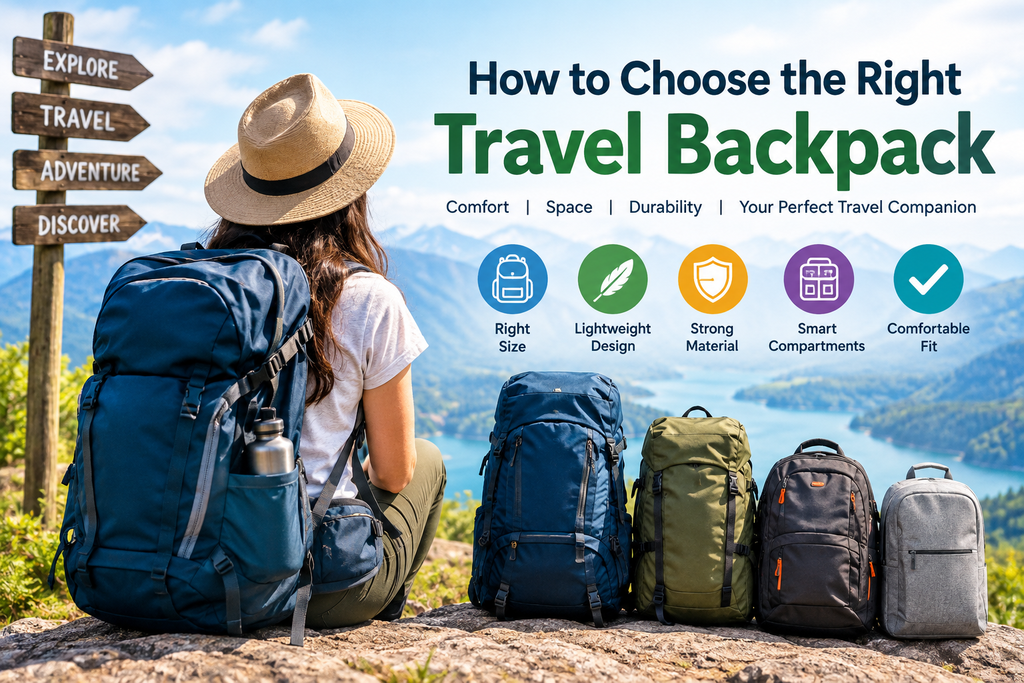
For a short trip, a backpack around 20 to 30 liters may be enough for many travelers. A medium sized backpack around 30 to 45 liters can work well for longer trips when you want more room. Larger backpacks may be useful for extended travel or situations where you need to carry additional equipment.
However, capacity is not the only thing that matters. Two backpacks with the same capacity can feel completely different because of their shape, compartments, padding, and weight.
I personally think you should choose the smallest backpack that comfortably fits the things you actually need. This keeps the bag easier to carry and can also encourage better packing habits.
Check the Weight of the Backpack
One mistake travelers sometimes make is focusing only on how much a backpack can hold. The empty weight of the backpack is equally important.
A heavy backpack can become uncomfortable after several hours of walking. If you already have a heavy bag before adding your clothes and personal belongings, the total weight can quickly become difficult to manage.
When choosing a lightweight travel backpack, check the manufacturer’s listed weight. At the same time, do not choose a bag simply because it is extremely light. A backpack still needs enough structure, padding, and quality construction to support your belongings.
The ideal balance is a backpack that feels light while still offering the durability and comfort you need.
Look for Comfortable Shoulder Straps
Comfort should be one of your biggest priorities. A backpack may look stylish in a store, but that does not necessarily mean it will feel comfortable after several hours.
Look for wide and padded shoulder straps that distribute weight properly. Adjustable straps are also important because they allow you to find a better fit for your body.
I recommend trying a backpack with some weight inside before buying it whenever possible. Walk around with it for a few minutes and pay attention to how it feels on your shoulders and back.
A comfortable travel backpack should sit securely without putting unnecessary pressure on one particular area.
Consider a Padded Back Panel
A padded back panel can improve comfort, especially when you are carrying the backpack for longer periods.
Some backpacks also have ventilation features designed to reduce heat and moisture against your back. This can be useful when traveling in warm weather or walking around a city for several hours.
In my view, the back panel should provide a good combination of padding and support without making the backpack unnecessarily heavy.
Look for Useful Compartments
Good organization can make travel much easier. Instead of having one large compartment where everything gets mixed together, I prefer backpacks with several useful sections.
A separate laptop compartment can be helpful if you travel with a computer. Smaller pockets can be useful for passports, chargers, keys, headphones, and other small items.
Some travel backpacks also include dedicated areas for shoes, water bottles, or dirty clothes.
However, I would not choose a backpack simply because it has many pockets. Too many compartments can sometimes make packing confusing. Look for a layout that matches the items you normally carry.
Check the Backpack Material
The material of a travel backpack affects its durability, weight, and appearance.
Common backpack materials include nylon and polyester. Some travel backpacks use specially designed fabrics that provide additional resistance against water or abrasion.
If you frequently travel in areas where rain is common, consider a backpack with water resistant material or a rain cover. Remember that water resistant does not always mean completely waterproof.
I also recommend checking the quality of the stitching, zippers, handles, and straps. These small details can tell you a lot about how well a backpack is constructed.
Consider Security Features
Security is another factor that should not be ignored when choosing a travel backpack. Travelers often carry important items such as passports, phones, money, cameras, and electronic devices.
Some backpacks include lockable zippers, hidden pockets, or compartments designed to make access more difficult for strangers.
A hidden pocket can be particularly useful for keeping important documents or small valuables in a less obvious location.
While no backpack can guarantee complete security, thoughtful design can make it easier to protect your belongings.
Think About Laptop and Electronics Storage
Many travelers now carry laptops, tablets, power banks, cameras, and other electronic devices. If you travel with electronics, check whether the backpack has appropriate padded compartments.
A dedicated laptop sleeve can help keep the computer separate from clothing and other belongings. Padding can also provide an additional layer of protection.
I would recommend checking the actual dimensions of the compartment instead of assuming that a laptop will fit simply because the backpack is advertised as a laptop bag.
Check the Zippers and Handles
Zippers may seem like a small detail, but they receive a lot of use during travel. A poor quality zipper can become frustrating very quickly.
Before purchasing a backpack, open and close the zippers several times. They should move smoothly without getting stuck.
The top handle is also worth checking. Travelers often grab their backpack by the handle when placing it on a luggage rack, putting it in a vehicle, or moving through an airport.
A strong handle with secure stitching can make these everyday situations much easier.
Choose a Backpack That Fits Your Body
Backpack fit is just as important as backpack capacity. People have different body shapes and sizes, so one design will not feel equally comfortable for everyone.
Adjustable shoulder straps can help, but some larger backpacks also provide additional support around the waist and chest.
If you are planning to carry the backpack for long periods, pay close attention to how the weight sits against your body. The backpack should feel stable rather than constantly pulling backward.
A proper fit can make a surprisingly large difference during long walks.
Do Not Ignore Your Packing Habits
Your personal packing habits should influence your decision. If you prefer to pack everything in one main compartment, you may prefer a simple design.
If you like to organize everything separately, choose a backpack with multiple compartments.
If you usually carry only a few clothes and basic travel items, a smaller backpack may be more practical.
I believe that understanding your own habits is more useful than simply buying the backpack that is currently popular.
Consider Travel Backpack Accessibility
Another feature I find useful is easy access. Traditional backpacks often open from the top, while some travel backpacks open more like a suitcase.
A suitcase style opening can make it easier to see and organize your belongings. This can be especially convenient when you are staying in different places and regularly packing and unpacking.
Think about how often you will need access to the contents of your backpack and choose a design that makes those situations easier.
Set a Realistic Budget
Travel backpacks are available at many different prices. You do not necessarily need the most expensive backpack to get a good travel experience.
Instead of focusing only on price, compare the features, materials, comfort, organization, and durability.
A quality backpack can be a useful long term investment if you travel regularly. At the same time, there is little reason to spend extra money on features you will never use.
For me, value means getting a backpack that provides the features I actually need at a price that makes sense.
Test the Backpack Before Your Trip
Once you have chosen a backpack, I recommend testing it before traveling. Pack the things you normally take with you and carry it around your home or neighborhood.
This can help you discover problems before your actual trip.
You may find that the shoulder straps need adjustment, a particular pocket is difficult to access, or you are carrying too many unnecessary items.
Testing the backpack also gives you an opportunity to improve your packing system.
Final Thoughts
Choosing the right travel backpack is mainly about understanding your own travel needs. There is no single backpack that is perfect for every traveler.
Think about the type and length of your trips, the amount you normally carry, the backpack size, empty weight, comfort, compartments, materials, security features, and overall durability.
In my opinion, the best travel backpack is not necessarily the biggest, most expensive, or most advanced option. It is the one that comfortably carries what you need while keeping your belongings organized and easy to access.
When you choose carefully, a good backpack can become one of the most useful pieces of travel gear you own. It can make packing simpler, walking more comfortable, and moving from one destination to another much easier. That is why I believe taking a little time to choose the right travel backpack before your next journey is well worth it.