 travelandlearns
Related Articles

Traveling is one of my favorite ways to experience new places, meet different people, and take a break from the usual routine. However, I have learned that a good trip is not only about choosing the right destination. It is also about staying organized before and during the journey. When everything has its place, I can enjoy my trip with less stress and more confidence.
Whether you are planning a short weekend trip, a family vacation, or a long international journey, learning how to stay organized while traveling can make a big difference. From keeping travel documents safe to managing your luggage, money, schedule, and daily plans, a few simple habits can save you from unnecessary problems.
In this guide, I will share practical travel organization tips that I find useful and easy to follow.
Start With a Simple Travel Plan
I believe the best way to stay organized while traveling is to start planning before leaving home. You do not need to create a complicated schedule for every minute of your trip. Instead, make a simple plan that gives you a clear idea of where you need to be and what you want to do.
Write down your travel dates, transportation details, hotel information, important activities, and any reservations you have made. If you are visiting several places, keep the information in the order you will need it.
A simple travel itinerary can help you remember important details without making your trip feel too strict. I usually leave some free time in my plans because unexpected opportunities are often part of the fun of traveling.
Keep All Travel Documents Together
Travel documents are some of the most important things you carry. Losing a passport, visa, identification document, boarding pass, or hotel reservation can create unnecessary stress.
I recommend keeping important documents in one secure travel wallet or document holder. Your passport, identification, travel insurance information, tickets, and important booking details should be easy to access when needed.
It is also useful to keep digital copies of important documents on your phone or in a secure cloud storage account. If something gets lost, having a backup can make the situation easier to manage.
However, I would not depend only on digital copies. Keeping physical documents safe is still essential, especially during international travel.
Create a Travel Packing List
A packing list is one of the simplest tools for staying organized while traveling. Instead of putting things into your suitcase randomly, write down everything you think you will need.
I like dividing my packing list into categories such as clothing, toiletries, electronics, documents, medication, and personal items. This makes it easier to check everything before leaving home.
A good packing list also helps prevent overpacking. Before adding something to your suitcase, ask yourself whether you will actually use it. Packing fewer useful items is usually better than carrying a heavy suitcase filled with things you never need.
I also recommend checking the weather at your destination before packing. This allows you to choose suitable clothing instead of taking unnecessary items.
Organize Your Luggage by Category
Keeping your luggage organized is just as important as packing it properly. If everything is mixed together, finding one small item can become frustrating.
I prefer using packing cubes or separate bags to organize different types of belongings. For example, one section can contain shirts, another can contain trousers, and another can hold underwear and smaller clothing items.
Toiletries can be placed in a separate waterproof bag. Electronics can also have their own small pouch for chargers, cables, power banks, and adapters.
This simple system saves time because you know where to look when you need something.
Keep Essential Items in Your Carry On
One mistake travelers sometimes make is placing every important item inside checked luggage. I believe essential belongings should stay in your carry on bag whenever possible.
Your passport, wallet, phone, travel documents, important medications, chargers, and other valuable items should be easy to access during the journey.
I also like keeping a few basic personal items in my carry on in case checked luggage is delayed. A change of clothes and basic toiletries can be useful during unexpected travel delays.
The goal is to make your carry on practical without making it unnecessarily heavy.
Use Your Phone as a Travel Organizer
Your smartphone can become one of your best travel organization tools. Instead of carrying loose papers everywhere, you can store many useful details digitally.
I recommend creating a travel folder on your phone containing booking confirmations, hotel details, transportation information, maps, and copies of important documents.
You can also use your phone calendar to remember flight times, hotel check in times, tours, reservations, and other important activities.
Before leaving, download anything you may need offline. Internet access is not always reliable when traveling, so having offline maps and important information available can be very helpful.
Keep Your Money Organized
Managing money becomes easier when you have a clear system. I prefer keeping cash, cards, and important financial information in secure places rather than putting everything together.
When traveling internationally, it can also be helpful to carry a small amount of local currency while keeping your main funds in a secure account or payment method.
I recommend checking your spending regularly during the trip. You do not need to record every tiny purchase, but knowing approximately how much you are spending can help you stay within your travel budget.
Keeping an emergency payment option separate from your everyday wallet can also provide extra peace of mind.
Make a Daily Plan Without Overplanning
Being organized does not mean planning every second of your vacation. In fact, I think overplanning can sometimes make travel less enjoyable.
Instead, choose a few important things you want to accomplish each day. You might decide to visit a particular attraction in the morning, explore a neighborhood in the afternoon, and enjoy a relaxed dinner in the evening.
Leave enough time between activities for transportation, meals, rest, and unexpected changes.
A flexible daily plan gives you structure while still allowing you to enjoy spontaneous experiences.
Keep Important Information Easy to Find
During a trip, you may need to find information quickly. Hotel addresses, reservation numbers, transportation details, emergency contacts, and flight information should not be buried under hundreds of unrelated files or messages.
I recommend keeping important travel information in one dedicated note or folder. Give it a simple name so you can find it quickly.
If you are traveling with family or friends, make sure they also know where important information is stored. This can make group travel much easier.
Maintain a Clean Hotel Room
One of the easiest ways to stay organized while traveling is to avoid turning your hotel room into a second suitcase.
When you arrive, take a few minutes to organize your belongings. Keep dirty clothes separate from clean clothes and return important items to the same place after using them.
I also try to keep my passport, wallet, phone, and other important items in one secure location when I am inside the hotel.
Before checking out, perform a quick room check. Look under the bed, inside drawers, in the bathroom, and around charging areas. This simple habit can help prevent forgotten belongings.
Manage Your Travel Schedule
Travel schedules can become confusing when you have multiple flights, trains, buses, hotel changes, and activities.
Write down your important times and check them regularly. Pay particular attention to departure times because transportation schedules can change.
I recommend checking your next day’s plans every evening. This takes only a few minutes but helps you prepare for the following morning.
If you have an early flight or activity, prepare your clothes, documents, and essential belongings the night before. It makes the morning much easier.
Keep Your Electronics Organized
Chargers and cables are small, but they can create a lot of frustration when they are mixed together.
I suggest keeping electronics in one small travel pouch. Put your phone charger, watch charger, power bank, headphones, adapters, and other cables in the same place.
Labeling similar cables can also help if you travel with several devices.
Before leaving a hotel or transportation area, check your charging points. It is surprisingly easy to forget a charger when it is plugged into a wall beside the bed.
Use Simple Organization Habits Every Day
Staying organized while traveling does not require complicated systems. Small habits can make a big difference.
After using something, return it to its proper place. After changing clothes, separate dirty items immediately. After receiving a new booking confirmation, save it in your travel folder. After reaching a new destination, check your belongings.
These small actions prevent clutter from building up.
I find that spending five minutes organizing things at the end of each day is much easier than spending an hour trying to fix everything later.
Prepare for Unexpected Changes
Even the best planned trip can have unexpected problems. Flights can be delayed, weather can change, hotels can have issues, and plans can sometimes fall apart.
Good organization means being prepared to adjust.
Keep emergency contacts available and maintain access to essential documents. Have some extra time in your schedule when possible. If you are moving between destinations, avoid making your plans so tight that one delay ruins the entire itinerary.
Being organized gives you more flexibility when something does not go according to plan.
Do a Final Check Before Going Home
The same organization you use before your trip should continue when it is time to return home.
Before leaving your hotel, check your passport, wallet, phone, chargers, clothing, toiletries, and other belongings.
If you bought souvenirs during the trip, organize them carefully so they do not get damaged. Make sure your luggage is properly closed and that you have all necessary travel documents.
After reaching home, unpacking quickly can also help. Separate laundry, return important documents to their normal storage place, and organize anything you brought back.
Final Thoughts
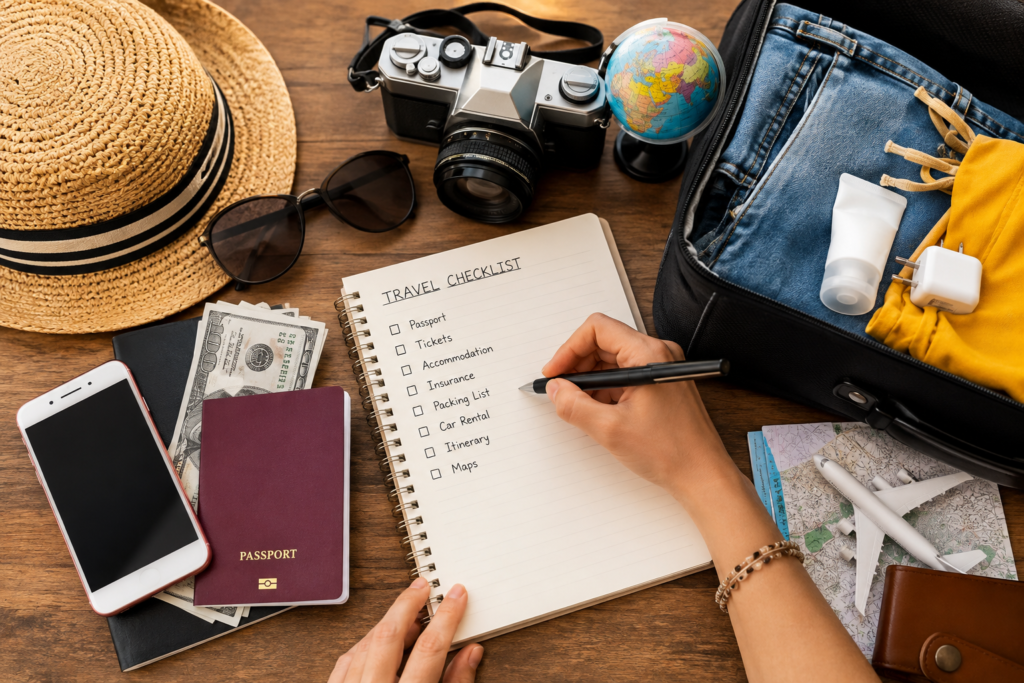
For me, staying organized while traveling is not about making a perfect schedule or carrying a suitcase full of carefully labeled bags. It is about creating simple habits that reduce stress and make the journey easier.
A travel itinerary, packing list, organized luggage, secure documents, a clean digital travel folder, and a flexible daily schedule can make a major difference. When I know where my important things are and what I need to do next, I can spend more time enjoying the destination instead of worrying about small problems.
The best travel organization system is one that is simple enough to use throughout the entire trip. Start with a few habits, keep your important belongings in consistent places, and give yourself enough flexibility to enjoy the unexpected.
With a little preparation and a practical approach, you can stay organized while traveling and make your entire journey more comfortable, relaxed, and enjoyable.