 travelandlearns
Related Articles
Packing light can completely change the way you travel. I have found that carrying less luggage makes a trip easier, more comfortable, and much less stressful. Instead of worrying about heavy suitcases, extra baggage fees, or finding space for everything, you can focus more on enjoying your destination.
Many travelers believe that packing light means leaving important things behind. In my experience, it is actually about making better choices. When you understand what you really need, you can travel with fewer items while still having everything necessary for a comfortable trip.
In this guide, I will share my practical approach to how to pack light for your next trip, including choosing clothes, organizing luggage, reducing toiletries, and avoiding common packing mistakes.
Start With a Simple Packing Plan
Before putting anything into your suitcase, I recommend making a simple plan. Think about where you are going, how many days you will stay, what the weather will be like, and what activities you expect to do.
A beach vacation will require different clothing from a winter city trip. Similarly, a business trip may need formal clothes while a casual vacation may require only comfortable outfits.
I usually avoid packing immediately after booking a trip. Instead, I first consider what I will actually use. This small step can prevent overpacking.
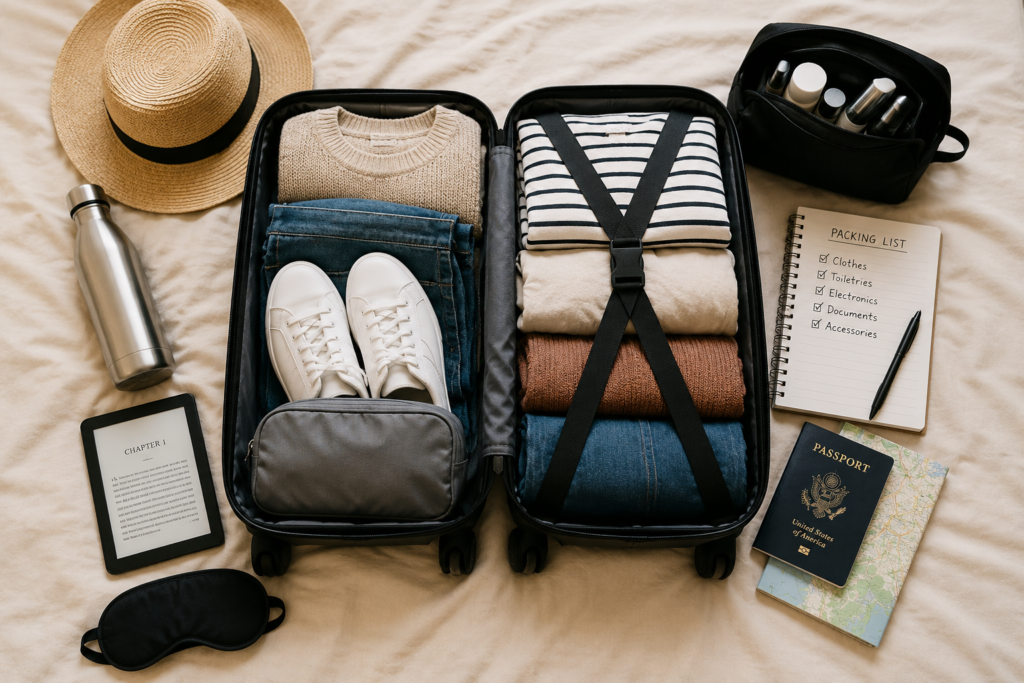
Write down the essentials and separate them into categories such as clothing, toiletries, electronics, documents, and personal items. Once you have a basic list, it becomes easier to identify things you do not really need.
Choose Clothes That Work Together
One of the easiest ways to pack light is to choose clothes that can be mixed and matched. Instead of packing a separate outfit for every day, select a small collection of clothes that work well together.
For example, neutral colors such as black, white, gray, navy, and beige can be combined in many different ways. One pair of trousers can work with several shirts, and one jacket can be used with different outfits.
I prefer taking clothes that are comfortable, practical, and easy to combine. This gives me more outfit options without filling my suitcase.
You should also consider whether every item serves more than one purpose. A lightweight shirt can be used during the day and dressed up for dinner. Comfortable shoes can work for walking and casual evenings.
Follow the One Week Clothing Rule
If I am traveling for a week, I generally do not pack seven completely different outfits. Most people can travel comfortably with fewer clothes than they expect.
A practical packing approach might include several shirts, two or three bottoms, one lightweight outer layer, underwear, socks, sleepwear, and one main pair of comfortable shoes.
For longer trips, you do not necessarily need to pack much more. Laundry facilities can make a big difference. Washing a few clothes during the trip can allow you to travel with a small suitcase even when you are away for several weeks.
The important thing is to think about how often you can reuse each item rather than packing something simply because you might wear it once.
Limit Your Shoes
Shoes are one of the biggest problems when trying to pack light. They take up a surprising amount of space and can add considerable weight.
I recommend taking only the shoes you genuinely need. For many trips, one comfortable pair plus one additional pair is enough.
Wear your heaviest shoes during transportation and keep lighter footwear in your luggage. If your trip involves hiking, formal events, or special activities, plan your footwear around those specific needs.
Before packing another pair, ask yourself whether you will actually wear it. If the answer is probably not, leave it at home.
Reduce Your Toiletries
Toiletries can quickly turn a small bag into a heavy suitcase. Instead of carrying large bottles, use travel sized containers where appropriate.
You can also check whether your hotel or accommodation provides basic items such as shampoo, soap, or other toiletries. There is no reason to carry something you can easily obtain at your destination.
I recommend keeping a small toiletry bag permanently prepared with your regular travel essentials. This saves time and makes it easier to avoid unnecessary products.
Try to take only the amount you expect to use. A short trip rarely requires a full sized bottle of every product.
Use Packing Cubes Wisely
Packing cubes can be useful for keeping luggage organized. They allow you to separate clothing, underwear, accessories, and other items so you can find things without emptying the entire suitcase.
However, I do not think you should use packing cubes simply as an excuse to carry more items. The purpose should be organization, not creating additional space for unnecessary belongings.
I prefer using a few lightweight packing cubes for categories that I want to keep separate. This makes unpacking easier and helps maintain order throughout the trip.
Roll or Fold Your Clothes
There is a lot of debate about whether rolling or folding clothes is better. In my opinion, both methods can work depending on the clothing.
Rolling works especially well for casual shirts, lightweight trousers, and other flexible clothes. Folding can be better for sweaters, jackets, and items that wrinkle easily.
The most important thing is not the exact technique. It is avoiding wasted space and keeping your luggage organized.
Do not try to compress every item into the smallest possible space. An extremely full suitcase can become difficult to close and may encourage you to bring more than you need.
Pack According to the Weather
Checking the weather before your trip can save a lot of luggage space. Many travelers pack for every possible weather condition instead of checking the actual forecast.
If you are visiting a warm destination, you probably do not need several heavy layers. If you are traveling somewhere cold, focus on versatile layers that can be worn together.
Weather can change, so I recommend preparing for realistic possibilities rather than every imaginable situation. A lightweight rain jacket, for example, may be more useful than packing several different outer layers.
Do Not Pack for Every Possible Situation
One of the biggest causes of overpacking is thinking about everything that could possibly happen.
You might think you need an extra outfit for an unexpected dinner, another pair of shoes in case you change your mind, or several accessories that you may never use.
I have learned that packing based on realistic needs is much better than packing based on fear.
If you forget a small nonessential item, you can often buy or replace it at your destination. This does not mean you should forget important medication, documents, or essential personal items. It simply means you should avoid filling your suitcase with unnecessary backup items.
Keep Electronics Simple
Electronics can also add unnecessary weight. Before traveling, consider which devices you actually need.
A phone can often replace several separate devices. Depending on your trip, you may not need a tablet, laptop, camera, gaming device, and multiple accessories.
Take the chargers you genuinely need and consider using a compact charging solution where appropriate. Keep important electronics in your carry on so they remain accessible during transportation.
Wear Your Bulkiest Items
Another simple way to save luggage space is to wear your heaviest clothing while traveling.
If you need a jacket, boots, or a heavier sweater, wearing them during your journey can free up valuable space in your suitcase.
You can always remove a jacket during a flight or other transportation if you become uncomfortable. The goal is to use the space in your luggage efficiently.
Keep Important Items Accessible
Packing light does not only mean reducing weight. It also means making your luggage easy to manage.
Keep important documents, travel information, money, medication, and essential electronics somewhere accessible. I prefer keeping these items in my personal bag rather than burying them inside checked luggage.
This becomes especially useful during airports, long journeys, and unexpected delays.
A well organized carry on can make your trip much easier because you can quickly access the things you need without opening your main suitcase.
Use the Space Inside Your Shoes
If you are carrying shoes, you can sometimes use the empty space inside them for small items such as socks or accessories.
This is a simple way to use otherwise wasted space. Just make sure anything you place inside the shoes is clean and properly protected.
Small spaces throughout your luggage can be useful, but I would still avoid filling every available gap simply because you have room.
Leave Some Extra Space
I strongly recommend leaving a little space in your suitcase. A completely full bag may be difficult to close, especially if you purchase something during your trip.
Having extra space also makes repacking easier.
One of my favorite rules is to pack what I need rather than packing until the suitcase is full. This simple change can make a noticeable difference.
Recheck Everything Before Leaving
After packing, take a final look at everything before closing your suitcase.
Ask yourself a few simple questions. Do I really need this? Can I wear it more than once? Can another item serve the same purpose? Can I buy it easily at my destination?
If an item does not have a clear purpose, consider removing it.
This final review often helps eliminate several unnecessary things that seemed important while packing.
Final Thoughts
Learning how to pack light for your next trip is mostly about changing the way you think about luggage. You do not need to take everything you own to enjoy a comfortable vacation.
Choose versatile clothes, limit your shoes, reduce toiletries, organize your belongings, and think carefully before adding anything extra. Most importantly, pack according to your actual trip instead of every possible situation.
In my opinion, traveling with less luggage gives you more freedom. You can move through airports more easily, use public transportation without struggling with heavy bags, unpack faster, and spend less time worrying about your belongings.
The best travel bag is not necessarily the biggest one. It is the one that contains what you truly need without carrying unnecessary weight.
With a little planning and practice, packing light can become one of the easiest and most useful travel habits you develop.