 travelandlearns
Related Articles
Traveling is one of my favorite ways to experience new places, meet different people, and create memories that stay with me for years. However, one thing I always take seriously when traveling is keeping my money safe. Losing cash, cards, or access to a bank account can quickly turn an enjoyable trip into a stressful experience.
In my experience, keeping money safe while traveling is not about carrying expensive security equipment or constantly worrying about theft. It is mainly about being prepared, using common sense, and avoiding situations where all your money is kept in one place.
Whether you are planning a short vacation, a business trip, or a long international journey, these simple travel money safety tips can help protect your finances and give you greater peace of mind.
Do Not Keep All Your Money in One Place
One of the most useful travel habits I have learned is to avoid keeping all my money together. If everything is in one wallet and that wallet gets lost or stolen, the problem becomes much bigger.
I prefer dividing my money between different safe places. I may keep a small amount of cash in my wallet for daily expenses while keeping another amount somewhere secure in my luggage or accommodation.
I also avoid carrying every payment card with me when I go sightseeing. If I only need one card for the day, there is little reason to carry several others.
This simple approach creates a backup. If one source of money becomes unavailable, I still have another option.
Carry Only the Cash You Need
Carrying a large amount of cash can make traveling more stressful. It can also create a bigger financial loss if your wallet disappears.
Before leaving my accommodation, I usually think about what I am likely to spend during the day. I carry enough cash for transportation, food, small purchases, and emergencies, rather than taking my entire travel budget with me.
This is especially useful in busy tourist areas where crowded streets and public transportation can create opportunities for pickpockets.
Having a smaller amount of cash in your everyday wallet also makes it easier to stay calm if something goes wrong.
Use a Secure Wallet
Your wallet is one of the most important things to protect while traveling. I prefer a simple wallet that does not attract unnecessary attention and that can be kept securely in a front pocket or another protected location.
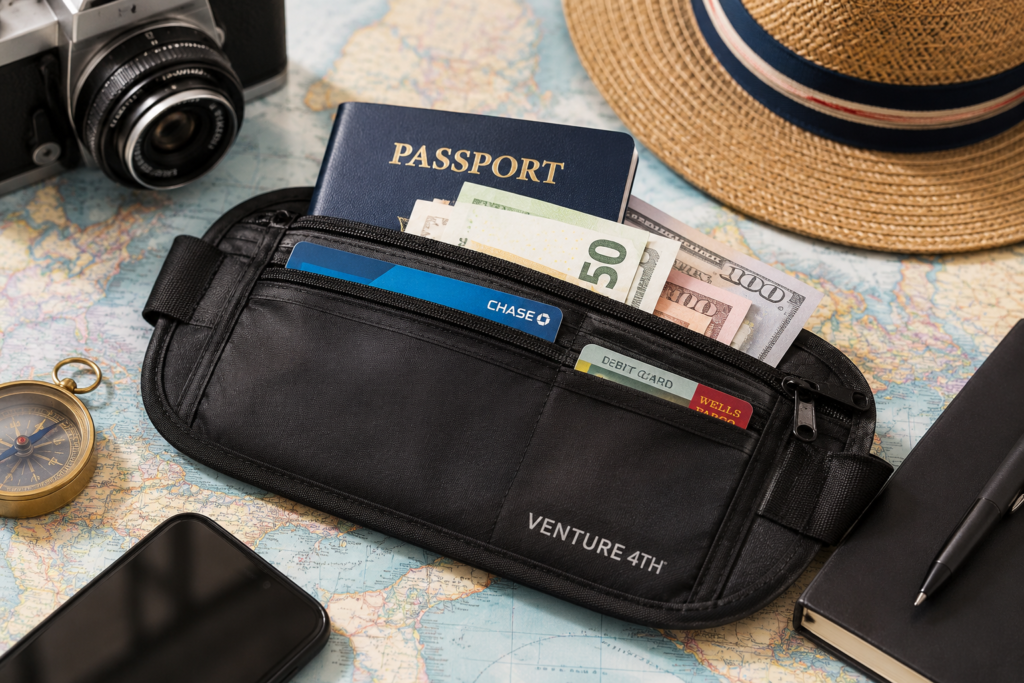
For crowded destinations, a money belt or hidden travel pouch can also be useful for storing important documents and emergency cash.
The key is not simply having a special travel wallet. The important thing is making sure your wallet is difficult for someone else to access without you noticing.
Keep Your Cards Secure
Credit and debit cards are extremely convenient when traveling, but they should be treated carefully. Before leaving home, I recommend checking which cards you actually need for the trip.
Keep your cards in a secure place and avoid leaving them unattended in hotel rooms, rental cars, or other exposed areas.
It is also helpful to know your bank’s process for reporting a lost or stolen card. Save the relevant customer service information somewhere you can access it without relying entirely on the physical card.
I also like having at least one backup payment method. If one card stops working, having another card or another approved payment option can make a huge difference.
Notify Your Bank Before International Travel
Before an international trip, I make sure I understand how my bank handles overseas transactions.
Some banks may have security systems that flag unusual purchases when you suddenly start spending money in another country. Checking your bank’s travel policies before leaving can help prevent unnecessary problems.
It is also worth checking foreign transaction fees, ATM fees, and currency conversion charges. Knowing these costs in advance makes it easier to manage your travel budget.
I would rather spend a few minutes checking these details before a trip than discover an unexpected problem while standing at an ATM in another country.
Be Careful With ATMs
Using ATMs while traveling is often unavoidable, but choosing the right ATM matters.
I prefer using ATMs located inside banks, reputable shopping centers, airports, or other secure locations. I avoid machines that look damaged, unusual, or poorly maintained.
Before inserting a card, I check the machine carefully. If something looks suspicious, I simply find another ATM.
When an ATM asks whether I want to accept a particular currency conversion, I also pay attention to the options presented. Understanding the exchange rate and fees can help prevent unnecessary costs.
After completing a transaction, I put my cash and card away before leaving the ATM area.
Avoid Showing Large Amounts of Cash
Another simple rule I follow is to avoid displaying large amounts of money in public.
There is usually no reason to count a large stack of cash in the middle of a busy street, restaurant, market, or transportation station. If I need to organize money, I prefer doing it somewhere private and secure.
This is not about being afraid of everyone around you. It is simply about avoiding unnecessary attention.
Keeping your spending discreet is one of the easiest ways to improve travel money safety.
Use Hotel Safes Carefully
A hotel safe can be useful for storing items that you do not need during the day. Depending on the accommodation, I may use it for extra cash, backup cards, or other important documents.
However, I do not treat a hotel safe as a guarantee of complete security. I still use good judgment about what I store inside and keep track of my belongings.
If I am staying somewhere for several nights, I also avoid leaving large amounts of cash lying around in luggage or drawers.
Make Digital Backups
Modern technology gives travelers another useful layer of financial protection.
Before traveling, I recommend keeping secure digital records of important information such as card numbers, bank contact details, travel insurance information, and important identification documents.
These backups should be stored securely rather than being left openly accessible on your phone.
I also make sure my phone itself is protected with a strong passcode or another security method. Your smartphone can provide access to banking apps, email accounts, payment services, and personal information, so protecting the phone is just as important as protecting your wallet.
Be Careful With Public WiFi
Public WiFi can be convenient when traveling, but I try to avoid performing sensitive financial activities on unfamiliar networks.
If I need to access my bank account, I prefer using a trusted connection. I also avoid clicking suspicious links in emails or text messages, especially when they claim that my bank account or payment card needs urgent attention.
Travelers can sometimes become distracted because they are busy with flights, hotels, transportation, and sightseeing. Scammers can take advantage of that distraction.
Taking a few extra seconds to verify a message before entering financial information can prevent major problems.
Watch Your Belongings in Crowded Places
Crowded locations deserve extra attention. Airports, train stations, markets, festivals, tourist attractions, and public transportation can become busy very quickly.
When I am in a crowded place, I keep my wallet and phone where I can feel them. I also avoid placing valuable items in open backpack pockets.
A backpack can be convenient, but the most important items should not be stored in an easily accessible outside pocket.
Being aware of your surroundings is one of the most effective ways to protect your money while traveling.
Keep Emergency Money Separate
One of my favorite travel safety habits is keeping a small emergency fund separate from my everyday spending money.
This emergency cash should be enough to help with basic transportation, food, communication, or another immediate need if my wallet is lost.
I do not use this money unless necessary. Its purpose is to provide a backup when something unexpected happens.
Having emergency money can reduce panic and give you time to solve the larger problem.
Be Careful When Exchanging Currency
Currency exchange is another area where travelers should stay alert.
I prefer using established banks or reputable currency exchange services rather than accepting offers from strangers. Before exchanging money, I check the current approximate exchange rate so I have an idea of what I should receive.
It is also important to count your money carefully after an exchange and keep your receipt when appropriate.
If an offer seems too good to be true, I would rather walk away than risk losing money.
Have a Plan If Your Wallet Is Lost
Even with careful planning, unexpected things can happen. That is why I think every traveler should have a basic plan for losing a wallet.
Know how to contact your bank and how to cancel or freeze your cards. Keep emergency contact information somewhere separate from your wallet.
If your passport or other important documents are lost, contact the appropriate authorities or your embassy or consular service as soon as possible.
The goal is not to expect something bad to happen. The goal is to make sure you know what to do if it does.
Final Thoughts
For me, keeping your money safe while traveling comes down to preparation and simple daily habits. I do not believe you need to spend your entire trip worrying about theft or financial problems. Instead, I prefer taking a few sensible precautions before leaving home and staying aware of my surroundings during the journey.
I divide my money, protect my cards, carry only the cash I need, use ATMs carefully, keep emergency funds separate, and maintain secure digital backups. These habits do not make travel complicated. They actually make traveling more comfortable because I know I have a backup plan.
The most important thing is to remember that your money should support your travel experience, not become a constant source of stress. With a little preparation and common sense, you can protect your finances and focus more on enjoying the places, people, and experiences that made you want to travel in the first place.