 travelandlearns
Related Articles


Traveling for the first time can feel exciting, but it can also feel a little overwhelming. There are so many things to think about before leaving home, from passports and tickets to packing, money, accommodation, and airport procedures. In my experience, the easiest way to avoid unnecessary stress is to prepare everything step by step instead of trying to remember everything at the last minute.
A good pre travel checklist gives you a clear idea of what needs to be done before your trip. It also helps you feel more confident because you know that the important details have been checked.
In this guide, I will share my ultimate pre travel checklist for first time travelers. These are practical things I believe every new traveler should consider before starting a journey.
Check Your Passport
The first thing I would check before any international trip is my passport. Make sure it is valid for the entire trip and meets the entry requirements of your destination.
Some countries require travelers to have several months of passport validity remaining after their planned arrival or departure. Because requirements can vary, it is important to check the official information for your destination before traveling.
Also make sure your passport has enough blank pages if your journey involves visas or immigration stamps.
I recommend keeping a digital copy of your passport in a secure location and carrying a separate physical copy as a backup.
Check Visa Requirements
A visa is one of the most important things to confirm before international travel. Do not assume that you can enter a country without checking its current requirements.
Depending on your nationality and destination, you may need a visa, electronic travel authorization, transit visa, or another form of entry permission.
Apply early whenever possible. Visa processing times can vary, and waiting until the last few days can create unnecessary pressure.
Keep a copy of your approved visa or travel authorization with your important documents if one is required.
Confirm Your Flight or Transportation
After checking your documents, confirm your travel arrangements. Look carefully at your flight ticket, departure time, arrival time, airport, and terminal information.
If you have connecting flights, check the connection time and make sure you understand where you need to go after landing.
For train, bus, or road trips, confirm departure points and schedules as well.
I personally like checking my transportation details again a day before departure because schedules can change.
Confirm Your Accommodation
Having a place to stay after reaching your destination is especially important for first time travelers.
Before leaving, confirm your hotel, hostel, apartment, or other accommodation booking. Save the address and contact information somewhere you can access without an internet connection.
I also recommend checking the check in time. If you arrive early in the morning or late at night, you may need to arrange early check in, late arrival instructions, or luggage storage.
Knowing exactly where you are going after arriving can make your first day much easier.
Buy Travel Insurance
Travel insurance is another item I recommend considering before an international journey. A suitable travel insurance policy may provide protection for certain unexpected situations such as trip interruptions, medical emergencies, lost belongings, or travel delays, depending on the policy.
Do not simply choose the cheapest option. Read the policy carefully and understand what is actually covered, including exclusions, limits, and claim requirements.
Keep your insurance details and emergency contact information accessible during the trip.
Make a Simple Travel Budget
Money planning can make a major difference to your travel experience.
Before leaving, estimate how much you may spend on accommodation, transportation, food, attractions, shopping, and emergencies.
I like dividing the budget into daily spending and emergency money. This makes it easier to see whether I am spending too much during the first few days.
Also check the currency used at your destination and understand the approximate exchange rate.
Prepare Your Bank Cards
Before traveling abroad, make sure your debit or credit cards are working and suitable for international use.
Some banks may require you to enable international transactions or notify them about your travel plans. Check your bank’s current policies before leaving.
I also recommend carrying more than one payment method. If one card stops working, having another option can save you from a difficult situation.
Keep your cards and cash in secure places rather than putting everything together in one wallet.
Carry Some Emergency Cash
Even if you normally use cards or mobile payments, carrying a reasonable amount of emergency cash can be helpful.
You may arrive somewhere where cards are not accepted, experience a technical problem, or need money for transportation.
Avoid carrying all your travel money in one place. Keeping some cash separately can provide an additional backup.
Make a Packing List
Packing becomes much easier when you make a list before opening your suitcase.
Start with essentials such as clothing, underwear, comfortable shoes, toiletries, travel documents, medications if needed, electronics, chargers, and personal items.
Then check the weather at your destination and pack according to the conditions.
I prefer packing versatile clothing that can be used for different activities rather than taking too many unnecessary items.
Remember that overpacking can make a trip harder. A lighter suitcase is usually easier to carry through airports, train stations, hotels, and busy streets.
Prepare Your Toiletries
Create a small travel toiletry kit before your departure.
Depending on your needs, this may include a toothbrush, toothpaste, soap, shampoo, moisturizer, sunscreen, deodorant, comb, and other personal care items.
If you are flying, check the current airline and airport rules for liquids and other restricted items. Pack liquids in suitable containers and keep them organized.
A small toiletry bag can prevent these items from spreading throughout your suitcase.
Organize Your Electronics
Modern travel often depends on electronics, so check your devices before leaving.
Charge your phone, laptop, camera, smartwatch, and other devices you plan to take.
Pack the correct charging cables and adapters. If your destination uses different electrical sockets, bring a suitable travel adapter.
I also recommend carrying a power bank when permitted by the airline and keeping it in the appropriate carry on baggage according to current airline rules.
Download Important Information
Internet access is not always guaranteed when you travel. Before leaving, download important information that you may need offline.
This can include hotel details, transportation information, maps, tickets, booking confirmations, and important contact numbers.
You can also save a copy of your itinerary on your phone.
Having offline information is especially useful when you arrive in a new country and do not immediately have mobile data.
Check Your Phone and Internet Plan
Contact your mobile provider or check your account to understand how your phone will work at your destination.
International roaming charges can sometimes be expensive. Depending on your destination and phone, you may have options such as an international package or local SIM.
Make sure your phone is unlocked if you plan to use another SIM card.
Research Your Destination
You do not need to plan every minute of your vacation, but basic research is extremely helpful.
Learn about local transportation, weather, important neighborhoods, cultural customs, opening hours, and common payment methods.
Find out how you will travel from the airport or station to your accommodation.
I also recommend saving the locations of your hotel, airport, train station, and a few important places on your map.
Check Health and Medication Needs
If you take regular medication, make sure you have enough for your journey and keep it properly organized.
Carry important medication in your carry on bag when appropriate rather than placing everything in checked luggage.
Check whether your destination has specific rules regarding medications.
It can also be useful to carry basic personal health items that you may need during the trip.
Make an Emergency Contact List
Before leaving home, create a small list of important contacts.
This can include family members, your accommodation, travel insurance provider, airline, bank, and local emergency services.
Save the information on your phone and keep an offline copy as well.
Hopefully, you will never need these contacts, but having them available can make an unexpected situation much easier to manage.
Secure Your Home
Travel preparation is not only about the trip itself. Your home should also be prepared before you leave.
Check that doors and windows are locked, unnecessary appliances are switched off, and important items are secure.
If you will be away for an extended period, arrange for someone you trust to check on your home if necessary.
Avoid publicly sharing every detail of your absence while you are away.
Check In Online
If your airline offers online check in, check the instructions and complete it within the permitted time.
Review your seat, baggage allowance, flight details, and boarding information.
Do not assume that everything is unchanged just because you booked the flight weeks ago. Checking the latest information before leaving for the airport is a simple habit that can prevent problems.
Keep Important Documents Together
Create one organized travel document folder.
Keep your passport, visa information, tickets, hotel confirmation, travel insurance details, and important reservations easily accessible.
I prefer keeping physical documents in a secure travel wallet while also maintaining digital copies.
Do not place your passport deep inside your checked suitcase. Keep essential travel documents with you.
Get a Good Night of Sleep
One final thing that is often forgotten is rest.
Do not stay awake all night packing if you can avoid it. Being exhausted before a long journey can make airports, connections, and unfamiliar places much more difficult.
Try to finish your main packing early so you can relax before departure.
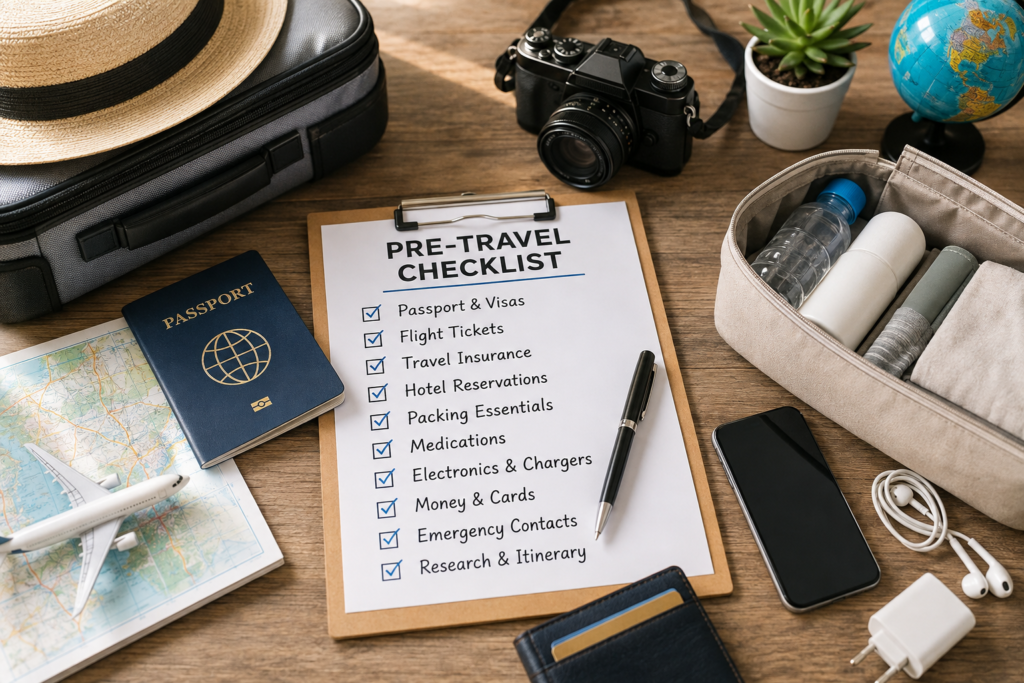
Final Pre Travel Checklist
Before leaving home, take a few minutes to review everything one more time.
Check your passport, visa, tickets, accommodation, travel insurance, money, bank cards, phone, chargers, medications, luggage, and important documents.
Then check the departure time and transportation to the airport or station.
For first time travelers, preparation is not about making the trip perfect. It is about reducing avoidable problems and giving yourself confidence.
My biggest advice is to start preparing several days before your departure instead of waiting until the final night. Make a simple checklist, complete each item one by one, and give yourself enough time to deal with anything unexpected.
Once the important details are organized, you can focus on what really matters: enjoying the journey, exploring your destination, meeting new people, and creating memories.
A little preparation before travel can turn a stressful first trip into a much smoother and more enjoyable experience.