 travelandlearns
Related Articles

Traveling for the first time can be exciting, but it can also feel a little stressful. When you are visiting a new city or country, you are dealing with unfamiliar streets, different customs, new transportation systems, and places you may have never seen before. From my experience, the best way to enjoy a trip is not to worry about every possible problem. Instead, I believe in taking a few simple safety precautions before leaving home and while exploring the destination.
Good travel safety does not mean being afraid of your surroundings. It means being prepared, staying aware, and making sensible decisions. A few basic habits can protect your belongings, documents, money, and personal information while helping you feel more confident.
In this guide, I am sharing some simple travel safety tips for beginners that I find useful for almost any type of trip.
Research Your Destination Before Traveling
One of the easiest ways to improve your travel safety is to learn about your destination before you arrive. You do not need to become an expert. Just spend some time understanding the area you are visiting.
Look at the neighborhoods where you will stay, learn about local transportation, check common scams, and understand any local rules that visitors should know. It is also useful to know which areas may be better avoided at night.
I always believe that a little research before a trip can prevent many unnecessary problems. Save the address of your hotel or accommodation on your phone and keep it somewhere you can access even if your internet connection stops working.
Keep Your Important Documents Safe
Your passport, identification, visas, travel insurance information, and other important documents should be treated carefully during a trip.
Before leaving home, make digital copies of important documents and keep them in a secure location. You can also keep photocopies separately from the originals.
When you are sightseeing, there may be no reason to carry every important document with you. Depending on local requirements and your circumstances, keep valuable documents secured in a safe place and carry only what you actually need.
If you lose a passport or another important document, contact the appropriate authorities or your country’s embassy or consular service for guidance.
Protect Your Money and Cards
Money is one of the biggest concerns for many first time travelers. I recommend avoiding the habit of keeping all your cash and cards in one place.
If your wallet disappears, losing everything at once can create a serious problem. Keeping your payment methods organized and separated can give you a backup option.
I also recommend carrying only the amount of cash you expect to need for the day. Keep your wallet somewhere secure and avoid displaying large amounts of money in crowded public places.
Before traveling, notify your bank if necessary and make sure you understand how your cards work internationally.
Be Careful in Crowded Places
Crowded markets, train stations, public transportation, tourist attractions, and busy streets can be enjoyable, but they are also places where travelers should pay extra attention to their belongings.
Keep your phone, wallet, passport, and other valuables secure. Avoid leaving bags open or unattended.
When I am in a crowded place, I prefer keeping my important belongings where I can easily feel or see them. A secure crossbody bag or a properly closed backpack can also be useful.
The goal is not to become paranoid. It is simply to stay aware of what is happening around you.
Do Not Share Too Much Personal Information
Being friendly while traveling is a wonderful thing, but you do not need to share every personal detail with strangers.
Avoid casually telling people where you are staying, how long you will be alone, or how much money you are carrying. If someone asks questions that make you uncomfortable, you can politely avoid answering.
I think trusting your instincts is important. If a person or situation feels unusual, you do not have to continue the conversation.
Use Transportation Carefully
Transportation is an important part of travel safety. Before using taxis, rideshare services, buses, trains, or other transportation, understand how the system works.
Use official transportation services whenever possible and check the vehicle details before getting inside when using a rideshare service.
If you are using public transportation, keep your belongings close and pay attention to your surroundings. At night, choose transportation options that are reliable and appropriate for the destination.
For rental cars, understand local driving rules before getting behind the wheel. Speed limits, road signs, traffic patterns, and driving customs can vary from one country to another.
Choose Your Accommodation Carefully
Where you stay can have a major effect on your overall travel experience. Before booking accommodation, read recent reviews and learn about the location.
I prefer checking whether the accommodation is located in an area that is convenient for transportation, restaurants, and basic services.
When you arrive, check the doors, windows, locks, and basic safety features. Keep your room key or access card secure and avoid sharing it unnecessarily.
If your accommodation offers a safe for valuables, you can consider using it for items that you do not need to carry throughout the day.
Keep Your Phone Charged
Your phone can be extremely useful during travel. You may need it for maps, transportation information, hotel details, translation, communication, or emergencies.
That is why I always recommend keeping your phone charged.
A portable power bank can be useful during long sightseeing days, especially when you are away from your accommodation for many hours.
Before leaving your hotel, make sure you have the information you may need saved or easily accessible. This can include your accommodation address, transportation details, important contacts, and travel documents.
Learn Basic Local Information
You do not need to learn an entire language before traveling, but knowing a few useful words can make a difference.
Learn basic phrases such as hello, thank you, help, please, and emergency related words in the local language when possible.
It is also helpful to know the local emergency numbers and understand how to contact police, medical services, or other appropriate authorities.
I find that knowing these basic details gives me more confidence when visiting an unfamiliar destination.
Avoid Taking Unnecessary Risks at Night
Exploring a destination at night can be enjoyable, but beginners should be more cautious after dark.
Stay in well populated and reasonably well lit areas when possible. Avoid walking alone through unfamiliar streets simply because they appear to be a shortcut.
If you are unsure about an area, use reliable transportation instead of taking unnecessary risks.
You do not have to prove that you can handle every situation. Sometimes the safest decision is simply choosing the more practical option.
Be Careful With Your Travel Plans
It is a good idea to let someone you trust know your general travel plans. You do not need to send updates every few minutes, but keeping a friend or family member informed can be useful.
Share basic information such as your destination, accommodation, and approximate travel schedule.
If your plans change significantly, let someone know when practical.
This simple habit can provide an additional layer of security, especially when traveling alone.
Watch Out for Common Travel Scams
Tourists can sometimes be targeted by scams because they may not understand local prices, customs, or transportation systems.
Common examples can include overpriced services, fake tickets, unofficial guides, misleading currency exchanges, and people creating distractions around crowded areas.
The best protection is to stay calm and avoid making rushed decisions.
Before paying for an expensive service, understand the price first. If someone pressures you to hand over money immediately, take a moment to think.
I believe that being polite does not mean you have to agree to everything someone asks.
Protect Your Digital Information
Travel safety is not only about physical belongings. Your digital information also deserves attention.
Avoid using unknown public computers for sensitive accounts. Be cautious when connecting to unfamiliar WiFi networks, especially when accessing financial accounts.
Use strong passwords and enable additional security features on important accounts when available.
Also avoid posting too much information about your exact location in real time. Sharing every detail of your trip publicly may not always be a good idea.
Trust Your Instincts
One of the most important travel safety tips for beginners is to trust your instincts.
If something feels wrong, take a step back. You can leave a location, change transportation, call someone you trust, or ask for help.
You do not need to worry about appearing rude if you feel uncomfortable. Your personal safety is more important.
At the same time, remember that most travel experiences are positive. Being careful does not mean expecting something bad to happen. It simply means giving yourself the best chance of handling unexpected situations calmly.
Keep Emergency Information Accessible
Before your trip, save important emergency contacts on your phone. You can also write down essential information somewhere secure in case your phone becomes unavailable.
Keep details about your accommodation and important travel documents accessible.
If you take regular medication or have specific travel requirements, prepare accordingly and carry necessary items safely.
A little preparation can make a stressful situation much easier to manage.
Final Thoughts
Travel safety for beginners does not have to be complicated. In my opinion, the most useful approach is to stay prepared without letting fear control your trip.
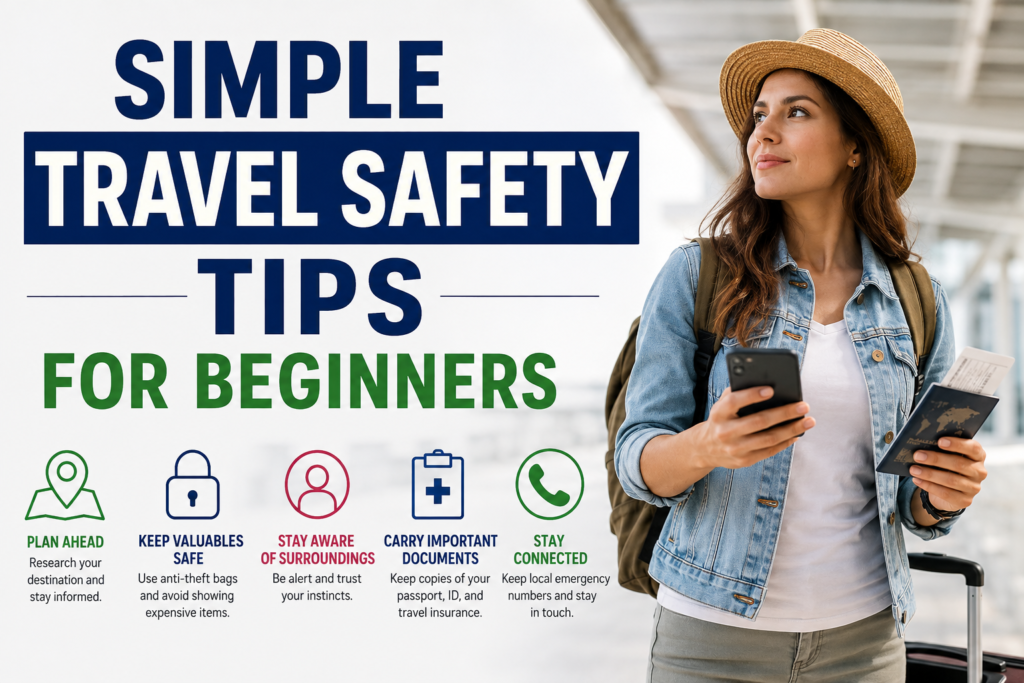
Research your destination, protect your documents and money, stay aware in crowded places, choose reliable transportation, keep your phone charged, and trust your instincts. These simple habits can make traveling much more comfortable.
You will probably make a few small mistakes during your first trips, and that is completely normal. Every journey teaches you something new about planning, communication, and staying aware.
The goal of safe travel for beginners is not to avoid every possible risk. It is to make smart choices, remain alert, and give yourself enough preparation to enjoy the journey with confidence.
When you combine common sense with a little planning, you can explore new places, meet new people, and create memorable experiences while taking sensible steps to protect yourself and your belongings.