 travelandlearns
Related Articles



Traveling to a new destination for the first time can be exciting, but it can also feel confusing when you do not know where to start. From choosing the right time to visit to understanding visa requirements, transportation, accommodation, local customs, and daily expenses, there are many details worth checking before you book your trip.
In my opinion, good destination research can make a huge difference between a stressful vacation and a smooth, enjoyable experience. You do not need to spend weeks researching every small detail. You simply need a practical destination research checklist that helps you focus on the things that matter most.
In this guide, I will share the important things I personally believe first time travelers should research before visiting any destination.
1. Start With a Basic Destination Overview
The first step in your destination research checklist should be understanding the place itself. Before looking at hotels or flights, spend some time learning about the destination.
Find out where it is located, what it is famous for, what type of travelers usually visit, and what kind of experiences you can expect. Is it mainly known for beaches, mountains, history, shopping, food, nightlife, wildlife, or cultural attractions?
I also recommend looking at the major cities and tourist areas. A country can have completely different experiences from one region to another.
This basic research helps you decide whether the destination actually matches your travel interests and expectations.
2. Check the Best Time to Visit
Weather can have a major impact on your trip, so checking the best time to visit should be high on your travel research checklist.
Research the average temperature, rainfall, humidity, busy seasons, and quieter periods. Some destinations are beautiful during certain months but extremely hot or rainy during others.
You should also check whether your planned activities are seasonal. For example, hiking destinations may have limited access during winter, while beach destinations may be best during dry months.
I prefer researching the weather before making any bookings because it helps me choose clothing, activities, and travel dates more confidently.
3. Research Visa and Entry Requirements
Visa requirements are one of the most important things first time travelers should never ignore.
Check whether you need a visa, electronic travel authorization, visa on arrival, or another form of entry permission. Also check passport validity requirements, blank passport pages, return ticket requirements, and any documentation that may be requested.
Do not depend entirely on information from old travel posts because entry rules can change.
For this part of your destination research, I recommend checking official government or embassy sources whenever possible. Having the correct documents before leaving home can prevent serious problems at the airport.
4. Create a Realistic Travel Budget
A destination may look affordable at first, but the actual cost of a trip can be very different once you include accommodation, transportation, food, attractions, shopping, and unexpected expenses.
Research average hotel prices, local transportation costs, restaurant prices, entrance fees, and common daily expenses.
I usually recommend creating a daily travel budget instead of thinking only about the total trip cost. This makes it easier to understand how much money you may need each day.
Also leave some extra money for emergencies. Unexpected expenses can happen during any trip, especially when you are traveling internationally for the first time.
5. Compare Accommodation Areas
Finding a hotel is not only about choosing the cheapest or highest rated property. The location can be equally important.
Research different neighborhoods and areas before booking accommodation. Check how far they are from major attractions, public transportation, restaurants, shopping areas, and airports.
For first time travelers, staying in a convenient area can save both time and transportation costs.
Read recent reviews and pay attention to comments about cleanliness, location, noise, safety, staff, and overall value. I find that recent traveler experiences often provide useful information that hotel descriptions do not mention.
6. Understand Local Transportation
Transportation research should be another important part of your destination research checklist.
Find out how people normally move around the destination. Research trains, buses, taxis, ride sharing services, rental cars, ferries, and walking routes where relevant.
Check whether public transportation is easy for tourists to understand and whether you need a special travel card or mobile application.
I also recommend researching airport transportation before your arrival. Knowing how you will get from the airport to your accommodation can make your first few hours much less stressful.
7. Make a List of Things to Do
Once you understand the destination, start researching attractions and activities.
Create a list of places you genuinely want to visit rather than trying to see everything. Look for famous attractions as well as smaller local experiences.
Check opening hours, ticket prices, reservation requirements, and approximate visiting times.
One mistake I think many first time travelers make is filling every hour of their itinerary. I prefer leaving some free time because it allows me to explore naturally, rest, or discover something interesting that was not part of the original plan.
8. Research Local Culture and Etiquette
Learning about local culture is an important part of responsible travel.
Research common greetings, appropriate clothing, dining customs, photography rules, religious traditions, tipping practices, and behaviors that visitors should avoid.
Every destination has its own social expectations. Something that seems normal at home may be considered disrespectful somewhere else.
You do not need to become an expert in local culture before traveling. Learning a few basic customs can simply help you show respect and communicate more comfortably with local people.
9. Learn a Few Useful Local Phrases
If the destination uses a language you do not speak, research a few basic phrases before your trip.
Simple words such as hello, thank you, please, excuse me, yes, no, and help can be useful.
Even if local people speak English, making an effort to use a few words from their language can create a more positive interaction.
I also recommend downloading an offline translation option if you expect language barriers.
10. Check Safety Information
Safety should always be part of your destination research checklist.
Research common tourist scams, areas that visitors should avoid, transportation concerns, local laws, and emergency procedures. Look at recent travel advisories from reliable official sources.
You should also know the local emergency numbers and keep important contact information accessible.
This does not mean you should travel with fear. In my view, safety research is simply about being prepared and making informed decisions.
11. Research Food and Dining Options
Food is one of my favorite parts of traveling, so I always recommend researching local cuisine before visiting a destination.
Find out which dishes are popular and which restaurants or food markets are worth considering. If you have dietary restrictions or allergies, research suitable restaurants in advance and learn how to explain your requirements in the local language.
You can also check whether tap water is generally considered safe for visitors.
Having a few dining options saved on your phone can be especially helpful when you arrive tired after a long journey.
12. Check Internet, SIM, and Payment Options
Modern travelers depend heavily on their phones, so internet access should not be overlooked.
Research whether your current mobile plan works at the destination or whether you should purchase a local SIM or eSIM. Also check Wi Fi availability in your accommodation and common tourist areas.
Payment methods are equally important. Find out whether credit and debit cards are widely accepted and how common cash payments are.
I recommend carrying more than one payment option and keeping some emergency cash separately from your wallet.
13. Research Travel Insurance
Travel insurance is another item I would include on every first time travel checklist.
Look at coverage for medical emergencies, trip cancellations, lost baggage, delays, and other situations relevant to your trip.
Do not simply choose the cheapest policy. Read the terms and understand what is actually covered.
For international travel especially, having suitable insurance can provide valuable peace of mind.
14. Save Important Information Offline
Before leaving, save important information on your phone and, if possible, keep backup copies.
Your destination research checklist should include your accommodation address, flight details, booking confirmations, passport information, emergency contacts, insurance details, transportation information, and important maps.
Offline access is useful when you do not have mobile data or reliable Wi Fi.
I also recommend keeping copies of important documents separate from the originals.
15. Check Your Final Travel Checklist
After completing your research, review everything one more time.
Make sure your passport and required documents are ready. Confirm your flights and accommodation. Check the weather again, review your transportation plan, prepare your budget, and make sure you know how to reach your accommodation after arrival.
At this stage, your research should make you feel more confident rather than overwhelmed.
You do not need to plan every minute. You simply need enough information to make good decisions while you are away.
Final Thoughts
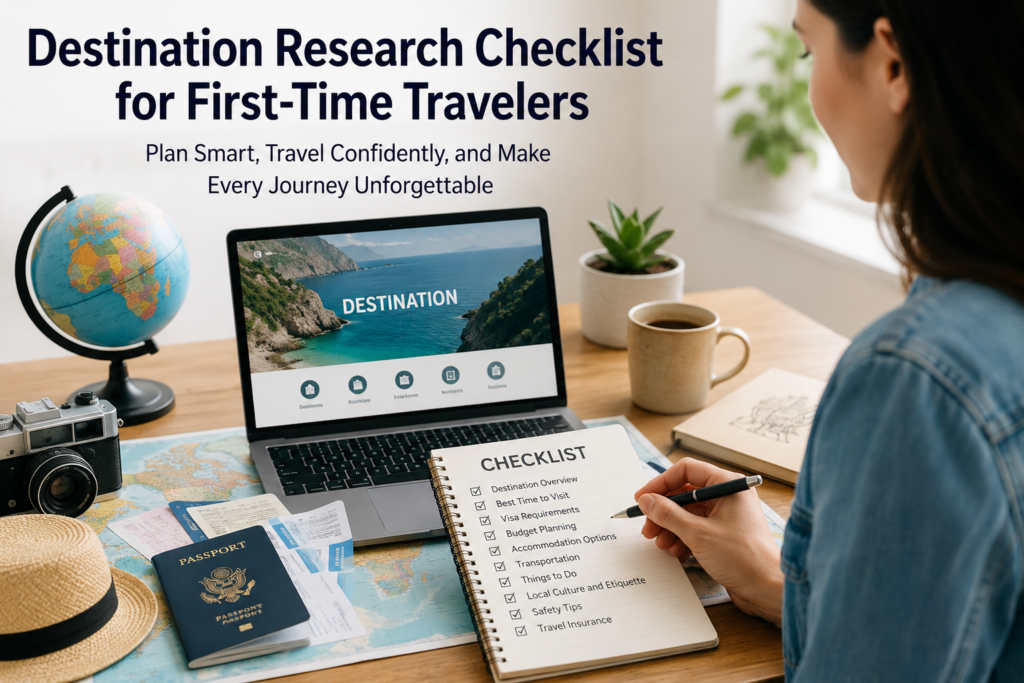
A destination research checklist is one of the simplest tools a first time traveler can use to prepare for a better trip. From visa requirements and weather to accommodation, transportation, safety, local culture, food, budgeting, and travel insurance, each part of your research can help you avoid unnecessary problems.
From my experience, the best travel preparation is not about creating a perfect itinerary. It is about understanding your destination well enough to feel comfortable and flexible when you arrive.
Take some time to research before booking, use reliable sources for important information, and leave room for spontaneous experiences. When you know the basics, you can spend less time worrying about logistics and more time enjoying the destination.
A little research before your journey can give you something every first time traveler needs: confidence.