 travelandlearns
Related Articles



Choosing between two travel destinations can be harder than it looks. Both places may have beautiful views, interesting attractions, great hotels, and plenty of things to do. When I plan a trip, I do not like to choose a destination only because it looks good in pictures. I prefer to compare the important details first and then decide which place matches my budget, travel style, and expectations.
If you are trying to decide between two destinations, a simple travel destination comparison can make the decision much easier. You can compare the cost, weather, attractions, food, transportation, safety, accommodation, and overall experience. The goal is not to find the destination that is best for everyone. The goal is to find the best travel destination for you.
Start With Your Travel Goals
Before comparing two destinations, I think it is important to understand what you actually want from the trip. A destination that is perfect for a family vacation may not be the best choice for a solo traveler. Similarly, someone looking for adventure may not enjoy a destination that is mainly focused on relaxation.
Ask yourself what you want to experience. Do you want beaches and relaxation? Are you interested in history and culture? Do you want hiking, nightlife, shopping, local food, or peaceful surroundings?
For example, if I am looking for a relaxing vacation, I would give more importance to beaches, comfortable hotels, peaceful surroundings, and good weather. If I want an adventure trip, I would focus more on outdoor activities, hiking opportunities, natural attractions, and transportation.
Understanding your travel goals gives you a clear starting point for comparing destinations.
Compare the Travel Budget
One of the most important parts of a travel destination comparison is the total cost. Many travelers only compare flight prices, but the real cost of a vacation includes much more.
Start by checking the price of flights or other transportation. Then compare hotel prices, food, local transportation, attraction tickets, tours, shopping, and other daily expenses.
A destination with cheaper flights may not always be cheaper overall. Sometimes accommodation and restaurants can be more expensive after you arrive. Another destination may have slightly higher airfare but much lower daily expenses.
I recommend creating a simple estimated budget for both destinations. Include transportation, accommodation, food, activities, and an emergency amount. Once you see the numbers together, it becomes much easier to understand which destination offers better value.
Check the Weather and Best Time to Visit
Weather can completely change a travel experience. Before choosing between two destinations, always compare their weather during the dates you are planning to travel.
Look at average temperatures, rainfall, humidity, snowfall, and seasonal conditions. If you are planning a beach vacation, sunny weather may be one of your biggest priorities. If you are planning a mountain trip, you may prefer cooler temperatures and clear skies.
I also recommend checking whether your travel dates fall during the destination’s busy or quieter season. Peak season can bring better weather, but it may also mean higher hotel prices and larger crowds.
The best time to visit a destination depends on what you want to do. There is no single perfect travel season for everyone.
Compare Attractions and Things to Do
The number and type of activities available can make one destination much more suitable than another.
Make a list of the attractions you would genuinely like to visit in both places. Look at museums, historical sites, beaches, national parks, markets, shopping areas, restaurants, hiking trails, theme parks, cultural experiences, and nightlife.
I believe quality is more important than quantity. A destination may have hundreds of attractions, but if they do not match your interests, they may not add much value to your trip.
Think about what you would actually enjoy doing each day. If you prefer nature, choose the destination with better natural attractions. If you love history, look for a place with museums, architecture, and historical landmarks.
This makes your destination comparison more personal and practical.
Compare Accommodation Options
Where you stay can have a major effect on your vacation experience. Compare hotels, guesthouses, apartments, resorts, and other accommodation options in both destinations.
Do not look only at the room price. Check the location, facilities, reviews, breakfast options, cleanliness, cancellation policies, and distance from major attractions.
A cheap hotel far away from everything may end up costing more because you spend extra money and time on transportation. A slightly more expensive hotel in a central location may provide better overall value.
For families, facilities such as larger rooms, kitchens, swimming pools, and family friendly services can be important. For solo travelers, location, public transportation, and safety may matter more.
Compare Food and Local Cuisine
Food is one of my favorite parts of traveling, so I always consider it when comparing destinations. Every place has its own food culture, and sometimes the cuisine can become one of the highlights of the entire trip.
Compare the variety, average prices, local specialties, restaurants, street food, and options for different dietary needs.
You should also consider whether you want an international food scene or an authentic local experience. Some destinations are famous for fine dining, while others are better known for affordable street food and traditional markets.
If trying local food is an important part of your vacation, give this category more weight when making your final decision.
Look at Transportation and Accessibility
Transportation is another factor that is easy to overlook. A destination may look perfect, but getting around can become frustrating if public transportation is limited or distances between attractions are large.
Compare airport access, trains, buses, taxis, rental cars, walking conditions, and local transportation costs.
I usually prefer destinations where I can move around easily without wasting several hours every day in traffic. If you are planning to visit multiple attractions, convenient transportation can make your trip much more enjoyable.
Also consider how long it takes to reach the destination from your home. A destination that requires several flights and long connections may not be worth it for a short vacation.
Compare Safety and Convenience
Safety should always be part of your travel destination comparison. Research the general safety situation, common tourist problems, transportation conditions, local laws, and areas where travelers should take extra care.
Also consider practical issues such as language, internet access, payment methods, healthcare facilities, and availability of tourist information.
A destination that is easy to understand and navigate can make your trip less stressful, especially if it is your first international vacation.
You do not need to become worried about every possible problem. The idea is simply to understand the destination before you travel and prepare accordingly.
Compare the Overall Travel Experience
Sometimes two destinations look almost equal when you compare individual categories. This is when I think about the overall experience.
Imagine yourself spending five or seven days in each destination. Which place sounds more exciting? Which one fits your personality? Which one gives you more opportunities to create the kind of memories you want?
Travel is not only about prices, attractions, and hotel ratings. It is also about atmosphere and personal connection.
One destination may have beautiful beaches, while another may have impressive architecture. One may feel peaceful, while another may be energetic and crowded. Neither is automatically better. It depends on what you want from your vacation.
Make a Simple Comparison Score
If you are still confused, create a simple scoring system. Give each destination a score from one to ten for categories such as budget, weather, accommodation, activities, food, transportation, safety, culture, and overall experience.
For example, if Destination A has excellent food but expensive hotels, you can give it a high food score and a lower accommodation score. Do the same for Destination B.
You can also give extra importance to the categories that matter most to you. If budget is your biggest concern, give cost more weight. If you are traveling with children, give accommodation, safety, and family activities more importance.
This method turns an emotional decision into a practical one while still allowing your personal preferences to guide the final choice.
Consider the Length of Your Trip
The number of days you have can also affect your decision. Some destinations are ideal for a short weekend because the major attractions are close together. Others require more time because of long travel distances.
If you only have three days, I would usually choose a destination that is easy to reach and simple to explore. If you have two weeks, you can consider a larger destination with more attractions and different regions to explore.
Always compare the destination with the amount of time you actually have.
Think About Your Travel Companions
Your travel companions should also influence your decision. A destination that works well for couples may not be ideal for children or older family members.
Talk to the people traveling with you and understand their expectations. One person may want adventure while another wants relaxation. A good destination should offer enough variety for everyone.
This is especially important when planning a group vacation because a destination should not be chosen according to only one person’s preferences.
My Final Approach to Comparing Destinations
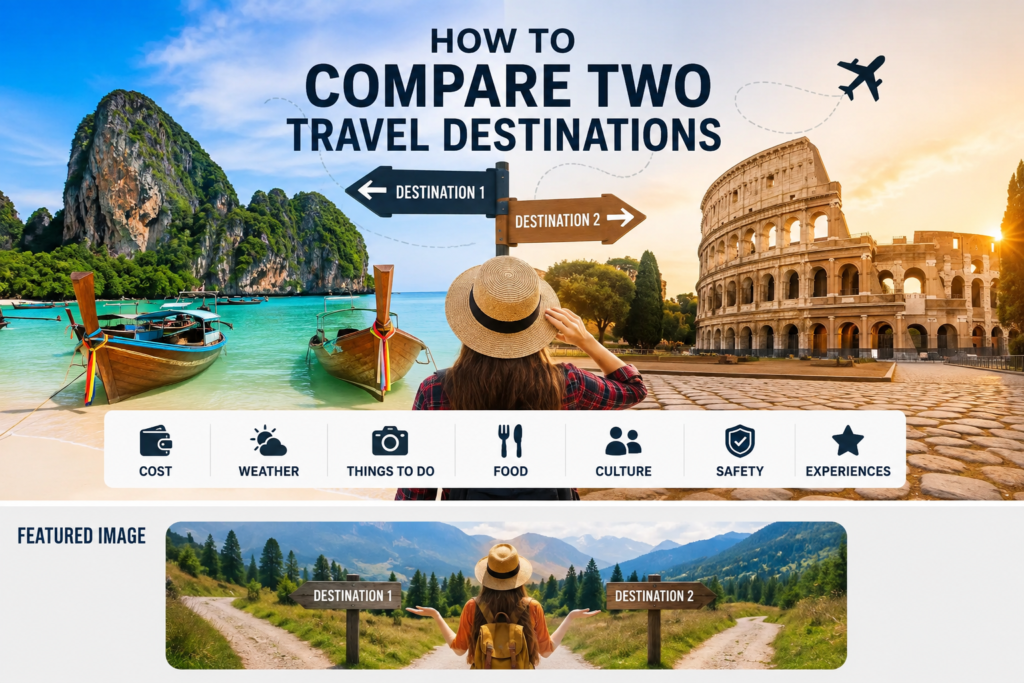
When I compare two travel destinations, I try not to focus on one attractive feature. A beautiful beach or famous landmark can be enough to catch my attention, but it is not enough to make the final decision.
I compare the total cost, weather, activities, accommodation, food, transportation, safety, travel time, and overall experience. Then I think about which destination matches my personal travel goals.
The most important thing to remember is that there is no universally perfect destination. The best travel destination is the one that fits your budget, interests, schedule, and travel style.
A little research before booking can save money, reduce stress, and help you enjoy your vacation more. So, instead of asking which destination is better, ask a more useful question: Which destination is better for me?
Once you answer that question, comparing two travel destinations becomes much simpler, and your final travel decision becomes more confident and meaningful.