 travelandlearns
Related Articles


Traveling to a new destination is exciting, but I believe good research can make the experience much better. When I plan a trip, I do not like to book everything immediately. I first try to understand the destination, including its weather, culture, transportation, attractions, accommodation, food, and general travel costs.
A few hours of research can sometimes save a lot of money, time, and unnecessary stress. It can also help you discover places that you might never find by simply following a popular travel list.
In this guide, I am sharing how to research a destination before traveling in a simple and practical way. These are the steps I personally find useful when preparing for a trip.
1. Start With Basic Information
Before making any serious travel plans, I always begin with the basics. Find out where the destination is located, what country it belongs to, what language is commonly spoken, what currency is used, and what the general climate is like.
This information gives you a basic understanding of what to expect.
For example, if you are traveling to a place with a different climate, your packing list may need to change completely. A destination that looks warm in photographs might have cool evenings or unpredictable weather during your travel dates.
I also like to learn a little about the local culture. Understanding basic customs can help you behave respectfully and avoid uncomfortable situations.
You do not need to become an expert before traveling. Even learning a few simple facts can make you feel more prepared.
2. Research the Best Time to Visit
One of the most important parts of destination research is choosing the right time to visit.
Every destination has different seasons, and the experience can change significantly depending on when you travel. Some places are best during spring or autumn, while others are particularly popular during summer or winter.
I usually compare the weather, tourist crowds, prices, and activities available during different months.
For example, if your main reason for visiting a destination is hiking, you should research when the trails are accessible. If you want a beach vacation, check the rainy season and average temperatures.
Peak season can offer excellent weather, but it may also mean higher hotel prices and larger crowds. Traveling during the shoulder season can sometimes provide a good balance between comfortable weather and reasonable prices.
3. Check Visa and Entry Requirements
Before booking flights, I strongly recommend checking the official entry requirements for your destination.
Depending on your nationality and destination, you may need a visa, electronic travel authorization, passport validity, proof of accommodation, travel insurance, or other documents.
Do not rely only on old blog posts for this information because entry rules can change.
I prefer checking official government or embassy sources close to the time of travel. Also check whether your passport needs a certain amount of remaining validity.
This is one area where proper research is much better than making assumptions. A beautiful travel plan does not help if you cannot enter the country.
4. Research the Main Attractions
Once I understand the basics, I start looking at the places I actually want to visit.
Search for the major attractions, but do not stop there. Famous landmarks are popular for a reason, but there may also be smaller museums, local markets, parks, neighborhoods, viewpoints, restaurants, and cultural experiences worth exploring.
I like making two lists.
The first list contains the places I definitely want to see. The second contains optional attractions that I can visit if I have enough time.
This approach keeps the itinerary flexible. You do not have to visit every attraction in a city to have a great trip.
5. Look Beyond Tourist Attractions
One of my favorite parts of researching a destination before traveling is discovering experiences that are not always mentioned in basic travel guides.
Search for local neighborhoods, traditional markets, walking routes, small restaurants, parks, cafés, and cultural activities.
Travel blogs and videos can be useful for getting ideas, but I also like reading comments from people who have actually visited the destination.
Sometimes a small local market or quiet neighborhood can become more memorable than a famous tourist attraction.
I think this is one of the best ways to make a trip feel personal instead of simply following a standard itinerary.
6. Research Transportation
Transportation is another area I always research before traveling.
Find out how you will get from the airport or train station to your accommodation. Then research how you will travel around the destination.
Depending on the location, you may have access to trains, buses, taxis, ride sharing services, rental cars, bicycles, or walking routes.
I recommend checking approximate travel times between attractions before creating your itinerary. Two places may look close together on a map but could take much longer to reach because of traffic or limited public transportation.
Understanding transportation in advance can save you a lot of time during your vacation.
7. Compare Accommodation Carefully
Choosing a hotel or other accommodation is not simply about finding the lowest price.
When I research accommodation, I look at the location first. A cheaper hotel far away from the main attractions may cost more overall because of transportation expenses and lost time.
I also check recent reviews, room details, cancellation policies, available facilities, and the surrounding neighborhood.
Read both positive and negative reviews. Pay attention to repeated comments because they can reveal useful information about noise, cleanliness, location, or service.
A well located and comfortable place to stay can make a major difference to your travel experience.
8. Research the Local Food
Food is an important part of travel for me, so I always research local dishes before visiting a destination.
I usually make a short list of foods I want to try. This can include traditional meals, desserts, street food, drinks, and regional specialties.
Researching food can also help you understand the local culture.
If you have dietary restrictions or allergies, this research becomes even more important. Learn the local words for ingredients that you need to avoid and identify restaurants that can accommodate your requirements.
I also recommend checking several restaurant reviews rather than trusting a single rating.
9. Create a Realistic Travel Budget
One of the most useful things you can learn through destination research is how much your trip is likely to cost.
Start with the major expenses such as flights, accommodation, transportation, food, attractions, and travel insurance.
Then consider smaller expenses that are easy to forget. These might include airport transportation, local SIM or data costs, luggage fees, tips, snacks, and souvenirs.
I prefer creating a daily spending estimate rather than setting only one total budget.
It is also smart to keep some extra money available for unexpected expenses. A little flexibility can prevent financial stress if something changes during the trip.
10. Read Recent Travel Reviews
Travel reviews can be extremely helpful, but I believe you should read them carefully.
Look for recent experiences rather than relying on reviews from many years ago. Hotels, restaurants, transportation systems, and attractions can change over time.
I like comparing information from several sources. Travel blogs can provide personal experiences, official websites can provide important rules, and traveler reviews can give practical details.
No single source is perfect. Comparing different opinions helps you build a more realistic picture of the destination.
11. Learn About Local Customs and Safety
Before traveling, take some time to understand local customs and basic safety information.
Research appropriate clothing, photography rules, tipping practices, public behavior, and cultural expectations.
Also identify common tourist scams and areas where visitors should exercise additional caution.
This does not mean you should be afraid of traveling. I believe the purpose of safety research is simply to help you stay aware and make sensible decisions.
Keep important documents secure and avoid carrying unnecessary valuables when exploring busy areas.
12. Check Internet and Mobile Options
Staying connected can be useful when traveling, especially if you rely on digital maps, translation tools, transportation apps, or online reservations.
Before leaving, research whether your mobile provider offers international roaming and compare it with local SIM or eSIM options.
I also recommend downloading important information for offline use. Having offline maps, accommodation details, booking confirmations, and important contact information can be helpful if your internet connection stops working.
13. Build a Flexible Itinerary
After completing your research, it is time to create a travel plan.
I recommend keeping your itinerary realistic. Instead of trying to visit ten places in one day, choose a few important activities and leave some free time.
Group attractions that are located near each other. This can reduce transportation time and give you more time to actually enjoy each place.
I also like keeping one or two flexible periods in my schedule. These can be used for unexpected discoveries, rest, shopping, or returning to a place I particularly enjoyed.
The best travel memories are not always planned.
Final Thoughts
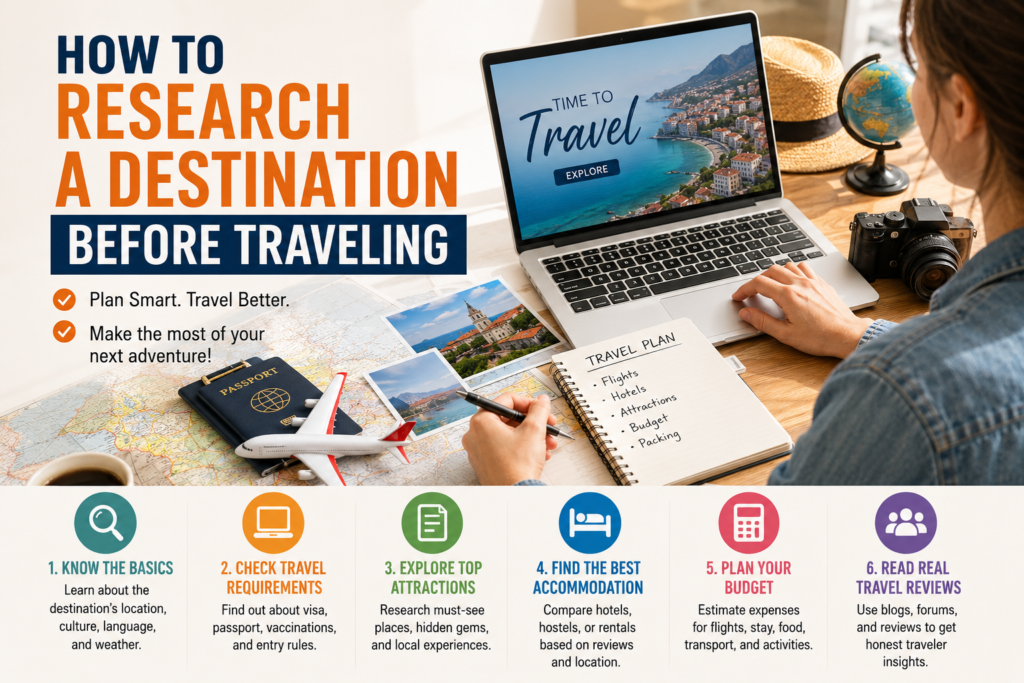
Knowing how to research a destination before traveling can make your entire trip more enjoyable. Good research helps you understand the weather, entry requirements, transportation, accommodation, food, attractions, local customs, safety, and expected costs.
For me, research is not about planning every minute of a vacation. It is about knowing enough to travel with confidence while still leaving room for spontaneity.
Start by learning the basics, check the best time to visit, confirm official travel requirements, research attractions, compare accommodation, understand transportation, plan your budget, and read recent traveler experiences.
Most importantly, do not let research become stressful. The goal is to prepare yourself, not to remove all the surprises from travel.
A well researched trip gives you the freedom to enjoy your destination rather than spending your vacation trying to solve problems that could have been avoided. With a little preparation before you leave home, you can travel more confidently, spend your money wisely, and focus on what really matters: exploring new places and creating memories that stay with you long after the journey ends.