 travelandlearns
Related Articles

Traveling to another country for the first time can be exciting, but the immigration process can also feel confusing. When I was learning about international travel, one of the things that seemed difficult was understanding what actually happens after landing at another country’s airport. Many first time travelers worry about what questions they will be asked, which documents they need, and how long immigration will take.
The good thing is that the immigration process is usually straightforward when you prepare properly. In my opinion, most of the stress comes from not knowing what to expect. Once you understand the basic steps, you can approach the immigration counter with much more confidence.
In this guide, I will explain the immigration process for first time travelers in simple language, including what to prepare before your flight, what happens at the airport, what immigration officers may ask, and what you should do after receiving entry permission.
What Is Immigration?
Immigration is the process through which a country checks people who are entering or leaving its territory.
When you arrive in another country, immigration officers check your travel documents and confirm whether you meet the requirements to enter. They may check your passport, visa, travel purpose, accommodation details, and other information depending on the destination.
It is important to understand that having a visa does not always mean automatic entry. A visa generally allows you to travel to a country and request entry, while the final decision at the border is made according to that country’s immigration rules.
This is why I recommend preparing your documents carefully before traveling.
Check Your Passport Before Traveling
Your passport is one of the most important documents for international travel.
Before your trip, check that your passport is valid for the entire period required by your destination. Some countries also require a certain amount of remaining validity after your planned departure.
Make sure your passport is not damaged and that your personal information is correct.
I also recommend keeping a digital copy of your passport in a secure location. A photocopy can also be useful as a backup, although you should always keep your original passport with you when required.
Check Whether You Need a Visa
Visa requirements depend on your nationality, destination, travel purpose, and length of stay.
Before booking your flight, check the official immigration or embassy information for the country you plan to visit. Do not depend entirely on information from social media or random websites because immigration requirements can change.
If you need a visa, apply through the appropriate official process and make sure the visa information matches your passport.
Check the visa type, validity period, permitted stay, and number of entries.
Understanding these details before your trip can prevent serious problems at the airport.
Prepare Your Travel Documents
Before leaving for the airport, organize the documents you may need.
These can include your passport, visa, flight reservation, hotel booking, travel insurance information, return or onward ticket, and financial documents when applicable.
You may not be asked to show every document, but having them available can make the immigration process easier.
I personally prefer keeping important documents together in one secure travel folder. This saves time when an officer asks for something unexpectedly.
Complete Any Required Arrival Form
Some countries require travelers to complete an arrival card, declaration form, health form, or electronic travel authorization before or during arrival.
The exact process depends on the destination.
If you are required to complete an online form before traveling, do it through the official government website and keep confirmation details available.
At some airports, forms may be completed electronically after arrival. Follow the signs and instructions provided by airport staff.
What Happens After You Land?
After your plane lands, follow the signs for immigration, passport control, or border control.
If you are connecting to another flight, pay attention to airport instructions because the process can be different depending on whether you are making an international connection or entering the country.
At immigration, you will normally join a queue for the appropriate category of travelers.
Some airports have separate lines for citizens, residents, visa holders, families, or visitors.
Read the signs carefully before choosing a queue.
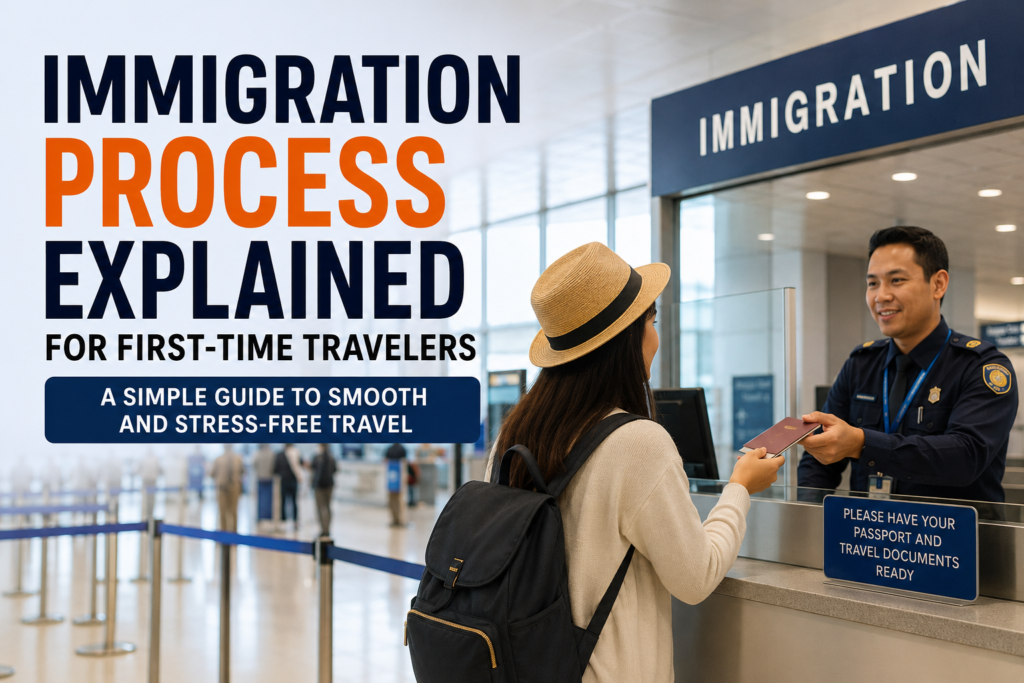
What Happens at the Immigration Counter?
When it is your turn, approach the immigration officer calmly.
The officer will normally ask for your passport and may request other documents.
Depending on the country and your circumstances, the officer may ask questions about your trip.
Common questions can include:
Why are you visiting?
How long will you stay?
Where will you stay?
What places are you planning to visit?
When are you returning?
What is your occupation?
Who are you traveling with?
The purpose of these questions is generally to understand your travel plans and determine whether you meet the entry requirements.
Answer honestly and clearly. There is no need to provide complicated explanations when a simple answer is enough.
Be Honest With Immigration Officers
One of the most important immigration tips for first time travelers is to always provide truthful information.
Do not invent hotel bookings, employment information, travel plans, or other details.
If you do not understand a question, politely ask the officer to repeat it. If you do not know something, say so rather than guessing.
In my opinion, staying calm and honest is much better than trying to give answers that you think the officer wants to hear.
Keep Your Hotel Information Available
First time travelers should keep their accommodation information easily accessible.
An immigration officer may ask where you are staying. You should be able to provide the hotel name and address without searching through hundreds of messages on your phone.
I recommend saving your hotel confirmation in your phone and keeping a printed copy if possible.
If you are staying with friends or family, keep their address and contact details available as well.
Be Ready to Explain Your Travel Purpose
Your travel purpose should be clear.
If you are traveling for tourism, you can simply explain that you are visiting for a vacation or sightseeing. If you are traveling for business, study, family reasons, or another purpose, make sure your documents support the reason for your trip.
The important thing is consistency. Your answers should match your visa and travel documents.
For example, if you have a tourist visa, you should not describe plans that suggest you intend to work illegally.
Immigration May Take Time
Do not assume that immigration will always take only a few minutes.
The process can be quick when the airport is quiet, but busy travel periods can create long queues.
Large airports may also have additional security or document checks.
For this reason, I recommend avoiding very tight connection times when possible. If you have a connecting flight, give yourself enough time to complete immigration, collect baggage if required, pass security again, and reach your departure gate.
Biometric Checks and Photographs
Many countries use technology during immigration, including fingerprints, facial recognition, or digital photographs.
If an officer asks you to provide biometric information, follow the instructions.
The process is normally simple. You may be asked to look at a camera, place your fingers on a scanner, or complete another identity verification step.
Do not worry if the airport uses technology that you have never experienced before. Staff are generally available to guide travelers.
Customs Is Different From Immigration
It is important for first time travelers to understand that immigration and customs are not exactly the same thing.
Immigration focuses mainly on people and their permission to enter the country.
Customs focuses on goods and items you are bringing into the country.
After collecting your luggage, you may need to pass through customs. Some countries have declaration requirements for food, cash, medicines, plants, electronics, or other goods.
Always check the destination’s rules before traveling and declare items when required.
What If an Officer Asks More Questions?
Sometimes an immigration officer may ask additional questions or send you to another area for further inspection.
This does not automatically mean that you have done something wrong.
There can be many reasons for additional questioning, including document verification, random checks, unclear travel information, or the need for more information.
If this happens, remain calm and cooperate with the instructions.
Answer questions honestly and provide the documents requested.
What Happens After Immigration?
Once the immigration officer approves your entry, you can continue through the airport.
Depending on the airport, you may collect your luggage before or after certain border procedures.
Follow the signs for baggage claim, customs, ground transportation, or connecting flights.
After leaving the controlled airport area, you can continue with your travel plans.
At this point, having your hotel address and transportation information ready can make the next step much easier.
Common Mistakes First Time Travelers Should Avoid
There are several simple mistakes that can make international travel more stressful.
One common mistake is failing to check passport validity.
Another is traveling without understanding visa requirements.
Some travelers also forget their accommodation information or cannot clearly explain why they are visiting.
I also recommend avoiding last minute document preparation. Check everything several days before your flight instead of discovering a problem at the airport.
Do not hide information from immigration officers and do not carry restricted items without checking the rules.
A little preparation can prevent many unnecessary problems.
My Simple Immigration Preparation Tips
Before international travel, I like to keep everything organized.
First, I check my passport validity.
Second, I confirm visa requirements.
Third, I save my flight and accommodation information.
Fourth, I check whether an arrival form or travel authorization is required.
Fifth, I keep important documents accessible.
Finally, I review the entry requirements of the destination shortly before departure because rules can change.
This simple routine can make the immigration process much less stressful.
Final Thoughts
The immigration process may look intimidating when you experience it for the first time, but it is simply an important part of international travel.
The best way to feel confident is to prepare before you leave home. Check your passport, understand your visa requirements, organize your travel documents, know where you are staying, and be prepared to answer basic questions about your trip.
When you reach the immigration counter, stay calm, listen carefully, and answer honestly. If you do not understand something, politely ask for clarification.
Every country has its own immigration rules, so always check the official requirements for your destination before traveling. Rules can change, and requirements may depend on your nationality and travel purpose.
In my view, good preparation is the easiest way to turn immigration from something stressful into a normal part of the travel experience. Once you know what to expect, you can walk through passport control with much more confidence and start enjoying your journey.