 travelandlearns
Related Articles


A layover can feel confusing when you are traveling for the first time. You arrive at an airport that you do not know, you have another flight waiting for you, and suddenly you have to figure out where to go, how much time you have, and whether you need to collect your luggage. I remember that one of the biggest concerns for first time travelers is simply not knowing what happens between two flights.
The good news is that a layover is usually much easier than it sounds. Once you understand how connecting flights work and what you should do during a layover, the airport becomes much less stressful. In this layover guide for first time travelers, I will explain the process in simple terms and share practical tips that can make your journey smoother.
What Is a Layover?
A layover is the time you spend at an airport between two flights. For example, if you fly from Lahore to London with a stop in Doha, your time at Doha Airport is your layover.
A layover can be short or long. Some travelers have only one or two hours between flights, while others may have several hours to relax, eat, shop, or explore the airport.
A layover is different from a stopover because a stopover generally refers to a longer planned stay between flights, often lasting more than a day. For most first time travelers, the important thing is to understand where the next flight leaves from and how much time is available.
How Does a Layover Work?
When you book a connecting flight, your journey usually includes two or more flights. Your first flight takes you to a connecting airport, and your second flight takes you toward your final destination.
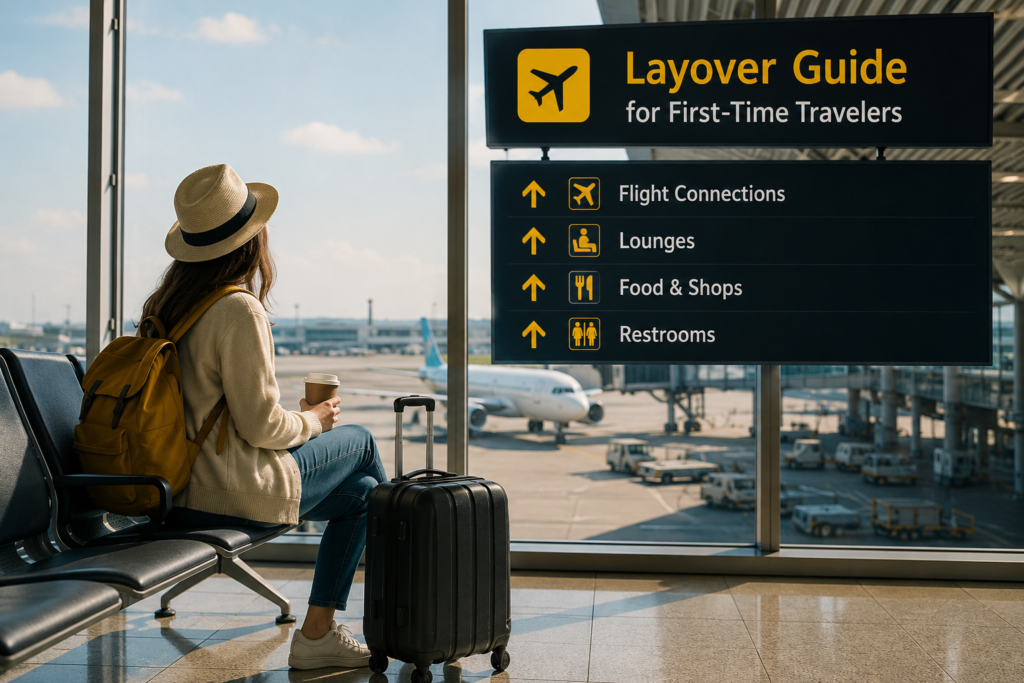
After leaving the first aircraft, you should look for signs showing Flight Connections, Transfers, or Connecting Flights. These signs guide passengers toward the area needed for their next flight.
The most important thing I recommend is checking your next flight as soon as you arrive. Look at the airport information screens and confirm the flight number, destination, departure time, and gate.
Do not rely only on the gate number printed on your boarding pass because gates can sometimes change.
How Much Layover Time Do You Need?
There is no single perfect layover time because every airport and itinerary is different. A small airport may be easier to navigate than a huge international airport where you need to travel between terminals.
For a domestic connection, a shorter layover may be enough if both flights use the same terminal and airline system. International connections can require more time because you may need additional security checks, immigration, or customs procedures.
When I plan a trip, I prefer having enough time to deal with unexpected delays. A connection that looks comfortable on paper can become stressful if the first flight arrives late.
If you are a first time traveler, avoiding extremely short connections can give you more confidence.
What Should You Do After Landing?
After your first flight lands, do not immediately follow the crowd without checking the signs. Take a moment to understand where you are going.
First, check your next flight on the airport screens. Then look for signs directing you toward connecting flights or your next terminal.
If airport staff are available, you can also ask for help. You can simply show your boarding pass and say that you have a connecting flight. Airport employees deal with this situation every day and can normally point you in the right direction.
Keep your passport, boarding pass, and other important travel documents easily accessible. You do not want to search through your luggage while standing in a busy airport.
Do You Need to Collect Your Baggage During a Layover?
This is one of the most common questions for first time travelers.
In many cases, checked luggage is transferred automatically to your final destination when your flights are booked together. However, this is not always the case.
Your baggage rules can depend on the airline, ticket, airport, country, and type of connection. Some international connections require passengers to collect their luggage and clear customs before checking it again.
The safest approach is to ask at the original check in counter. Ask clearly whether your checked baggage will go directly to your final destination.
You can also check the baggage tag given to you at check in. The destination shown on the tag can provide useful information, although asking the airline staff is still the best option when you are unsure.
International Layover and Immigration
International layovers can involve additional procedures. Depending on the countries involved, you might have to pass through immigration, security, or customs before reaching your next flight.
Do not assume that every international connection works the same way. Airport procedures vary from one location to another.
If your connection requires immigration, make sure you have the necessary travel documents and visas. This is especially important when your layover takes place in a country where you may technically enter the country before continuing your journey.
If you are unsure, ask an airport employee or airline representative before leaving the designated transit area.
Should You Leave the Airport During a Layover?
This depends mainly on the length of your layover and the entry requirements of the country you are visiting.
For a short layover, I normally recommend staying inside the airport. Leaving the airport takes time because you may need to pass immigration, travel into the city, and return early enough for your next flight.
A longer layover can sometimes make leaving the airport possible, but you should carefully consider transportation time, traffic, security procedures, and visa requirements.
First time travelers should be especially careful with this decision. Missing a connecting flight because you underestimated travel time can turn a simple layover into a major problem.
What Can You Do During a Layover?
A layover does not have to be boring. If you have enough time, you can use it to relax and prepare for the next part of your trip.
You can find a comfortable seating area, have a meal, drink coffee, charge your devices, or visit an airport lounge if you have access.
Some large airports also have shopping areas, restaurants, sleeping facilities, showers, and quiet spaces.
If your layover is several hours long, walking around the terminal can also help you stay comfortable after sitting on a plane.
However, I always recommend keeping an eye on the departure screens. It is easy to become distracted when you are eating or shopping and forget that boarding time is approaching.
Keep Your Important Items With You
During a layover, your personal belongings should remain close to you.
Keep your passport, wallet, phone, boarding pass, money, and other important documents in your carry on bag or personal item.
If you decide to sleep at the airport, be careful with your belongings. Do not leave valuable items unattended.
I also recommend keeping a small collection of essential items in your carry on luggage. This can include medication, charging cables, a power bank where permitted, basic toiletries, headphones, and a change of clothes.
These items can become extremely useful if your checked baggage is delayed.
How to Find Your Next Gate
Finding your next gate is one of the most important tasks during a layover.
Start by checking the airport departure screens. Search for your flight number rather than relying only on the destination because several flights may be going to the same city.
Once you know your gate, follow the signs throughout the terminal.
Large airports can have long walking distances, trains, shuttle buses, or separate terminals. Give yourself enough time to reach the gate.
Remember that your gate can change after you have checked it. Keep checking the airport screens until you are comfortably settled near the correct departure area.
What If You Miss Your Connecting Flight?
Missing a connecting flight can be stressful, but try not to panic.
If both flights were booked together as one itinerary and the delay was caused by the airline or another covered travel disruption, the airline may be able to help you find another flight.
Go to the airline desk or speak with an airline representative as soon as possible. Keep your booking information and boarding pass available.
If you booked separate tickets, the situation can be more complicated because the airlines may treat the flights as separate journeys.
This is another reason I prefer leaving enough time between flights whenever possible.
Simple Layover Tips for First Time Travelers
My biggest advice is to stay organized. Before your trip, know your flight numbers, connection airport, terminal information, and approximate layover duration.
When you land, check your next flight immediately.
Keep your travel documents accessible.
Follow airport signs instead of simply following other passengers.
Ask for help if you are confused.
Do not spend your entire layover far away from your gate.
Keep your phone charged because you may need it for flight information, communication, or your boarding pass.
Most importantly, do not panic if the airport feels confusing. Almost every major airport has clear signs and staff who can help passengers.
Final Thoughts
A layover may seem complicated when you have never experienced one, but it becomes much easier once you know what to expect. The basic process is simple: leave your first aircraft, check your next flight, follow the signs for connections, complete any required security or immigration procedures, find your gate, and wait for your next flight.
The most important part of a successful layover is giving yourself enough time. A few extra hours can be much more comfortable than rushing through a large airport.
From my point of view, the best way to handle your first layover is to stay calm, stay organized, and keep checking your flight information. Once you complete your first connecting flight successfully, future layovers will probably feel much more normal.
A layover is not something you need to fear. It is simply a short part of your journey between two flights. With basic preparation and a little patience, you can use the time to rest, eat, explore the airport, and prepare for the next part of your adventure.