 travelandlearns
Related Articles


Flying for the first time can feel confusing, especially when you receive a boarding pass filled with letters, numbers, codes, and airport information. I remember how easy it is for a first time flyer to look at a boarding pass and wonder what everything means. The good thing is that a boarding pass is actually quite simple once you understand the important sections.
In this boarding pass guide for first time flyers, I will explain what a boarding pass is, how to read it, where to find your gate and seat, what the boarding group means, and what you should do at the airport. My goal is to make the process easier so you can travel with more confidence.
What Is a Boarding Pass?
A boarding pass is the document or digital pass that confirms you are allowed to board your flight. Airlines usually provide it after you complete check in. You can receive a printed boarding pass at the airport or use a digital boarding pass on your smartphone.
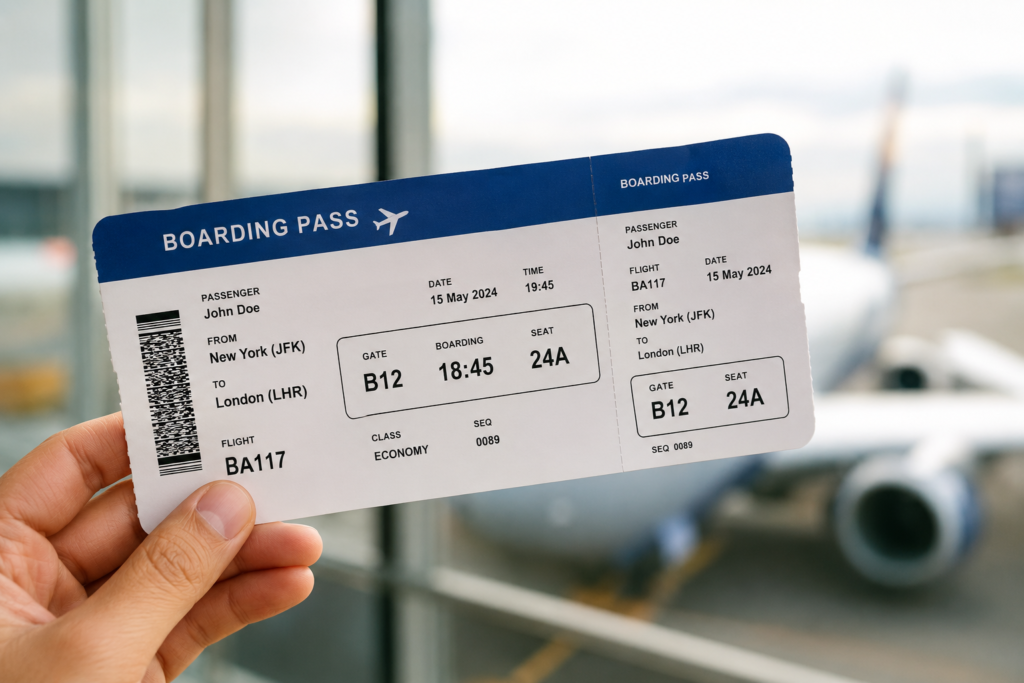
A boarding pass normally contains important information about your flight. This can include your name, airline, flight number, departure airport, destination, date, boarding time, gate, seat number, boarding group, and a barcode or QR code.
For first time flyers, the most important thing is not to worry about understanding every number. You mainly need to know where your flight is going, when you need to board, which gate you should use, and where your seat is located.
How Do You Get a Boarding Pass?
There are several ways to get a boarding pass. The most common method today is online check in through the airline website or mobile application. Depending on the airline, online check in may open one or more days before departure.
During online check in, you normally confirm your travel information and may select or confirm your seat. After completing the process, the airline provides your boarding pass digitally.
If you prefer a printed document, you can usually print it yourself or request one from the airline check in counter at the airport.
I personally recommend keeping both a digital and printed option when possible, especially for an international trip. A phone battery problem or technical issue can make a digital boarding pass inconvenient, so having a backup can give you extra peace of mind.
Understanding Your Name on the Boarding Pass
The first thing I recommend checking is your name.
Your boarding pass should match the passenger information associated with your booking and travel documents. For international flights, it is particularly important to make sure your passport information and booking details are correct.
If you notice a serious spelling problem or another important error, contact the airline as soon as possible. Do not wait until the last minute at the airport if the problem can be handled earlier.
Finding Your Flight Number
Your flight number is another important detail on your boarding pass.
It usually contains an airline code followed by several numbers. For example, you might see something like AB123. The exact format depends on the airline.
Your flight number helps you identify your flight on airport departure screens. Airports can have many flights leaving at similar times, so checking the flight number is often more reliable than looking only at the destination.
When you arrive at the airport, compare your boarding pass with the departure information displayed on the airport screens.
Understanding the Departure Airport and Destination
Your boarding pass will show where your flight is departing from and where it is going.
For example, if you are flying from Lahore to Dubai, the boarding pass may display airport codes such as LHE and DXB. These codes are used internationally to identify airports.
As a first time flyer, I recommend becoming familiar with your airport codes before reaching the airport. This can make checking departure screens much easier.
Also remember that a large city can have more than one airport. Always confirm the exact airport shown on your ticket and boarding pass.
Where Can You Find Your Gate?
The gate is one of the most important pieces of information on your boarding pass.
The gate tells you where you should go to board your aircraft. It may be represented by a letter and number, such as A12 or B7.
However, there is one important thing to remember. Your gate can sometimes change after your boarding pass has been issued.
For this reason, I never recommend relying only on the gate printed on your boarding pass. Check the airport departure screens regularly, especially after passing through security.
If your boarding gate changes, follow the updated airport information.
Understanding Your Seat Number
Your seat number tells you where you will sit on the aircraft.
A seat might be shown as 12A, 18C, or 24F. The number represents the row, while the letter identifies the specific seat in that row.
Your seat could be near the window, middle, or aisle depending on the aircraft layout.
If you are unsure where to go after entering the aircraft, do not hesitate to ask a flight attendant. They can quickly help you locate your seat.
What Does Boarding Time Mean?
Boarding time is the time when passengers are expected to begin getting onto the aircraft.
This is different from the departure time.
For example, if your flight leaves at 8:00 PM, boarding might begin at 7:20 PM. You should be near the gate before boarding starts rather than arriving at the last minute.
One mistake I see first time flyers making is focusing only on the departure time. Your goal should be to reach the gate early enough to complete the boarding process comfortably.
What Is a Boarding Group?
Some airlines divide passengers into boarding groups, zones, or priority categories.
Your boarding pass may show something like Group 2, Zone 4, or another boarding category.
The airline uses these groups to organize passengers as they enter the aircraft. Listen for announcements at the gate and wait for your group to be called.
There is usually no need to rush toward the gate immediately when boarding begins. Simply follow the instructions from the airline staff.
What Is the Barcode or QR Code?
Most modern boarding passes contain a barcode or QR code.
This code contains information that airport and airline systems can scan. You may need to show it at security, immigration, or the boarding gate depending on the airport and route.
If you are using a digital boarding pass, make sure your phone screen is bright enough for scanning. I also recommend saving the boarding pass to your phone before arriving at the airport so you are not dependent on an internet connection.
Digital Boarding Pass or Printed Boarding Pass?
Both options can work well.
A digital boarding pass is convenient because you can keep it on your smartphone. It saves paper and makes it easy to access your flight information.
A printed boarding pass can be useful if you prefer physical documents or if your phone battery is low.
For international travel, requirements can vary between airlines and airports. Some airports may also require additional document checks even when you have a digital boarding pass.
My advice is simple. Use whichever option your airline and airport accept, and keep your important travel documents accessible.
What Should You Do With Your Boarding Pass at the Airport?
Once you have your boarding pass, keep it somewhere easy to access.
At different stages of your journey, you may need to show your boarding pass. Depending on your flight, this can include airport security, immigration, airline staff, and the boarding gate.
After arriving at the airport, first confirm your departure terminal and flight information. Then complete check in if you have not already done so.
After check in, follow the signs for security and immigration if required. Once you are inside the departure area, check the airport screens for your gate.
Then walk toward your gate and stay nearby while waiting for boarding.
Boarding Pass for Connecting Flights
If you have a connecting flight, your boarding pass situation can be slightly different.
You may receive boarding passes for both flights during your first check in. In some situations, you may need to obtain the second boarding pass at the connecting airport.
Always check the information for each flight separately.
Your first boarding pass might show one flight number, gate, and seat, while the second boarding pass contains completely different information.
If you are unsure, ask the airline staff at the airport. It is better to ask a simple question than to accidentally miss an important step during a connection.
What If You Lose Your Boarding Pass?
Do not panic if you lose your boarding pass.
If you are using a digital boarding pass, you may be able to access it again through the airline application or website.
If you have a printed boarding pass and lose it, visit the airline counter or another designated service point. Staff can usually help you obtain another copy if you have completed the required check in process.
This is another reason I recommend keeping your booking reference and passport accessible during your trip.
Common Boarding Pass Mistakes First Time Flyers Should Avoid
One common mistake is confusing the boarding time with the departure time. Remember that boarding normally starts before the scheduled departure.
Another mistake is not checking the gate after entering the airport. Gates can change, so keep an eye on the airport screens.
Some travelers also put their boarding pass deep inside their luggage. This can make the airport experience unnecessarily stressful. Keep it somewhere convenient.
Finally, do not share clear photos of your boarding pass publicly. Boarding passes can contain personal travel information and codes that you should keep private.
Final Thoughts
A boarding pass may look complicated at first, but it is simply a guide that helps you complete your journey through the airport and onto the aircraft.
For first time flyers, I recommend checking a few key details before leaving for the airport. Confirm your name, flight number, destination, departure time, boarding time, gate, and seat. Once you arrive, continue checking the airport screens because gates and other information can change.
Most importantly, do not feel embarrassed about asking airport or airline staff for help. Everyone was a first time flyer once. If you stay organized, keep your boarding pass accessible, and pay attention to airport announcements, the process becomes much easier.
Your boarding pass is not something you need to fear. Once you understand what each section means, it becomes one of the simplest and most useful documents you will have during your flight.
Frequently Asked Questions
Do I need a boarding pass to fly?
Yes. You generally need a valid boarding pass to proceed through the required airport checks and board your aircraft, although the exact process varies by airport and airline.
Can I use my phone as a boarding pass?
Yes, many airlines and airports accept digital boarding passes. However, requirements can vary, so check your airline’s instructions before traveling.
Is the boarding time the same as the flight departure time?
No. Boarding usually begins before departure. You should be at your gate before the boarding time shown on your travel information.
What happens if my gate changes?
Check the airport departure screens and follow the latest instructions from airport or airline staff. Gate changes are possible, so do not rely only on the original gate information.
Where can I find my seat?
Your seat number is normally printed on your boarding pass. A number such as 18A means row 18 and seat A.
Should I print my boarding pass?
A printed boarding pass is not always necessary if your airline and airport accept digital boarding passes. However, having a backup can be useful during travel.