 travelandlearns
Related Articles


When I started learning about international travel, one thing that seemed simple but actually required a little attention was checked baggage. Most travelers know that they can take a suitcase with them on a flight, but the rules about weight, size, restricted items, baggage fees, and lost luggage can sometimes be confusing.
In my experience, understanding checked baggage before reaching the airport makes the whole travel process much easier. Instead of standing at the check in counter wondering whether your suitcase is too heavy or whether something inside is allowed, you can arrive prepared and confident.
This checked baggage guide for international travelers explains the most important things you should know before your next international flight.
What Is Checked Baggage?
Checked baggage is a suitcase or bag that you give to the airline at the airport before your flight. The airline places a baggage tag on it and sends the bag into the airport baggage handling system. You do not keep the checked bag with you during the flight.
After you arrive at your destination, you normally collect your checked baggage from the baggage claim area.
Checked baggage is different from carry on baggage. Carry on luggage stays with you inside the aircraft cabin, while checked baggage travels in the aircraft baggage compartment.
For international travelers, checked baggage is especially useful when you are carrying clothes, shoes, larger personal items, or other belongings that would not fit comfortably into a carry on bag.
Check Your Airline Baggage Allowance
One of the first things I recommend doing before packing is checking your airline’s baggage allowance. There is no single international baggage rule that applies to every airline.
Your baggage allowance can depend on your airline, ticket type, travel class, destination, frequent flyer status, and the specific fare you purchased.
Some tickets include one checked bag, while others may include two. Some low cost fares may not include checked baggage at all.
The most important information to check is the number of bags allowed, maximum weight per bag, maximum dimensions, and additional baggage fees.
Do not assume that the baggage allowance from one airline will apply to another airline. Even when two airlines operate similar international routes, their baggage policies can be different.
How Much Can a Checked Bag Weigh?
Weight is one of the most important checked baggage rules.
Many international airlines use a maximum weight of around 23 kilograms for standard economy checked bags, while some fares and travel classes may allow heavier bags. However, the exact limit depends on your airline and ticket.
If your suitcase is over the permitted weight, you may have to remove some items or pay an excess baggage charge.
I personally think it is better to leave a little space under the weight limit rather than packing right up to it. A suitcase that weighs 22 kilograms at home can become heavier after you add a few last minute items at the airport.
A small luggage scale can be very useful for international travelers. It allows you to check the weight before leaving home and gives you a much better idea of whether you need to rearrange your belongings.
Check the Size of Your Suitcase
Weight is not the only thing airlines consider. Your checked suitcase also needs to meet the airline’s size requirements.
Airlines commonly calculate checked baggage size by adding the length, width, and height of the suitcase. Some airlines use a maximum total dimension, while others may provide specific measurements.
Before buying a new suitcase, I recommend checking your airline’s official baggage rules first. A suitcase can look perfectly normal but still exceed the airline’s permitted dimensions.
Remember that wheels, handles, and other parts of the suitcase may also be considered when measuring baggage.
What Should You Pack in Checked Baggage?
Checked baggage is ideal for items that are permitted but are not convenient to carry inside the aircraft cabin.
Clothing is usually the main thing people pack. Depending on the length of the trip, you can organize shirts, trousers, jackets, shoes, and other personal items inside your suitcase.
To make packing easier, I prefer organizing clothes by category. For example, you can keep daily clothing together, place shoes in separate bags, and keep toiletries in a secure pouch.
It is also useful to leave some space because you may purchase souvenirs or other items during your trip.
However, never use checked baggage as a place to put everything without checking the rules first. Some items are restricted or prohibited in checked baggage.
What Should Not Go in Checked Baggage?
This is one of the most important parts of international baggage preparation.
Certain dangerous goods and other restricted items may not be allowed in checked baggage. Rules can vary depending on the airline, country, and type of item.
Items such as certain batteries, power banks, explosives, flammable substances, and other hazardous materials can have strict restrictions.
Portable power banks and spare lithium batteries are particularly important to check because many airlines require them to be carried in cabin baggage rather than checked baggage.
You should also avoid putting important documents, valuable belongings, cash, essential medication, and irreplaceable personal items into checked baggage.
If your checked suitcase is delayed or lost, you do not want your passport, travel documents, money, or other essential belongings inside it.
Always check your airline’s current restricted and prohibited items list before packing.
Keep Important Items in Your Carry On
One of the best checked baggage tips for international travelers is to keep essential items with you.
Your carry on should contain things you may need during the journey or immediately after arrival.
I recommend keeping your passport, visa documents if required, wallet, phone, chargers, important medication, travel documents, and valuable electronics in your cabin baggage.
It is also smart to keep one change of clothes and basic personal items in your carry on. If your checked baggage is delayed, having these essentials can make the situation much easier.
Think of your checked suitcase as luggage that you can live without for a short period. Your carry on should contain the things you absolutely cannot afford to lose access to.
How to Prepare Your Checked Bag
Before closing your suitcase, check everything carefully.
First, make sure the suitcase is strong enough for international travel. Weak zippers, damaged wheels, and broken handles can create problems during baggage handling.
Second, avoid overpacking. A suitcase that is extremely full can be difficult to close and may put extra pressure on the zipper.
Third, place heavier items toward the bottom of the suitcase when it is standing upright. This can help distribute the weight.
You can also use packing cubes to keep clothes organized. They are especially useful when traveling for several days or visiting multiple destinations.
Make sure liquids are properly secured to reduce the chance of leakage. A bottle that opens inside your suitcase can create a major mess.
Put Your Contact Information on the Bag
A luggage tag is a simple but useful precaution.
Write your name and a reliable contact method on the baggage tag. You can also add your destination information if appropriate.
I also recommend placing some identification information inside the suitcase. If the outside tag becomes damaged or detached, internal identification may still help identify the owner.
Before checking your bag, take a clear photograph of the suitcase. You can also photograph the contents if you want a personal record.
These small steps can become very useful if your baggage is delayed, damaged, or misplaced.
What Happens at the Airport?
At the airport, you normally take your checked baggage to the airline’s check in counter or baggage drop area.
The airline representative or automated system will process your bag and attach a baggage tag.
You should receive a baggage receipt or tag information. Keep this information until you have collected your suitcase at your destination.
The baggage tag contains information that helps the airline identify and route your luggage.
Once your bag has been accepted, it goes through the airport baggage system and is loaded onto the aircraft.
Collecting Your Checked Baggage
After landing at your international destination, follow the airport signs toward baggage claim.
Look at the information screens to find the carousel assigned to your flight. Several flights may be using the same baggage claim area, so check the flight number carefully.
When your suitcase arrives, compare its appearance and identifying information before leaving the baggage area.
Do not simply pick up a bag because it looks similar to yours. Many suitcases have similar designs, colors, and sizes.
Adding a unique luggage strap or tag can make your suitcase easier to identify.
What If Your Baggage Is Delayed or Lost?
Sometimes checked baggage does not arrive when the passenger does. This can be stressful, but the most important thing is to report the problem before leaving the airport baggage area when possible.
Go to the airline’s baggage service desk and explain the situation. You may need to provide your baggage tag information, flight details, and a description of your suitcase.
Keep any baggage claim reference number or documentation provided by the airline.
If your suitcase arrives damaged, report the damage as soon as possible and follow the airline’s instructions for making a claim.
This is another reason why keeping your baggage receipt and taking photographs before your journey can be helpful.
How to Avoid Checked Baggage Problems
A little preparation can prevent many common baggage problems.
Check your airline’s baggage policy before packing. Weigh your suitcase at home. Measure the bag if you are unsure about its dimensions. Remove restricted items and keep valuable belongings in your carry on.
Do not leave your suitcase unlocked if your airline or destination has specific security requirements. Use an appropriate luggage lock when permitted.
Avoid packing fragile and irreplaceable items in checked baggage. Even though baggage handlers take care of luggage, checked suitcases go through a busy transportation system.
Most importantly, do not wait until you reach the airport to discover that your suitcase is overweight.
Final Thoughts
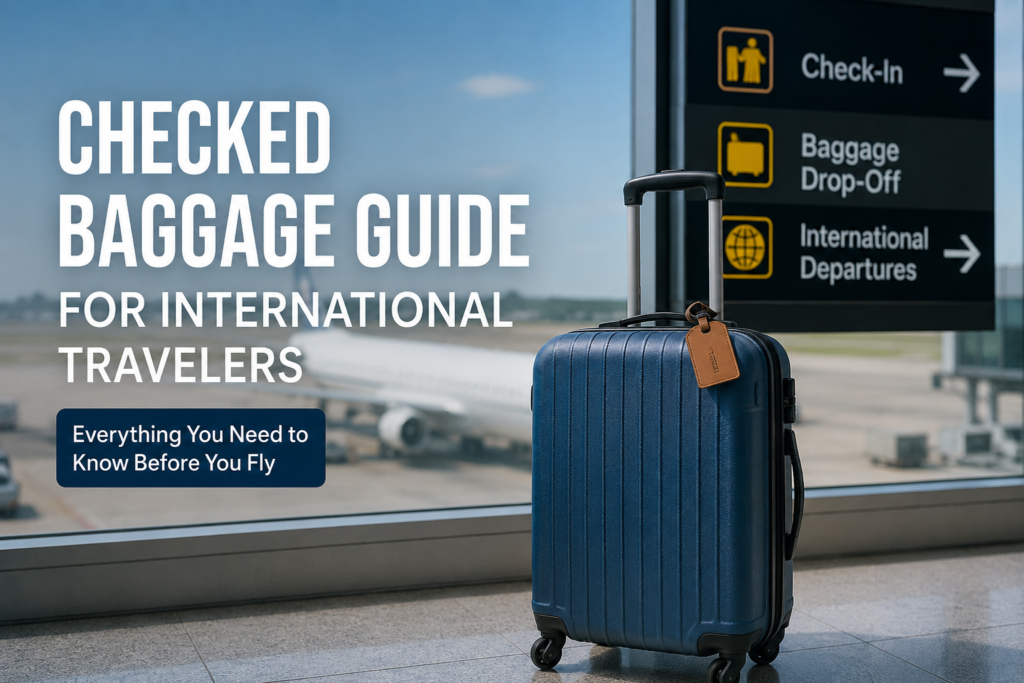
For me, checked baggage is not something that should create stress. The key is simply knowing the rules before you travel.
A good checked baggage plan starts with checking your airline’s baggage allowance, choosing an appropriate suitcase, weighing your luggage, and understanding what you can and cannot pack.
Keep your passport, money, important documents, medication, valuable electronics, and other essential belongings in your carry on. Give your checked suitcase clear identification and keep your baggage receipt until you reach your destination.
International travel already involves several steps, including check in, security, immigration, boarding, and baggage collection. Preparing your checked baggage properly can make one of those steps much easier.
With a little planning, you can arrive at the airport knowing exactly what you are carrying, how much it weighs, and what will happen to your suitcase after you hand it over to the airline. That preparation can make your international journey more comfortable and much less stressful.