 travelandlearns
Related Articles


Traveling for the first time can be exciting, but preparing your travel documents can sometimes feel confusing. Before thinking about flights, hotels, sightseeing, or packing clothes, I believe it is important to make sure all your important documents are ready. A missing document can create unnecessary stress and, in some situations, can even prevent you from boarding your flight or entering another country.
In this travel documents guide for beginners, I will explain the most important documents you may need for domestic and international travel. I will also share some practical tips that I personally find useful when preparing for a trip. The exact requirements can vary depending on your nationality, destination, airline, and purpose of travel, so always check official requirements before your journey.
Why Travel Documents Are Important
Travel documents prove who you are, where you can travel, and whether you have permission to enter a particular country. Airlines, immigration officers, border authorities, hotels, and other organizations may ask for different documents during your journey.
When I prepare for a trip, I like to think about my documents before anything else. Clothes and other items can often be replaced if something goes wrong, but replacing an important travel document while abroad can be much more difficult.
Keeping your documents organized can also make airport procedures much easier. Instead of searching through your luggage at check in, security, or immigration, you can quickly find what you need.
Passport
For international travel, your passport is usually the most important document you will carry.
A passport identifies you as a citizen of your country and allows you to travel internationally. Before booking an international trip, check that your passport is valid for the required period.
Some countries require travelers to have several months of passport validity remaining after their planned arrival or departure date. Entry rules can also differ depending on the destination.
I recommend checking your passport expiry date well before your trip. If it is close to expiring, do not wait until the last moment to renew it.
Also check that your passport is in good physical condition. Damaged passports can sometimes create problems when traveling.
Keep your passport in a secure but easily accessible place during your journey.
Visa
A visa is another important travel document for many international travelers.
A visa gives you permission to travel to a country for a specific purpose and period, depending on the rules of that country. Not every traveler needs a visa for every destination.
Visa requirements can depend on your nationality, destination, reason for travel, length of stay, and other factors.
There are different types of visas, including tourist visas, student visas, work visas, business visas, and transit visas.
Some countries issue electronic visas, while others require travelers to apply through an embassy or official visa application system.
Before traveling, carefully check whether you need a visa and what documents are required for the application.
Do not rely only on information from social media or random websites. Immigration rules can change, so official government sources are the safest place to confirm current requirements.
Airline Ticket and Booking Confirmation
Your airline ticket or booking confirmation contains important information about your journey.
It normally includes your name, flight number, travel date, departure airport, destination, and booking information.
Today, many travelers use electronic tickets rather than printed tickets. You may receive your booking confirmation by email or through an airline application.
Even though digital documents are convenient, I personally recommend keeping an offline copy of your booking details. Your phone battery could run out, you might lose internet access, or an application could stop working temporarily.
You do not necessarily need to print every document, but having a backup can make your journey more comfortable.
Boarding Pass
A boarding pass is used to board your flight. You usually receive it after checking in online or at the airport.
Your boarding pass contains information such as your name, flight number, seat, departure time, and boarding gate when available.
Keep your boarding pass accessible after check in. You may need to show it at security, immigration, the gate, or other airport checkpoints.
If your airline provides a mobile boarding pass, make sure your phone is charged before arriving at the airport.
Proof of Accommodation
Some international trips may require proof of where you will stay.
This can be a hotel reservation, accommodation confirmation, or an invitation from someone you are visiting, depending on the circumstances and destination.
Even when you are not specifically asked to show accommodation details, I think it is useful to keep your reservation information available.
Your booking confirmation should ideally include the property name, address, contact information, and reservation dates.
Having this information ready can also make it easier to answer questions from immigration officers if they ask where you are staying.
Travel Insurance Documents
Travel insurance is not required for every trip, but it can be useful and may be mandatory for certain destinations or visa categories.
Travel insurance can provide coverage for certain unexpected situations, depending on the policy. These may include medical emergencies, trip interruptions, baggage problems, or other covered events.
If you purchase travel insurance, keep your policy information with your other travel documents.
Write down the insurance company contact information and understand how to contact them from abroad.
Do not assume every policy covers everything. Read the policy details before your trip so you understand the conditions and exclusions.
Proof of Funds
Some countries may ask travelers to demonstrate that they have enough money to support themselves during their stay.
Proof of funds can sometimes include bank statements, credit cards, cash, or other accepted financial evidence.
The exact requirements vary by country and visa type.
If you are traveling internationally, it is useful to understand the financial requirements of your destination before leaving home.
Keep financial information secure. Do not share sensitive banking information unnecessarily.
Identification Documents
Depending on your destination and type of trip, you may need additional identification.
A national identity card can be useful, especially for domestic travel where it is accepted.
You may also want to carry a photocopy or secure digital backup of your passport identification page.
Copies are not substitutes for the original documents when originals are required, but they can be useful if your passport is lost or stolen.
I recommend keeping copies separately from the original documents.
Vaccination and Health Documents
Some destinations may have health related entry requirements. These can change according to current regulations and circumstances.
Certain travelers may need vaccination certificates or other health documentation depending on their destination and travel history.
Before your trip, check the official health and immigration information for the country you are visiting.
If you need specific medical documents, keep them with your important travel papers and make sure you understand whether physical or digital copies are accepted.
Documents for Children
Traveling with children can require additional documentation.
Depending on the destination and circumstances, parents or guardians may need passports, visas, birth certificates, consent letters, or other documents.
Requirements can be different when a child is traveling with only one parent or with another adult.
For this reason, families should check the requirements of both their destination and transit countries before traveling.
Preparing these documents early can prevent unnecessary problems at the airport.
Emergency Contact Information
Emergency contact information is something many beginners forget.
I recommend keeping a small list of important contacts with you. This can include family members, your accommodation, airline contact information, travel insurance provider, and relevant embassy or consulate information.
You can keep this information on your phone, but having an offline copy can also be useful.
If your phone is lost or unavailable, a written emergency contact list can still help you get assistance.
How to Organize Travel Documents
The easiest way to manage your documents is to keep them together in one secure travel organizer.
I prefer separating essential documents from items that I will not need frequently. Your passport, boarding pass, and identification should be easy to access, while backup copies and additional paperwork can be stored separately.
You can also create a secure digital folder containing copies of important documents.
Make sure the digital copies are protected and do not share them publicly.
Before leaving home, check each document one more time. Confirm names, dates, passport numbers, flight details, and reservation information.
Common Travel Document Mistakes
One common mistake is checking documents only a few days before departure. Some problems take weeks or even months to resolve.
Another mistake is assuming that a passport is automatically enough for international travel. Some destinations require visas, permits, proof of accommodation, or other documents.
Travelers can also forget to check their passport validity.
Another mistake is keeping everything only on a phone. Technology is helpful, but phones can lose battery, internet connections can fail, and devices can be lost.
Having secure backup copies is a simple way to reduce stress.
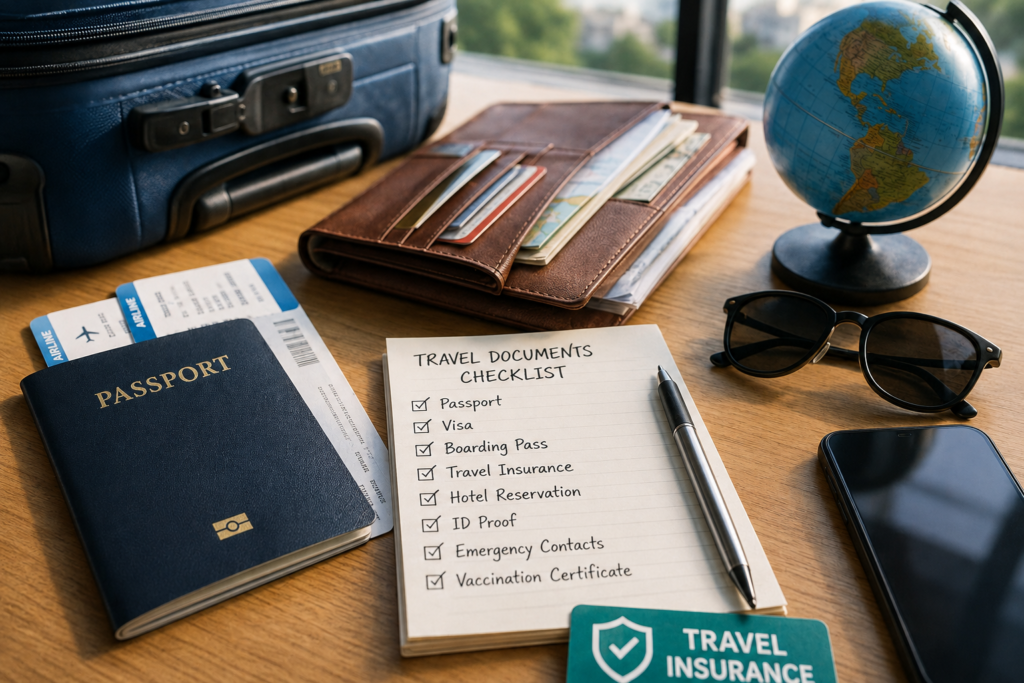
Final Travel Documents Checklist
Before your trip, review your documents carefully.
Make sure your passport is valid.
Confirm whether you need a visa.
Check your flight booking.
Keep your boarding pass accessible.
Save your accommodation confirmation.
Review your travel insurance information if applicable.
Check whether you need vaccination or health documents.
Carry accepted identification.
Prepare documents for children if you are traveling as a family.
Keep emergency contact information available.
Store secure copies of important documents.
Final Thoughts
Preparing travel documents may not be the most exciting part of planning a trip, but it is one of the most important. From my point of view, good document preparation gives you confidence before you even reach the airport.
The most important thing is not to assume that every country follows the same rules. Passport validity, visa requirements, health documents, financial requirements, and entry conditions can vary significantly.
Take time to check the official requirements for your destination and keep your documents organized. Make digital backups where appropriate and keep your original documents secure.
Once your travel documents are ready, you can focus more on the enjoyable parts of your journey. A little preparation at home can save you from a lot of stress later, especially when you are traveling internationally for the first time.