 travelandlearns
Related Articles

Staying connected has become an important part of international travel. When I travel to another country, having mobile internet is one of the things I like to arrange before leaving because it makes everything from finding directions to contacting family much easier. A reliable connection can also be useful when checking hotel reservations, booking transportation, translating information, or using travel apps.
For international travelers, a travel SIM card can be a simple and affordable way to get mobile service abroad. However, choosing the right SIM card is not always as straightforward as it sounds. There are physical SIM cards, eSIMs, local SIM cards, international SIM cards, and travel data plans. Each option has different advantages depending on your destination and travel needs.
In this travel SIM card guide, I will explain how travel SIM cards work, what to check before buying one, how to choose the right option, and some common mistakes that beginners should avoid.
What Is a Travel SIM Card?
A travel SIM card is a mobile SIM designed to provide cellular service while you are traveling outside your home country. It can provide mobile data, calls, text messages, or a combination of these services depending on the plan.
Instead of using your regular home mobile plan abroad and potentially paying expensive roaming charges, you can use a travel SIM card that offers service in your destination country.
Travel SIM cards are particularly useful for international travelers who want internet access without depending entirely on public WiFi.
The exact service you receive depends on the provider, destination, network partnerships, and package you purchase.
Why Do You Need a SIM Card When Traveling?
I think mobile internet is one of the most useful travel tools today. Without a connection, simple tasks can suddenly become difficult.
For example, you may need Google Maps to find your hotel, a translation app to communicate, or a ride booking application to arrange transportation. You may also need internet access to check flight information or contact your accommodation.
Having mobile data means you can access these services while walking around a new city instead of constantly searching for WiFi.
A SIM card can also provide peace of mind when traveling alone or visiting an unfamiliar destination.
Physical SIM Card vs eSIM
There are two main options that international travelers should understand.
A physical SIM card is a small plastic card that you insert into your smartphone. You may purchase one before traveling or buy a local SIM after arriving at your destination.
An eSIM works digitally. Instead of inserting a physical card, you download the mobile plan onto a compatible phone.
I personally find eSIMs particularly convenient because there is no tiny physical card to remove or store. You can often purchase a plan online and activate it when you reach your destination.
However, not every phone supports eSIM technology, so checking your device compatibility is important.
How to Choose the Best Travel SIM Card
The best travel SIM card depends on your individual travel plans.
Before buying one, I recommend thinking about how long you will be away and how much mobile data you are likely to use.
If you are traveling for only a few days, a smaller data package may be enough. For a longer trip, you may want a plan with more data or an option that allows you to add additional data later.
You should also check whether the SIM covers all the countries on your itinerary.
This is especially important if you are planning a multi country vacation. A SIM that works well in one country may not provide service in another.
Check Your Phone Before Buying a SIM
One of the most important steps is checking whether your phone can actually use another SIM.
Your smartphone generally needs to be compatible with the networks used in your destination. It may also need to be unlocked so that you can use a SIM card from another provider.
If your phone is locked to your current mobile carrier, another SIM may not work properly.
For eSIM users, you should also confirm that your specific phone model supports eSIM functionality.
I recommend checking these details before purchasing a travel SIM. It is much better to discover a compatibility issue at home than after arriving in another country.
How Much Mobile Data Do You Need?
This is one of the most common questions beginners ask.
The answer depends on how you use your phone.
If you mainly use messaging applications, email, maps, and occasional web browsing, you may not need a huge data package.
If you regularly watch videos, upload large files, use social media heavily, or share your mobile connection with another device, you may need considerably more data.
I usually suggest estimating your normal daily usage and then adding some extra capacity. Running out of data in the middle of a trip can be inconvenient, especially when you are trying to navigate an unfamiliar place.
You can also reduce data consumption by downloading maps and other useful information before leaving your hotel.
Local SIM Card vs Travel SIM Card
Another option is buying a local SIM card after arriving at your destination.
A local SIM can sometimes provide excellent rates and generous data packages. However, purchasing one may require visiting a mobile store, completing registration requirements, or dealing with language differences.
A travel SIM card can be more convenient because you can arrange it before your trip.
For a short vacation, I often think convenience is worth considering alongside price. Saving a small amount of money is not always worthwhile if the process becomes complicated.
For longer stays, however, comparing local SIM plans may make sense.
International SIM Cards for Multiple Countries
If your trip includes several countries, an international SIM card or regional travel SIM may be useful.
Instead of purchasing a separate SIM in every country, one plan may provide service across multiple destinations.
This can make traveling between borders much easier.
Before purchasing such a plan, carefully check the list of supported countries. Do not assume that every country in a region is included.
Also check whether the plan provides the same data allowance in every destination. Some plans may offer different network access or limits depending on the country.
Data Only Travel SIM Cards
Many travel SIM cards are data only plans.
This means they provide mobile internet but may not include a traditional phone number for regular calls or text messages.
For many travelers, this is not a major problem because messaging applications can be used for communication when mobile data is available.
However, if you need to receive traditional SMS messages or make regular phone calls, check the plan details carefully.
Some services may provide a phone number while others are designed entirely around mobile data.
Using WiFi With a Travel SIM
Even if you have a travel SIM card, WiFi can still be useful.
Hotels, airports, restaurants, cafes, and other public locations may provide WiFi. Connecting to trusted networks can help reduce your mobile data usage.
However, I would not depend entirely on public WiFi during an international trip.
Having your own mobile data gives you more flexibility. You can access maps, messages, transportation services, and travel information while you are away from WiFi.
When using public WiFi, avoid entering sensitive information on networks that you do not trust.
How to Activate a Travel SIM
Activation instructions vary between providers.
A physical SIM usually needs to be inserted into your phone. You may then need to follow activation instructions provided by the carrier.
For an eSIM, you may receive a QR code or another digital activation method. Your phone settings are then used to add the mobile plan.
I recommend installing an eSIM before your flight if the provider allows it, but carefully check when the plan starts. Some plans begin counting the validity period immediately after installation, while others begin when the device connects to a supported network.
Always follow the provider’s instructions.
Keep Your Main SIM Safe
If you remove your regular physical SIM while traveling, store it somewhere safe.
A tiny SIM card is extremely easy to lose.
I would place it in a small container or SIM storage case rather than leaving it loose inside a wallet or travel bag.
When you return home, you can reinstall your original SIM and restore your normal mobile service.
If your phone supports dual SIM functionality, you may be able to keep your main SIM active while using a travel SIM for mobile data. The exact setup depends on your phone and carrier.
Common Travel SIM Mistakes
One common mistake is buying a SIM without checking phone compatibility.
Another is choosing a plan based only on price. The cheapest travel SIM may not provide enough data, coverage, or supported countries for your trip.
Some travelers also forget to check the plan expiration date.
Another mistake is not understanding whether the package includes calls and texts or only mobile data.
I also recommend checking network coverage before traveling to remote areas. A SIM may work well in major cities but have limited service in rural locations.
Final Thoughts
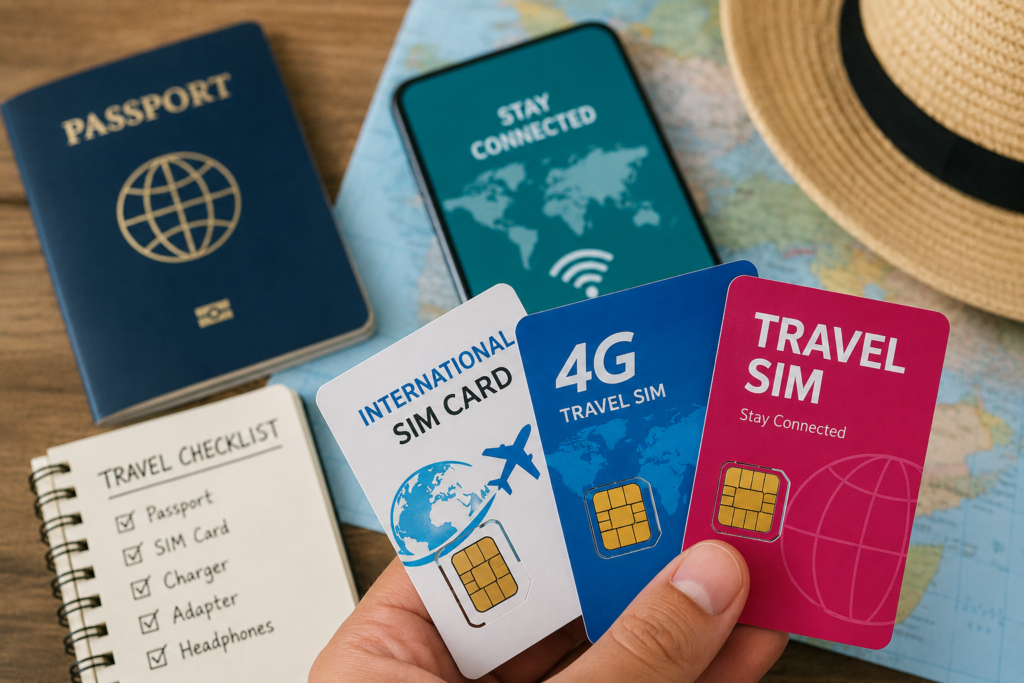
A travel SIM card can make international travel much easier. Having reliable mobile data means you can navigate unfamiliar streets, stay in contact with people, access important travel information, and use helpful apps without depending completely on hotel or airport WiFi.
Before buying a travel SIM, check your phone compatibility, make sure your device is unlocked when necessary, compare data allowances, check destination coverage, and understand how activation works.
For short trips, a travel SIM or eSIM can offer a convenient solution. For longer stays, comparing local SIM cards may be worthwhile. If you are visiting several countries, a regional or international plan may provide greater convenience.
The most important thing is to choose a plan based on your actual travel needs rather than simply selecting the cheapest option.
With a little preparation before departure, staying connected abroad can become one less thing to worry about during your international adventure.