 travelandlearns
Related Articles

Taking a long haul flight for the first time can feel a little overwhelming. Spending many hours inside an airplane is very different from taking a short flight, especially when you are traveling internationally or crossing several time zones. I remember that one of the biggest concerns for beginners is simply not knowing what to expect.
The good news is that a long flight becomes much easier when you prepare properly. From choosing the right seat to packing useful items and planning how to sleep, small decisions can make a big difference.
In this long haul flight guide for beginners, I will share practical tips that can help make your journey more comfortable, organized, and enjoyable. These are simple travel habits that can be useful whether you are flying for the first time or preparing for a much longer journey than usual.
What Is a Long Haul Flight?
A long haul flight generally refers to a flight that lasts for many hours and covers a significant distance. There is no single worldwide definition for exactly how many hours a flight must last to be considered long haul.
For travelers, the important thing is that you will spend a large part of your day or night inside an aircraft.
Long flights can involve international travel, overnight journeys, or flights between distant continents. Depending on your route, you may spend eight, ten, twelve, or even more hours in the air.
This is why preparation matters more for a long flight than it does for a short domestic journey.
Choose Your Seat Carefully
One of the first things I consider when preparing for a long haul flight is the seat.
A window seat can be great if you want to look outside, lean against the wall, and avoid people walking past you. It can also be useful if you plan to sleep for a large part of the journey.
An aisle seat provides easier access to the restroom and allows you to stand up without asking another passenger to move. For some travelers, this extra freedom is worth more than the window view.
The middle seat is usually less popular, but sometimes it is unavoidable.
If your airline allows seat selection, look at the aircraft seating map before choosing. Your personal preference should depend on whether you value the window, easy movement, or additional space.
Arrive at the Airport Early
For a long international journey, I prefer arriving at the airport with enough time to handle unexpected delays.
You may need to check luggage, complete airport security, pass immigration, find your gate, and deal with a busy terminal.
Arriving early also gives you time to relax instead of rushing from one line to another.
Check your airline’s recommended airport arrival time because requirements can vary depending on the airport and destination.
I would rather spend some extra time at the airport than start a long flight feeling stressed and exhausted.
Pack a Smart Carry On Bag
Your carry on bag becomes especially important during a long haul flight.
Instead of filling it with unnecessary items, I recommend focusing on things you may genuinely need during the journey.
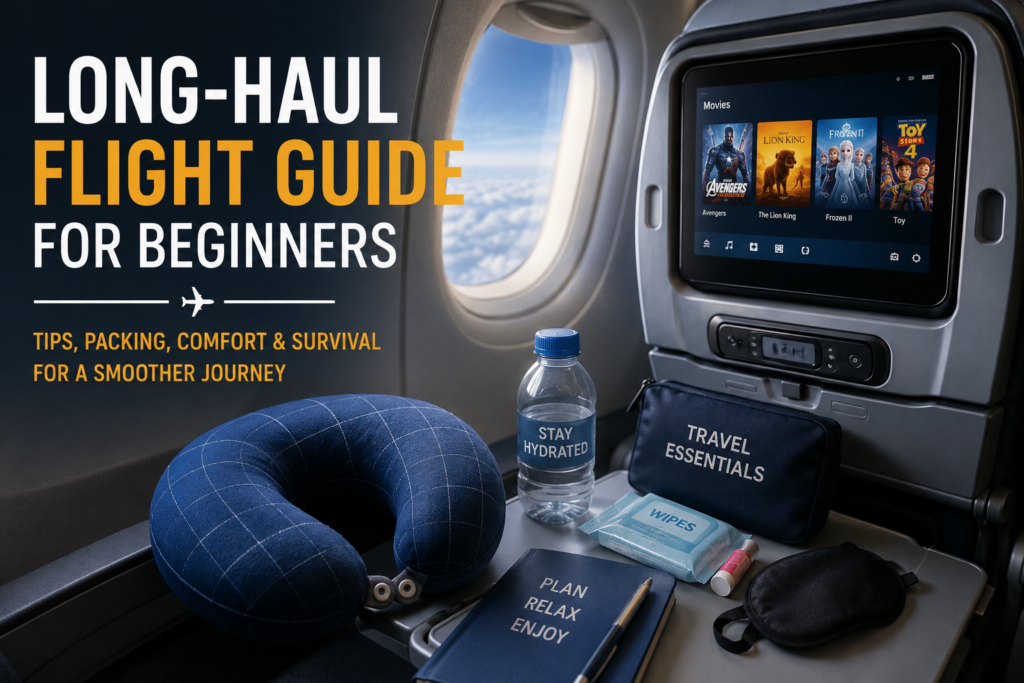
Useful items can include headphones, a phone charger, charging cables, travel documents, a neck pillow, an eye mask, tissues, hand wipes, lip balm, and basic toiletries that comply with airport security requirements.
If you take regular medication, keep it accessible and follow the applicable airline and airport rules.
I also recommend keeping your passport and other important documents in an easy to reach location.
The goal is to create a small personal travel kit that allows you to remain comfortable without constantly opening your main luggage.
Wear Comfortable Clothing
Comfortable clothing can make a huge difference on a long flight.
I prefer loose and comfortable clothes that allow easy movement. Since airplane cabins can feel cool, wearing layers is usually a good idea.
Instead of relying on one heavy item, consider wearing several lighter layers. You can remove one if you become warm and add one if the cabin feels cold.
Comfortable shoes are also important because your feet may swell slightly during a long journey.
I would avoid wearing anything that feels restrictive or uncomfortable for many hours.
Stay Hydrated
Staying hydrated is an important part of looking after yourself during a long flight.
Airplane cabins can have relatively low humidity, which may make some travelers feel dry or uncomfortable.
Drink water regularly and avoid relying entirely on caffeinated or alcoholic beverages.
You can carry an empty reusable water bottle through security where permitted and fill it after passing security. Always follow the liquid rules at your departure airport.
Staying hydrated does not mean drinking excessive amounts at once. Regular, sensible intake is more practical, especially when you are trying to sleep.
Plan for Sleep
Sleeping on a long haul flight can be difficult, especially if you are not accustomed to sleeping in an airplane seat.
A neck pillow, eye mask, and comfortable headphones can help create a more relaxing environment.
If you are traveling overnight, think about your destination time zone before deciding when to sleep. Adjusting your sleep schedule gradually can sometimes make the transition easier.
I would also avoid expecting yourself to sleep for the entire flight. Even getting some rest can make the journey feel easier.
If you cannot sleep, do not become frustrated. Listen to something relaxing, watch a movie, read, or simply close your eyes and rest.
Understand Time Zone Changes
Long haul flights often involve crossing multiple time zones.
This can affect your sleep schedule and leave you feeling tired after reaching your destination. This condition is commonly known as jet lag.
One simple strategy is to start thinking about your destination’s local time during the journey.
Adjusting your watch to the destination time can help you mentally prepare for the new schedule.
After arrival, try to follow the local schedule rather than immediately returning to your home time. Getting natural daylight and maintaining a reasonable sleep routine can also help your body adjust.
Move Around During the Flight
Sitting in one position for many hours can become uncomfortable.
When it is safe and practical, stand up occasionally and walk around the cabin. You can also perform simple movements while seated.
Moving your feet and legs regularly can help prevent stiffness.
Passengers with specific health concerns should follow advice from their healthcare professional about long distance air travel.
You should also follow crew instructions and keep your seat belt fastened when required.
Bring Entertainment
Long flights can become boring if you have nothing to do.
Fortunately, modern aircraft often provide entertainment systems with movies, television programs, music, games, or other options.
However, I still recommend downloading some entertainment before leaving home.
You might download podcasts, music, movies, books, or offline games to your phone or tablet.
Do not depend entirely on the airplane entertainment system because the available selection and equipment can vary.
A good pair of headphones can also make a major difference.
Download Important Travel Information
Before boarding, I like to make sure important travel information is available on my phone.
Save your hotel address, booking information, airport details, transportation information, and important contact details.
If you are traveling internationally, having important information available offline can be useful if you do not immediately have mobile internet after landing.
This preparation takes only a few minutes but can save you considerable stress after a long journey.
Be Careful With Food
Airlines generally provide meals and drinks on longer flights, depending on the route and ticket.
If you have dietary requirements, check with the airline before traveling to understand what options are available.
You may also want to bring suitable snacks that comply with airport and destination regulations.
I prefer simple snacks that are easy to carry and do not create a mess.
Remember that food restrictions can apply when entering another country, so do not assume that everything you receive or carry on the aircraft can automatically be taken through customs.
Make the Most of the In Flight Entertainment
A long flight can actually become enjoyable if you use the time wisely.
You can watch movies, listen to music, read a book, organize photos, write notes, or simply relax.
I think it helps to avoid constantly checking how many hours remain. Watching the clock can make the journey feel longer.
Instead, divide the flight into smaller sections. You might watch a movie, eat a meal, rest for a while, read something, and then take another break.
This makes a long journey feel more manageable.
Keep Your Personal Space Organized
Your seat area can become messy surprisingly quickly.
Your phone, headphones, water bottle, blanket, food, and other items can easily spread across the seat and floor.
Try to keep frequently used items in one small pouch or accessible section of your carry on bag.
This makes it easier to find things without disturbing the passenger next to you.
When it is time to sleep, organize your area first. A clean space can make the seat feel much more comfortable.
Prepare for Arrival
Do not wait until the final minutes of the flight to organize everything.
Before landing, put your electronics and personal items back into your carry on bag.
Check that you have your passport, phone, wallet, and important documents.
If you are arriving at an international airport, prepare yourself for immigration and customs procedures.
Knowing what happens after landing can make the final part of the journey much less stressful.
Common Long Haul Flight Mistakes
Beginners often make a few simple mistakes when taking their first long flight.
One mistake is packing too much in the carry on bag. Another is forgetting chargers or other essential items.
Some travelers also avoid drinking water because they do not want to visit the restroom. Others remain seated for many hours without moving.
Another common mistake is trying to sleep according to their home time without considering the destination.
Finally, many people underestimate how tiring a long journey can be. Give yourself some time to rest after arrival instead of planning an exhausting schedule immediately.
Final Thoughts
A long haul flight does not have to be uncomfortable or stressful. With some preparation, you can turn many hours in the air into a manageable and even enjoyable part of your trip.
Choose your seat carefully, arrive at the airport early, pack a practical carry on bag, wear comfortable clothing, stay hydrated, and prepare entertainment before boarding.
Think about sleep and time zone changes, move around when appropriate, and keep your important documents accessible.
Most importantly, remember that you do not need to make the flight perfect. Give yourself permission to relax and take the journey one stage at a time.
Once you know what to expect, long haul flights become much easier. With the right preparation and a positive mindset, those many hours in the sky can simply become another part of the adventure.