 travelandlearns
Related Articles

Planning a trip is exciting, but one thing that can quickly turn a great experience into a stressful one is spending more money than expected. I have found that creating a travel budget before a trip makes the whole journey easier because I know where my money is going and how much I can comfortably spend.
A good travel budget is not about avoiding every enjoyable activity or choosing the cheapest option for everything. It is about understanding your expected expenses and making smart decisions before you leave home. Whether you are planning a weekend getaway, a family vacation, or an international trip, learning how to create a travel budget can help you enjoy your journey without unnecessary financial pressure.
Why Is a Travel Budget Important?
A travel budget gives you a clear idea of how much your trip may actually cost. Many travelers think mainly about flights and hotels, but travel expenses include much more than these two things.
You may need money for transportation, meals, sightseeing, travel insurance, shopping, airport transfers, visas, mobile data, tips, and unexpected expenses.
When I plan a trip, I prefer to estimate these costs before booking anything. This helps me understand whether the destination fits my available budget. It also makes it easier to decide where I can spend more and where I should save.
A travel budget can also prevent the common problem of returning home with credit card bills or financial stress.
Step 1: Decide Your Total Travel Budget
The first step is to decide how much money you can realistically spend on the entire trip.
Start by looking at your available travel savings and your regular financial responsibilities. Your travel budget should not interfere with important expenses such as rent, bills, savings, or emergency funds.
For example, if you can comfortably spend $2,000 on a trip, use that amount as your starting point. You can then divide the $2,000 among different travel expenses.
Try not to create a budget based only on what you hope to spend. Create it based on what you can actually afford.
Step 2: Choose Your Destination Carefully
The destination has a major effect on your travel budget.
Some cities are expensive because accommodation, transportation, and food cost more. Other destinations can offer comfortable travel at a much lower daily cost.
Before choosing a destination, research the typical prices for hotels, restaurants, local transportation, attractions, and other basic expenses.
I also recommend comparing several destinations before making a final decision. Sometimes a destination that initially looks expensive can become affordable during the off season, while a supposedly cheap destination can become costly because of expensive flights.
Step 3: Calculate Your Transportation Costs
Transportation is usually one of the biggest parts of a travel budget.
Start with the cost of getting to your destination. This could include flights, trains, buses, or fuel if you are driving.
Do not forget the smaller transportation expenses. Airport transfers, taxis, public transportation, rental cars, parking fees, and tolls can add up quickly.
For international trips, I like to estimate both the arrival and departure transportation separately. You should also consider transportation between different cities if your itinerary includes multiple destinations.
If you are flying, compare different dates before booking. Sometimes changing your departure by one day can make a noticeable difference in the total cost.
Step 4: Set a Budget for Accommodation
Accommodation is another major travel expense.
First, decide what type of accommodation suits your trip. You might choose a hotel, hostel, guesthouse, vacation rental, or another suitable option.
Do not look only at the nightly price. Check the complete cost, including taxes, service fees, resort fees, cleaning fees, and other charges when applicable.
For example, a room advertised at $70 per night may cost significantly more after additional charges.
I also recommend considering location. A cheaper hotel far from the main attractions may require more spending on taxis or public transportation. Sometimes paying slightly more for a central location can actually reduce your overall travel expenses.
Step 5: Estimate Your Food Budget
Food is an expense that many first time travelers underestimate.
Before your trip, think about how you normally eat while traveling. Do you prefer restaurants, local food, cafes, supermarkets, or a combination of these?
Create an estimated daily food budget.
For example, you might plan $30 per day for breakfast, lunch, dinner, drinks, and snacks. If you are traveling for seven days, that gives you a basic food budget of $210.
Your actual amount will depend heavily on the destination and your personal preferences.
I personally believe travelers should leave some room for trying local food. Saving money is useful, but food is also an important part of experiencing a new destination.
Step 6: Include Activities and Entertainment
Sightseeing and entertainment should have their own category in your travel budget.
Make a list of the activities you really want to experience. These might include museums, tours, theme parks, boat trips, cultural events, guided excursions, or adventure activities.
Research the approximate prices before your trip and add them together.
You do not need to plan every activity in advance. In fact, I prefer leaving some free time in my itinerary. This gives me the flexibility to discover places naturally without feeling like I have to pay for something every day.
Step 7: Remember Travel Insurance and Documents
Travel documents can also add to your overall trip cost.
Depending on your destination and nationality, you may need to pay for a visa, passport related services, travel insurance, or other required documentation.
Travel insurance is another expense worth considering, especially for international trips. The right coverage can help protect you from certain unexpected costs related to situations covered by your policy.
Add these expenses to your budget before calculating your final trip cost.
Step 8: Create an Emergency Fund
One of the most important parts of a travel budget is an emergency fund.
Unexpected expenses can happen even when your trip is carefully planned. You might miss a connection, need an unexpected taxi, replace a lost item, or face a sudden change in your plans.
Instead of using your entire budget for planned expenses, keep some money aside for emergencies.
I usually think of this amount as money that I hope I will not need. If everything goes according to plan, I can keep it for my next trip.
Step 9: Add a Shopping and Miscellaneous Budget
Shopping is another category that can easily break a travel budget.
You may want souvenirs, clothes, gifts, local products, or other items during your trip.
Instead of pretending you will not shop, create a realistic shopping limit.
You should also have a miscellaneous category for small expenses that are difficult to predict. This can include tips, snacks, bottled water, laundry, internet access, baggage fees, or other minor purchases.
These small expenses may seem insignificant individually, but together they can become a noticeable part of your trip cost.
Step 10: Calculate Your Daily Travel Budget
Once you know your major expenses, calculate your daily spending limit.
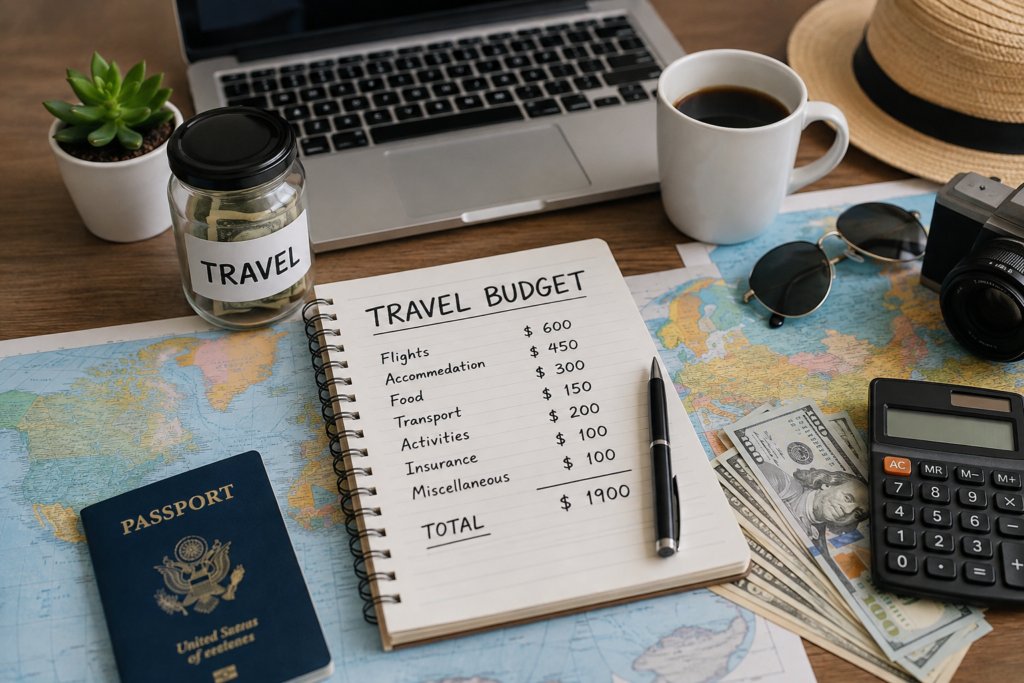
For example, imagine your planned expenses look like this:
Flights: $600
Accommodation: $450
Food: $300
Transportation: $150
Activities: $200
Travel insurance and documents: $100
Miscellaneous expenses: $100
Your estimated total would be $1,900.
If your trip lasts seven days, you can also calculate your average daily spending for expenses such as food, transportation, and activities.
This makes it much easier to monitor your spending while traveling.
Step 11: Track Your Spending During the Trip
Creating a travel budget is only half the job. You should also track your actual spending.
You can use a simple notes app, spreadsheet, budgeting app, or notebook.
At the end of each day, check how much you spent. If you spent more than expected one day, you can reduce your spending the next day.
For example, if you spend $50 on dinner and activities when your planned daily budget was $30, you can choose a cheaper meal and free activity the following day.
The goal is not to make your vacation feel restrictive. It is simply to stay aware of your spending.
Simple Ways to Save Money While Traveling
There are many ways to reduce travel costs without making your trip less enjoyable.
Traveling during the shoulder or off season can sometimes reduce accommodation and transportation costs. Booking early can also help when prices are favorable.
Using public transportation instead of taxis can save money in many destinations. Eating at local restaurants can sometimes be more affordable than eating in heavily tourist focused areas.
You can also choose a hotel that includes breakfast if the total price makes sense.
Another useful strategy is to prioritize experiences. Instead of spending money on many small purchases, choose a few activities that you genuinely want to remember.
Common Travel Budget Mistakes to Avoid
One common mistake is planning a budget that is too optimistic.
If you estimate every expense at the lowest possible price, your budget may fail as soon as something costs a little more than expected.
Another mistake is forgetting hidden or secondary costs. Airport transfers, taxes, baggage fees, tips, exchange rate differences, and booking charges can increase your final expenses.
Some travelers also spend their entire budget before the final days of the trip. This is why I recommend dividing your money into categories and keeping an emergency reserve.
Final Thoughts
Learning how to create a travel budget is one of the simplest ways to make travel more comfortable and enjoyable. A good budget helps you understand the real cost of your trip before you start spending.
Start with your total available amount, then estimate transportation, accommodation, food, activities, documents, insurance, shopping, and miscellaneous expenses. Keep some money aside for unexpected situations and track your spending during the trip.
In my opinion, the best travel budget is not the one that makes you spend the least. It is the one that allows you to enjoy your destination while staying financially comfortable.
With a little preparation, you can plan a realistic travel budget, make better travel decisions, and enjoy your trip with much less financial stress.