 travelandlearns
Related Articles

Planning a vacation does not always mean spending a lot of money. In my experience, a great trip is more about making smart decisions than having a huge travel budget. With the right planning, you can enjoy a comfortable vacation, explore interesting places, eat good food, and make wonderful memories without putting too much pressure on your wallet.
A budget friendly vacation starts with understanding where your money will go. Transportation, accommodation, food, activities, shopping, and unexpected expenses can quickly increase the total cost of a trip. That is why I always recommend planning the important details before leaving home.
In this guide, I will explain how to plan a budget friendly vacation step by step. These practical travel tips can help beginners save money while still enjoying their trip.
Set a Realistic Vacation Budget
The first step in planning a budget friendly vacation is deciding how much you can comfortably spend. Do not choose a destination first and then try to find money for it. Instead, decide your travel budget and plan your trip around that amount.
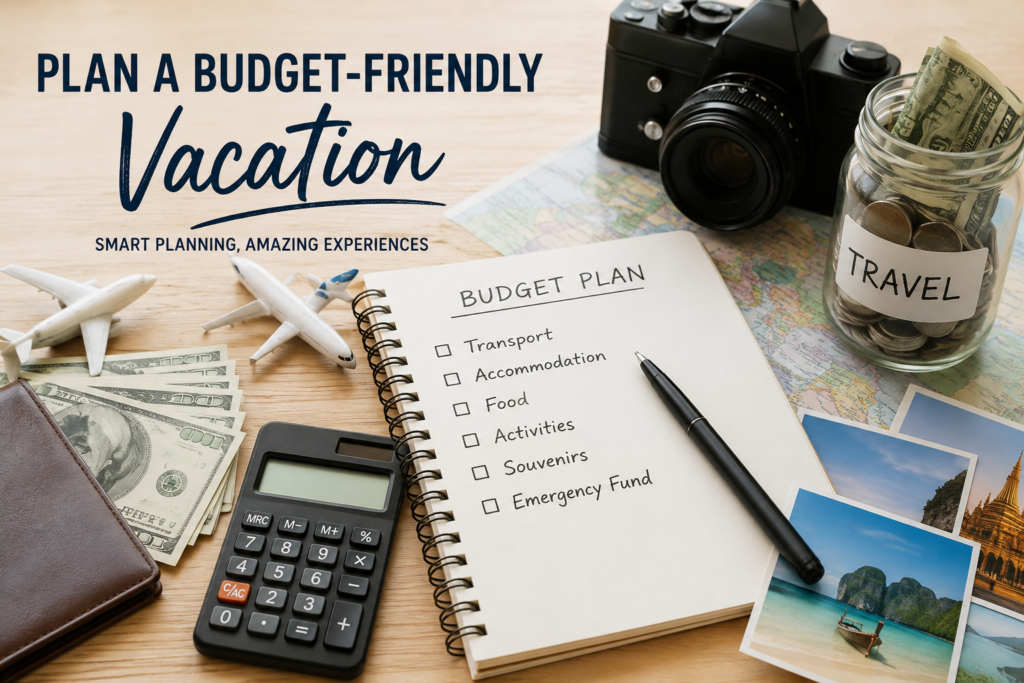
Write down the total amount you are willing to spend. Then divide it into different categories such as transportation, hotel, food, activities, shopping, local transportation, and emergency expenses.
I personally recommend keeping a small emergency amount separate from your main vacation budget. You may face unexpected transportation costs, price changes, or other situations during your trip. Having extra money available can make the journey less stressful.
Choose an Affordable Destination
Your destination has a major effect on your vacation cost. Some places are naturally more expensive because hotels, restaurants, transportation, and attractions cost more.
If your budget is limited, compare several destinations before making your final decision. You may find another city or country offering similar experiences at a much lower price.
For example, instead of choosing a famous tourist destination during its busiest season, consider a nearby destination that offers beautiful scenery, local culture, historical attractions, or outdoor activities.
Another useful idea is to travel to less popular destinations. Places that are not heavily crowded with tourists can often provide better prices and a more authentic experience.
Travel During the Right Season
Travel dates can make a huge difference to your total vacation cost. Peak travel periods are usually more expensive because demand for flights, hotels, and activities is higher.
If your schedule allows flexibility, consider traveling during the shoulder season. This is the period just before or after the busiest tourist season. Prices can be lower, while the weather may still be enjoyable.
I always recommend checking prices for several different dates before booking anything. Sometimes changing your trip by only a few days can save a surprising amount of money.
Also consider traveling on weekdays when possible. Flights and hotels may have different prices depending on the day of the week.
Find Affordable Transportation
Transportation is often one of the biggest parts of a vacation budget. When planning your trip, compare different transportation options instead of immediately booking the first flight or train you find.
For longer journeys, compare flights, buses, trains, and other available options. The cheapest option is not always the best option, so consider travel time, baggage costs, airport transportation, and comfort as well.
When booking flights, always look at the complete price. A cheap ticket may become expensive after adding baggage, seat selection, meals, and other charges.
For local transportation, public transport can be much cheaper than taxis or private rides. Walking is another excellent option when the destination is safe and attractions are located close together.
Save Money on Accommodation
Accommodation can take a large part of your travel budget, especially if you stay in expensive tourist areas.
When choosing a hotel, do not focus only on the room price. Check the location, taxes, breakfast, transportation access, and additional charges. A slightly cheaper hotel far from the main attractions may cost more after paying for transportation every day.
Look for budget hotels, guesthouses, hostels, apartments, or other suitable accommodation options. If you are traveling with family or friends, sharing an apartment can sometimes be more affordable than booking several hotel rooms.
I also suggest reading recent guest reviews before making a reservation. Saving money is useful, but choosing a place with poor cleanliness or safety can turn a vacation into a frustrating experience.
Plan Your Meals Carefully
Food is another area where travelers can easily spend more than expected. Eating at expensive tourist restaurants every day can quickly increase your vacation expenses.
One of my favorite ways to save money while traveling is to eat where local people eat. Local restaurants and small food businesses can often offer delicious meals at more reasonable prices.
You can also choose accommodation that includes breakfast. Having a good breakfast before leaving your hotel can help reduce unnecessary food spending during the day.
If your accommodation has a kitchen or refrigerator, buying some basic groceries can also help. You do not need to cook every meal. Even preparing simple breakfasts or snacks can reduce your daily expenses.
At the same time, do not make your vacation so strict that you cannot enjoy local food. I believe food is an important part of travel. The goal is to spend wisely, not avoid every enjoyable experience.
Choose Free and Low Cost Activities
You do not need to pay for every attraction to have a great vacation. Many destinations have free parks, public beaches, walking areas, markets, museums, historical sites, viewpoints, and cultural events.
Before traveling, research free things to do at your destination. Make a list of activities you are genuinely interested in and compare their prices.
If there are several paid attractions you want to visit, decide which ones are most important to you. You do not need to visit every tourist attraction just because it is popular.
Sometimes the best travel memories come from simple experiences such as walking through an old neighborhood, watching a sunset, visiting a local market, or talking with local people.
Avoid Unnecessary Shopping
Shopping can easily destroy a carefully planned vacation budget. It is tempting to buy souvenirs, clothes, electronics, and other items when you are visiting a new place.
Before shopping, ask yourself whether you actually need the item. If you want souvenirs, set a specific shopping budget before your trip.
I prefer buying a few meaningful souvenirs rather than spending money on many things that I may never use. This approach saves money and also makes the trip feel more special.
Be especially careful in popular tourist markets where prices may be higher. Compare prices and understand local shopping practices before making expensive purchases.
Use Travel Deals Wisely
Travel deals can help reduce expenses, but do not book something simply because it looks cheap.
Compare the final price and check what is included. Some offers may have restrictions, additional fees, or conditions that make them less valuable.
Look for hotel discounts, transportation deals, attraction passes, and seasonal offers when they genuinely fit your travel plans.
It can also be useful to compare prices across several booking platforms before making a decision. However, always check the cancellation policy and booking conditions.
Create a Daily Spending Limit
A daily travel budget can make it easier to control your expenses. After calculating your major costs, estimate how much money you can spend each day on food, transportation, activities, and small purchases.
For example, if you have a fixed amount for your trip, divide the available spending money across the number of days you will be traveling.
You do not have to spend exactly the same amount every day. You might spend less on one day and more on another day when you visit an expensive attraction.
The important thing is to keep track of your total spending.
Keep an Emergency Fund
Even when you plan everything carefully, unexpected expenses can happen. A delayed journey, lost item, sudden transportation change, or other problem can require extra money.
That is why I believe an emergency fund should always be part of a budget friendly vacation plan.
Keep this money separate from your daily spending budget. Think of it as money you hope you will not need but will be thankful to have if something unexpected happens.
Pack Smart Before You Leave
Packing properly can also save money. Forgetting essential items may force you to buy them at expensive tourist shops.
Make sure you pack suitable clothes, personal items, chargers, travel documents, basic medicines, and anything else you are likely to need.
Avoid overpacking because extra baggage fees can increase your transportation costs. Pack according to the weather and activities you have planned.
I also recommend carrying a reusable water bottle where practical and permitted. Buying bottled drinks repeatedly can become an unnecessary expense.
Track Your Expenses During the Trip
Planning your budget is only the beginning. You should also track your spending while traveling.
You can use a simple notes app, spreadsheet, or budgeting application to record your expenses. Write down what you spend on food, transportation, activities, shopping, and other purchases.
This gives you a clear picture of where your money is going. If you notice that you are spending too much in one category, you can adjust your plans before the trip ends.
Do Not Sacrifice Safety to Save Money
Saving money is important, but safety should always come first. Avoid choosing extremely cheap accommodation if it has serious safety concerns.
Be careful with transportation, unfamiliar areas, unknown offers, and suspiciously cheap services.
A budget friendly vacation should be affordable while still being comfortable and safe. Saving a small amount of money is not worth creating a serious problem during your trip.
Final Thoughts
Learning how to plan a budget friendly vacation is mainly about making smart choices before and during your journey. You do not need to spend a fortune to enjoy travel.
Start by setting a realistic budget, choosing an affordable destination, traveling during a suitable season, comparing transportation, finding reasonably priced accommodation, and planning your meals. Add free activities, control shopping, track your daily spending, and keep an emergency fund for unexpected situations.
In my opinion, the best budget travel strategy is not to remove all the fun from your vacation. It is about deciding what matters most to you and spending your money on those experiences.
With thoughtful planning, even a modest travel budget can give you an enjoyable and memorable vacation. The key is to plan early, compare your options, avoid unnecessary expenses, and leave some room for unexpected moments. A well planned budget friendly vacation can prove that amazing travel experiences do not always require a huge amount of money.