 travelandlearns
Related Articles


Choosing the right carry on bag can make air travel much easier. I have found that a good carry on bag is not only about appearance or brand name. It should fit your travel needs, remain comfortable to handle, provide enough space for your essentials, and meet the baggage requirements of the airline you are flying with.
When I choose a carry on bag, I look at several things before making a decision. Size, weight, wheels, handles, durability, compartments, security, and ease of use all matter. A bag may look perfect in a store, but if it is uncomfortable or difficult to organize, it can become a problem during a real trip.
In this guide, I will share the main things I believe every traveler should consider when choosing the right carry on bag.
Understand Your Travel Needs
The first step is to understand how you normally travel. There is no single carry on bag that works perfectly for everyone.
If you usually take short business trips, you may need space for clothing, a laptop, documents, chargers, and personal items. If you travel for vacations, you may want more room for clothes, toiletries, and other essentials.
Some travelers prefer a traditional suitcase, while others prefer a carry on backpack. If you move around frequently between airports, trains, buses, and hotels, a backpack may be more convenient. If you mostly travel from the airport to a hotel, a wheeled carry on can be easier.
Think about your usual trips before buying a bag. This simple step can help you avoid buying something that looks good but does not match your travel style.
Check the Size Carefully
Size is probably the most important factor when choosing a carry on bag.
Airlines have different rules regarding carry on luggage, and these requirements can change. Some airlines also have different limits for cabin bags and personal items. Because of this, I always recommend checking the current baggage rules of your airline before buying a new bag.
Do not only look at the advertised capacity. Pay attention to the external dimensions because wheels, handles, pockets, and other parts are included in the overall size when airlines measure luggage.
A bag that is slightly too large can create problems at the airport. Choosing a practical size that works with the airlines you commonly use can save you from unnecessary stress.
Consider the Weight
A lightweight carry on bag can make a noticeable difference during a trip.
Remember that the weight of the bag itself counts toward your total luggage allowance on airlines that have carry on weight limits. A heavy suitcase leaves you with less room for your clothes and other belongings.
I prefer finding a balance between low weight and durability. An extremely lightweight bag may be convenient, but it still needs to handle normal travel conditions.
When comparing bags, check the empty weight and think about how much you normally pack. A small difference in weight may seem unimportant at first, but it becomes more noticeable when you are carrying the bag through a large airport.
Choose Between Two Wheels and Four Wheels
The wheels can greatly affect how easy a carry on bag is to use.
Two wheel bags can be useful on uneven surfaces and may feel stable when pulled behind you. Four wheel bags, often called spinner bags, can move in different directions and are especially convenient on smooth airport floors.
I personally find four wheel carry on bags very convenient in airports because I can push them beside me instead of constantly pulling them behind me.
However, wheel quality is more important than simply choosing two or four wheels. Look for wheels that feel sturdy and move smoothly. Cheap wheels can become noisy or difficult to move after repeated trips.
Look at the Handle Quality
A good handle may seem like a small detail, but you will use it constantly.
The telescoping handle should extend smoothly and lock securely. It should also feel comfortable at your height. A handle that feels loose or weak can become frustrating during travel.
I recommend extending and closing the handle several times before buying a suitcase. Check whether it moves smoothly and whether it feels stable when the bag is being pulled.
Also look at the top and side handles. These are useful when lifting your carry on bag into an overhead compartment or moving it from a car to a hotel.
Think About Interior Organization
A good carry on bag should make packing simple.
I prefer bags with practical compartments because they help keep clothing, electronics, documents, and smaller accessories organized. A separate laptop section can be useful for business travelers, while zipped pockets can help keep passports, cables, and other small items in one place.
A completely open interior can provide flexibility, but it may require packing cubes or organizers.
I do not think a carry on bag needs dozens of pockets. Too many compartments can actually make packing more confusing. What matters is having enough useful storage space for the items you normally carry.
Check the Material and Durability
Travel bags can experience rough handling, even when you keep them with you in the cabin.
Look for strong materials, reliable stitching, sturdy zippers, and reinforced areas around the handles and wheels.
Hard shell carry on bags can offer good protection for certain belongings and are easy to wipe clean. Soft sided bags can provide more flexibility and may have external pockets that are useful for quick access.
Neither style is automatically better for every traveler. I would choose based on how you travel and what you normally pack.
If durability is important to you, pay attention to the quality of the construction rather than focusing only on the appearance.
Consider Security Features
Your carry on bag may contain valuable items such as electronics, travel documents, money, and personal belongings.
Security features can provide an extra layer of protection. Some bags include lockable zippers or built in combination locks. Others have hidden compartments that can be useful for keeping important items less visible.
However, I would not depend entirely on a lock. Good travel habits are equally important. Keep valuable items secure and remain aware of your belongings in crowded airports, transportation areas, and public spaces.
Make Sure Your Electronics Fit
Modern travelers often carry more electronics than ever.
A laptop, tablet, phone, headphones, power bank, camera, and charging cables can take up considerable space. If you travel with electronics, choose a carry on bag that provides appropriate compartments.
A padded laptop section can make it easier to protect your computer during normal movement. Quick access pockets can also be useful when you need to remove electronics during airport security procedures.
Before buying, think about the exact devices you usually carry. A bag that works well for someone carrying only a phone may not be suitable for someone traveling with a laptop and camera.
Think About Accessibility
Easy access is another feature I consider important.
During a trip, you may need your passport, boarding information, headphones, charger, water bottle, or other small items several times.
A carry on bag with a practical front pocket or quick access compartment can save time. Instead of opening the main compartment every time, you can keep frequently used items where they are easy to reach.
At the same time, avoid placing valuable items in exterior pockets where they may be easier for someone else to access.
Consider Expandable Storage Carefully
Some carry on bags include an expandable section that provides additional space.
This can be useful if you plan to bring home souvenirs or need extra room on the return journey. However, there is an important point to remember. Expanding the bag may make it larger than the permitted cabin dimensions.
I think expandable luggage is useful when used carefully. Before opening the expansion section, check whether the expanded dimensions still meet your airline’s requirements.
Choose a Style That Fits Your Routine
Appearance is not the most important factor, but it still matters.
A simple and professional carry on bag can work well for business travel. Travelers going on vacations may prefer a more casual design.
I recommend choosing a style that you will be comfortable using for several years. Neutral designs can also be practical because they tend to look suitable in different travel situations.
Most importantly, do not choose a bag only because it looks attractive. Comfort and functionality should come first.
Set a Reasonable Budget
You do not always need the most expensive carry on bag.
There are many reasonably priced options that provide good storage, durability, and practical features. If you travel frequently, investing in a higher quality bag may make sense because you will use it regularly.
When comparing prices, look at the overall value. Consider the materials, wheels, handles, compartments, warranty, and expected durability.
A cheap bag that needs to be replaced after a few trips may not actually save money in the long term.
Test the Bag Before Traveling
If possible, test your carry on bag before your first trip.
Pack it with the items you normally take and move it around your home. Pull it across different surfaces and check whether the wheels move smoothly. Lift it using the top and side handles. Try the zippers and make sure your electronics and other important items fit properly.
This is also a good opportunity to check the weight. A bag may feel light when empty but become difficult to handle when fully packed.
Testing it before traveling gives you time to make changes instead of discovering problems at the airport.
Final Thoughts
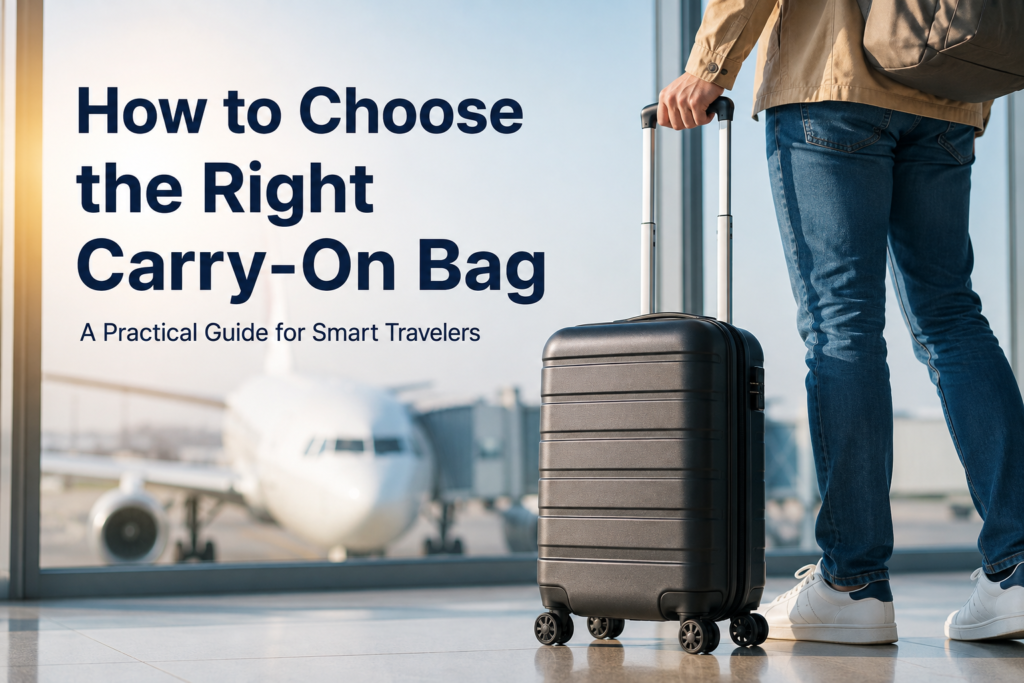
Choosing the right carry on bag is about finding the right balance between size, weight, comfort, durability, organization, security, and price.
In my opinion, the best carry on bag is not necessarily the biggest or most expensive one. It is the bag that fits your travel habits and makes your journey easier.
Before buying, check the current airline requirements, measure the bag carefully, consider its empty weight, test the wheels and handles, and make sure the interior provides enough useful space.
A good carry on bag should help you stay organized instead of creating extra work. When you choose carefully, you can move through airports more comfortably, keep your important belongings close, and enjoy a smoother travel experience.
Whether you prefer a wheeled suitcase or a carry on backpack, taking a little time to compare your options can make a big difference. Your ideal travel bag should be practical, comfortable, durable, and suitable for the way you actually travel.
SEO Keywords: how to choose the right carry on bag, best carry on bag, carry on luggage, travel carry on bag, carry on bag size, lightweight carry on bag, durable carry on luggage, carry on suitcase, best travel bag, airline carry on bag