 travelandlearns
Related Articles
When I am preparing for a trip, I always try to think about the small things that can make the journey easier. A travel water bottle is one of those simple items that may not seem very important at first, but it can become one of the most useful things in your travel bag. Whether I am going on a long road trip, exploring a new city, hiking outdoors, or taking a flight, having a good water bottle helps me stay hydrated and avoid buying bottled water again and again.
However, choosing the right travel water bottle is not always as simple as picking the first bottle that looks attractive. There are different materials, sizes, lids, shapes, and features available. Some bottles are designed for hiking, while others are better for everyday city travel.
In my opinion, the best travel water bottle is the one that matches your travel habits. You do not need the most expensive bottle or the one with the most features. You need something that is comfortable to carry, easy to clean, durable, and suitable for the type of trip you are planning.
Consider the Bottle Size
The first thing I look at when choosing a travel water bottle is its size. Bottle capacity can make a big difference to how convenient it is to carry.
A smaller bottle is usually easier to fit inside a handbag, backpack, or small travel bag. It is a good option for short walks, sightseeing, or situations where you know you will have regular access to drinking water.
A larger bottle can be more useful for hiking, road trips, or outdoor activities where water may not be available frequently. However, a large bottle also becomes heavier when it is full.
Personally, I prefer choosing the size according to the destination. For a city trip, I usually value portability. For outdoor travel, I prefer having enough water to stay comfortable between refill points.
Choose the Right Material
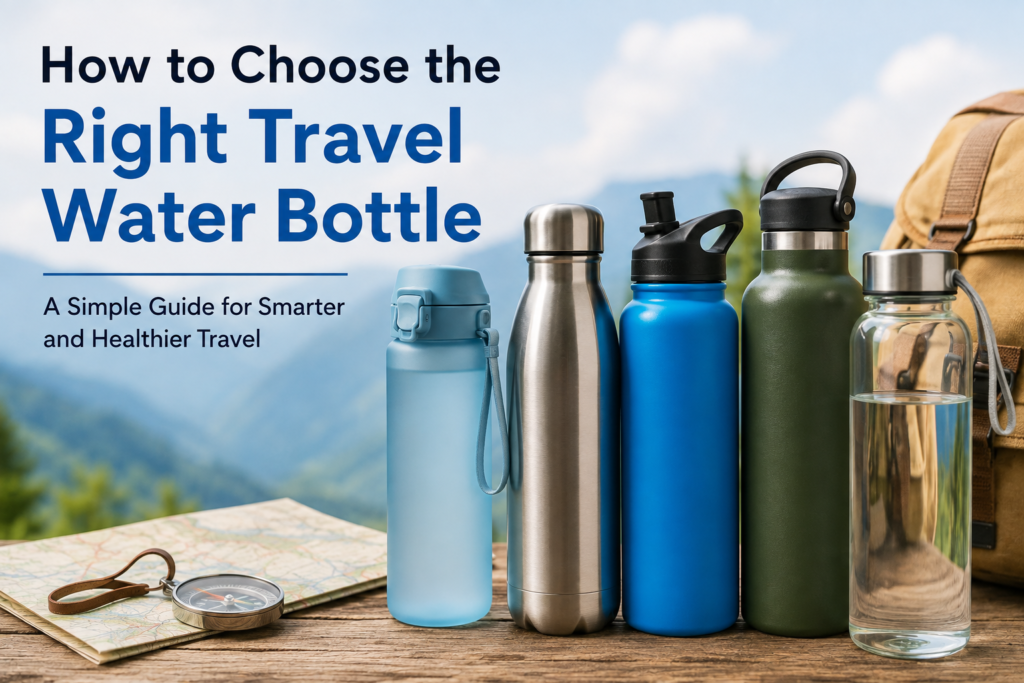
Travel water bottles are commonly made from stainless steel, plastic, glass, or other lightweight materials. Each option has advantages and disadvantages.
Stainless steel bottles are popular because they are durable and can often keep drinks cold or hot for longer when they have insulated construction. I think they are particularly useful for longer trips because they can handle regular use.
Plastic bottles are usually lightweight and affordable. They can be a practical choice when reducing luggage weight is important.
Glass bottles can provide a clean drinking experience, but they are heavier and can break if dropped. For that reason, I would personally be more careful about using glass bottles during active travel.
The best material depends on your priorities. If durability is important, stainless steel may be attractive. If low weight matters most, a lightweight plastic bottle may be more practical.
Look for a Leakproof Design
There is nothing more frustrating than opening your travel bag and discovering that water has leaked everywhere. This is why I believe a leakproof travel water bottle is one of the most important features to look for.
Before buying a bottle, pay attention to the lid and sealing system. A good lid should close securely and should not easily open inside your backpack.
I also recommend testing the bottle at home before taking it on a trip. Fill it with water, close it properly, and place it upside down for a while. This simple test can help you identify problems before the bottle is packed with clothing, electronics, documents, or other important belongings.
Think About Insulation
If you enjoy cold water while traveling, an insulated water bottle can be a great choice. Double wall insulated bottles are designed to help maintain the temperature of drinks for longer periods.
This can be especially useful during hot weather, outdoor adventures, and long journeys. A cold drink can feel refreshing after walking around a busy city or spending several hours outdoors.
Some insulated bottles can also keep hot drinks warm, which makes them useful in cooler weather.
The main thing to remember is that insulated bottles can be heavier than simple bottles. If keeping your luggage light is your priority, you may prefer a lighter design.
Check the Bottle Opening
The size of the bottle opening is another feature I think people sometimes overlook.
A wide mouth can make the bottle easier to fill, clean, and add ice to. It can also make it easier to wash the inside thoroughly.
A narrow opening can be more comfortable for drinking while walking because water flows more slowly. However, narrow bottles can sometimes be harder to clean.
I personally prefer a bottle that offers a good balance between comfortable drinking and easy cleaning.
Make Sure It Is Easy to Clean
A travel water bottle should be easy to clean because it may be used repeatedly during your journey.
Look for a design with removable parts that can be washed properly. Bottles with complicated lids can sometimes collect moisture and residue in small areas.
If you are traveling for several days, cleaning becomes even more important. I recommend rinsing the bottle regularly and washing it properly whenever you have access to suitable facilities.
A bottle that is easy to clean is much more convenient than one that looks attractive but requires a lot of effort to maintain.
Consider the Lid Style
Different travel water bottles come with different lid designs. Some have screw tops, while others have flip lids, straw systems, or push buttons.
The right option depends on how you use your bottle.
If I am walking around a city, I may prefer a bottle that is easy to open with one hand. If I am hiking, a secure lid and comfortable drinking system can be more important.
A simple screw top can be reliable and easy to clean, while a flip lid can provide quicker access to water. Think about your normal routine and choose a design that feels natural for you.
Look for a Comfortable Carrying Option
A good travel water bottle should be easy to carry. Some bottles come with handles, loops, or straps that make them easier to attach to a backpack.
This can be very useful during hiking and sightseeing. Instead of keeping the bottle inside your bag, you may be able to attach it securely to the outside.
However, I would make sure the carrying loop feels strong enough for regular use. A weak attachment point can become a problem when the bottle is full and heavy.
Check the Shape
The shape of a travel water bottle affects how easily it fits into your luggage.
A slim bottle may fit into a backpack side pocket or car cup holder. A wider bottle may provide greater stability but can take up more room.
I prefer a bottle that fits naturally into the bags and holders I already use. There is no point buying a large bottle if it does not fit comfortably into your travel setup.
Before purchasing, check the dimensions rather than looking only at the stated capacity.
Think About Weight
Weight is another important consideration for travelers. A bottle that feels light when empty can become surprisingly heavy when filled with water.
If you are walking several kilometers every day while sightseeing, that extra weight can become noticeable.
For short trips, a lightweight bottle may be enough. For outdoor adventures, you may accept a little extra weight in exchange for insulation and durability.
For me, the best choice is usually a balance between strength and portability.
Consider Durability
Travel items can experience a lot of movement and handling. Your bottle may be dropped, squeezed into a backpack, or placed on different surfaces throughout the journey.
That is why durability matters.
If you travel frequently, I think it is worth investing in a bottle made from reliable materials with a strong lid and good overall construction. A durable bottle can be used on many trips instead of being replaced after a few uses.
Check Whether It Fits Your Travel Routine
Before buying a travel water bottle, I recommend thinking about how you normally travel.
If you spend most of your time in hotels and cities, you may want a compact bottle that is easy to refill and carry.
If you enjoy hiking and outdoor activities, durability, insulation, and a secure lid may be more important.
For road trips, a bottle that fits into a vehicle cup holder can be very convenient. For air travel, a lightweight bottle that can be emptied before security screening and refilled afterward can be a practical choice.
The best travel water bottle is ultimately the one that fits your routine.
Think About Sustainability
Reusable water bottles can also help reduce dependence on single use plastic bottles. When I travel, I prefer carrying a reusable bottle whenever it is practical to refill it safely.
This can also save money over the course of a trip because you may not need to purchase bottled water as frequently.
Of course, water quality and safe refill options vary by destination. Always follow local guidance about drinking water and use an appropriate filtration or purification method when necessary.
Final Thoughts
Choosing the right travel water bottle is mainly about understanding your own needs. I would look at size, material, weight, durability, insulation, leak protection, lid design, cleaning, and portability before making a decision.
For me, a good travel water bottle should be simple and dependable. It should not leak inside my bag, it should be comfortable to carry, and it should be easy to clean after use.
I also believe there is no single bottle that is perfect for every traveler. Someone going on a hiking adventure may need something completely different from someone spending a weekend exploring a city.
Before buying one, think about where you travel, how long your trips usually last, how much water you need, and how you plan to carry the bottle. Once you understand these things, choosing the right travel water bottle becomes much easier.
A good bottle may seem like a small travel accessory, but it can make staying hydrated more convenient throughout your entire journey. In my view, that makes it one of the simplest and most useful items worth adding to a travel bag.