 travelandlearns
Related Articles



A long trip can be one of the most exciting experiences in life, but it can also become stressful if things are not properly organized. When you travel for several days or even weeks, you have to manage your luggage, documents, money, transportation, accommodation, daily activities, and personal belongings. Without a simple system, it is easy to forget something or waste valuable time looking for things.
From my point of view, staying organized during a long trip does not mean planning every minute of your journey. It means having a simple routine that helps you know where your important things are, what you need to do, and what is coming next. With a little preparation and a few useful habits, you can enjoy a smoother and more comfortable travel experience.
Start With a Simple Travel Plan
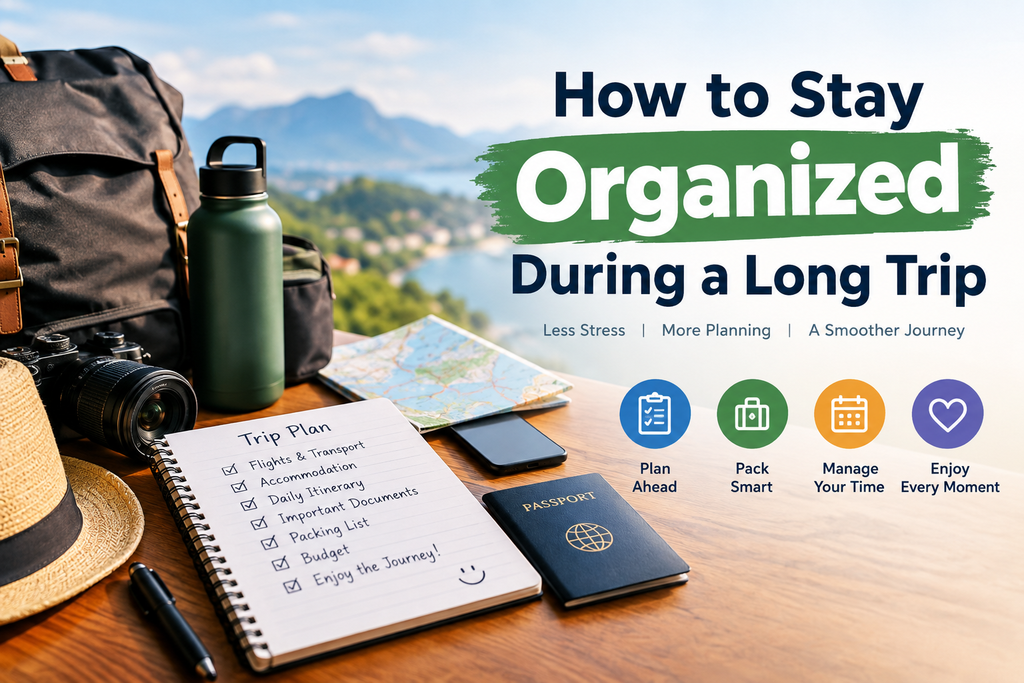
Before starting a long trip, I believe the first step is creating a simple travel plan. You do not need a complicated document. A basic list containing your destinations, transportation, accommodation, important activities, and travel dates can be enough.
Write down the main details of your journey in one place. Include hotel names, booking information, transportation details, and important contact information. Keeping these details together makes it much easier to check your plans when you are away from home.
I also recommend leaving some free time in your schedule. A long trip rarely goes exactly according to plan. Flights can be delayed, roads can be busy, or you may discover a place where you want to spend more time. A flexible travel plan gives you room to enjoy unexpected experiences.
Keep Important Documents Together
Travel documents are among the most important things to organize during a long trip. Losing your passport, tickets, identification, or booking information can create unnecessary problems.
I prefer keeping important documents in one secure place. You can use a small travel folder or a dedicated document pouch. Your passport, copies of important documents, travel insurance details, hotel information, and transportation bookings should be easy to access when needed.
It is also helpful to keep digital copies of important documents on your phone or in secure cloud storage. If something is lost or damaged, having a backup can make the situation easier to manage.
Organize Your Luggage Carefully
One of the easiest ways to stay organized during a long trip is to organize your luggage before leaving home.
Instead of putting everything into your suitcase randomly, group similar items together. Keep clothes in one section, electronics in another, toiletries in a separate bag, and important items somewhere easy to reach.
Packing cubes can also be useful because they help divide your luggage into smaller sections. For example, you can have one cube for shirts, another for trousers, and another for underwear.
I also recommend keeping a small bag for items that you use every day. This can include your phone charger, headphones, wallet, medication, sunglasses, or other personal essentials. When these things have a regular place, you spend less time searching for them.
Create a Daily Routine
Long trips can sometimes disturb your normal routine. You may sleep at different times, eat differently, and spend most of the day exploring unfamiliar places. Creating a simple daily routine can help you stay organized.
Your routine does not have to be strict. You might simply decide to check your schedule every morning, organize your belongings before leaving your accommodation, and review your plans before going to sleep.
I find that a few minutes of organization each day can prevent many problems later. Before leaving your hotel or accommodation, check your phone, wallet, passport, room, and luggage. This simple habit can help prevent forgotten belongings.
Use Your Phone as a Travel Organizer
Your smartphone can become one of your most useful travel organization tools. Instead of carrying lots of paper, you can store many travel details digitally.
Create folders for travel documents, hotel bookings, transportation information, maps, and important contacts. You can also use notes or calendar applications to keep track of your plans.
I recommend taking screenshots of important information when possible. Internet access is not always reliable while traveling, so having essential information available offline can be very useful.
Make sure your phone is charged before leaving your accommodation. Carrying a portable charger can also help when you spend long hours exploring a destination.
Keep Track of Your Money
Managing money becomes especially important during a long trip. When you travel for several weeks, small daily expenses can quickly add up.
Create a simple travel budget before your journey. Divide your expected spending into categories such as accommodation, transportation, food, activities, shopping, and emergencies.
During the trip, keep track of your spending. You do not need to record every small purchase if that feels inconvenient, but checking your expenses regularly can help you avoid spending too much.
I also recommend keeping your payment methods organized. Avoid keeping all your cash and cards in one place. Having a backup payment option can be helpful if your main card is lost or does not work.
Keep Your Accommodation Organized
When staying in the same hotel for several nights, it is tempting to spread your belongings everywhere. However, this can make packing and finding things much harder.
I prefer keeping my luggage organized throughout the trip rather than unpacking everything. Take out only what you need and return items to their proper place after using them.
Before checking out, do a complete room check. Look under the bed, inside drawers, around charging areas, and in the bathroom. Many travelers accidentally leave small items behind because they are focused on reaching their next destination.
Manage Your Travel Schedule
A long trip may include several destinations, which means transportation schedules can become confusing. Keep track of your flights, trains, buses, rental cars, and other transportation arrangements.
I recommend checking the next day’s schedule before going to sleep. Confirm your departure time, location, transportation, and how long it will take to reach the station or airport.
This small habit can reduce morning stress and help you avoid rushing.
Keep Your Health and Personal Items Organized
Your personal care items should also have a fixed place in your luggage. Toiletries, basic first aid supplies, medications, sunscreen, and other essentials should be stored where they are easy to find.
If you regularly use any medication, make sure you carry enough for the entire trip and keep it stored safely according to its instructions.
It is also useful to carry a small personal care bag that you can quickly access. This is especially convenient during long transportation journeys when you may not want to open your entire suitcase.
Make a Small Emergency Plan
Even when you plan carefully, unexpected situations can happen. Your transportation may be delayed, accommodation plans may change, or you may lose an important item.
For this reason, I believe every long trip should have a basic backup plan. Keep emergency contact information, copies of important documents, backup payment options, and essential travel information available.
You should also know how to contact your accommodation and transportation provider if something changes.
The goal is not to worry about everything that could go wrong. The goal is simply to be prepared enough that a small problem does not ruin your entire trip.
Do a Quick Organization Check Every Evening
One of my favorite habits for staying organized during a long trip is doing a quick evening check.
Before going to sleep, look at your plans for the next day. Charge your devices, prepare the clothes you may need, organize your bag, and check transportation details.
This may take only ten minutes, but it can make the next morning much easier.
You can also take a moment to check whether you have used anything that needs to be replaced. For example, you may need water, toiletries, snacks, or other basic supplies.
Do Not Overpack
Overpacking is one of the biggest enemies of travel organization. The more things you carry, the more difficult it becomes to keep everything organized.
Before packing, think about what you will realistically use. Choose clothing that can be combined in different ways and avoid taking items simply because you think you might need them.
A lighter suitcase is easier to move, easier to organize, and less stressful when changing accommodations.
Give Everything a Regular Place
The simplest organization rule I follow while traveling is to give everything a regular place.
Your passport should have a specific location. Your wallet should have a specific location. Your charger, headphones, toiletries, and other essentials should also have their own places.
When you follow this habit every day, you will know exactly where to look when you need something.
Conclusion
Knowing how to stay organized during a long trip can make a huge difference in your overall travel experience. You do not need complicated systems or expensive travel accessories. A simple travel plan, organized luggage, secure documents, a daily routine, and regular checks can help you stay in control.
In my opinion, the best travel organization system is one that is simple enough to follow every day. Keep important things together, avoid carrying unnecessary items, manage your schedule, track your spending, and prepare for unexpected situations.
Most importantly, do not let organization take away from the fun of traveling. The purpose of planning is to reduce stress so you have more time and energy to explore, relax, and enjoy the places you visit. When your belongings and plans are under control, you can focus more on creating memorable experiences during your long trip.