 travelandlearns
Related Articles



Choosing a travel destination is one of the most exciting parts of planning a trip, but I believe it is also something that deserves careful thought. When I start thinking about a vacation, I do not simply choose a place because I saw a beautiful picture online. I first try to understand what the destination is really like, how much the trip may cost, what the weather will be, what I can do there, and whether it matches the kind of experience I want.
A destination can look perfect in photographs but may not be the right choice for your budget, travel style, or schedule. That is why doing some research before booking can save money, reduce stress, and help you enjoy your vacation much more.
In this article, I am sharing the most important things to research before choosing a destination. These tips can help you make a smarter decision and plan a trip that actually matches your expectations.
1. Research Your Travel Budget
The first thing I recommend checking is the total cost of the trip. A destination may seem affordable at first, but the actual expenses can be much higher once you include flights, accommodation, food, transportation, activities, and other costs.
I usually try to create a rough budget before becoming too attached to a particular destination. This helps me compare different options realistically.
For example, one destination may have inexpensive flights but expensive hotels, while another may have higher airfare but much cheaper food and accommodation.
Remember to include smaller expenses as well. Airport transfers, attraction tickets, luggage fees, travel insurance, internet access, and souvenirs can all add to the final cost.
A realistic budget gives you a better idea of whether a destination is genuinely affordable for you.
2. Check the Weather and Best Travel Season
Weather can completely change your travel experience, so it should always be part of your research.
Before choosing a destination, check the typical temperatures and weather conditions during the dates you are considering. Think about what type of weather you personally enjoy.
If you love beaches, you probably want warm and sunny conditions. If you enjoy hiking, extremely hot weather may make outdoor activities uncomfortable. If you want to see autumn foliage or winter snow, timing becomes even more important.
I also recommend checking the busiest travel season. Peak season often brings better weather but can also mean larger crowds and higher prices.
Sometimes traveling during the shoulder season can give you a good balance between pleasant weather, fewer tourists, and reasonable prices.
3. Research the Main Attractions
Before choosing a destination, I like to find out what there actually is to see and do.
Look at the famous attractions, but also research activities that match your personal interests. If you love history, search for museums, monuments, historic neighborhoods, and cultural sites. If nature is your priority, look for mountains, beaches, forests, lakes, national parks, and hiking trails.
Do not choose a destination simply because it is popular. Ask yourself whether its attractions are interesting to you.
A destination can be famous for nightlife, for example, but that does not make it a good choice for someone who prefers peaceful nature and outdoor activities.
The best destination is one where the available experiences match your interests.
4. Research Transportation
Transportation is another important factor that is easy to overlook.
Before choosing a destination, find out how easy it is to reach the place and how you will travel once you arrive. Check flights, trains, buses, taxis, rental cars, and local transportation options.
I especially recommend researching airport transportation. You do not want to arrive after a long flight and discover that reaching your hotel is difficult or unexpectedly expensive.
Also consider the size of the destination. Some cities are easy to explore on foot, while others require public transportation or a rental car.
If you want a relaxing vacation, spending hours every day traveling between attractions may not be ideal.
5. Look at Accommodation Options
Accommodation can have a major effect on the overall cost and quality of your trip.
Before selecting a destination, check whether there are hotels, guesthouses, hostels, apartments, or other options within your budget.
I always look at location as well as price. A cheap hotel far away from everything may not actually save money if you have to spend a lot on transportation.
Read recent reviews and pay attention to comments about cleanliness, noise, location, service, and safety.
I also recommend checking the cancellation policy before making a booking. Travel plans can change, and flexible reservations can sometimes be worth paying slightly more for.
6. Research Local Food
Food is a major part of travel for me, so I always research what a destination is known for.
Find out which local dishes are popular and whether the destination has restaurants, markets, cafés, or street food that you would enjoy.
Food research can also help you estimate your daily expenses. Some destinations have inexpensive local meals, while others can be surprisingly expensive.
If you have food allergies, dietary restrictions, or specific preferences, research these issues before booking your trip.
I also enjoy looking at local food culture because it can tell you a lot about a destination. Sometimes a traditional meal or local market becomes one of the best memories of the entire trip.
7. Learn About Safety
Safety should be part of every travel decision.
Before choosing a destination, research general safety conditions and learn about areas that visitors should avoid. Look for information from reliable government sources and recent traveler experiences.
You can also research common tourist scams and basic precautions. Knowing what to expect can help you avoid unnecessary problems.
This does not mean you should be afraid of visiting unfamiliar places. I believe the purpose of safety research is simply to stay informed and make sensible decisions.
Also check whether your accommodation is located in a convenient and safe area, especially if you expect to return after dark.
8. Research Local Culture and Customs
Every destination has its own traditions and social expectations. I think learning about these before traveling shows respect and can make your experience more enjoyable.
Research local clothing expectations, greetings, tipping practices, photography rules, religious customs, and appropriate behavior in public places.
Some destinations may have specific rules about visiting religious buildings or taking photographs of people.
Learning a few basic words in the local language can also be helpful. Even simple greetings and polite expressions can make interactions with local people more pleasant.
You do not need to know the entire language. A little preparation can go a long way.
9. Check Entry and Visa Requirements
Before booking flights or accommodation, always research the entry requirements for your destination.
Depending on your nationality and the country you plan to visit, you may need a visa, electronic travel authorization, passport validity, proof of accommodation, travel insurance, or other documents.
I recommend checking official government or embassy sources because immigration requirements can change.
Do not depend entirely on information from old travel articles or social media posts.
Also check your passport’s expiration date well before your trip. Some destinations require passports to remain valid for a certain period beyond your planned departure.
This is one of the most important things to research before choosing a destination because an otherwise perfect trip can become impossible if the entry requirements are not met.
10. Research Internet and Mobile Connectivity
Staying connected is increasingly important for travelers.
Before choosing a destination, check whether your mobile provider offers international roaming and compare the cost with local SIM or eSIM options.
Good internet access can be useful for navigation, translation, transportation apps, restaurant reservations, and staying in contact with family.
If reliable internet is important to you, especially for work, check recent traveler reviews about connectivity at hotels and in different parts of the destination.
I also recommend downloading offline maps and important travel information before leaving home.
11. Read Recent Traveler Reviews
Online reviews can give you valuable information, but I recommend reading them carefully.
Look for recent reviews rather than relying on information from several years ago. Hotels, attractions, restaurants, transportation systems, and local conditions can change.
Travel blogs can help you discover ideas, while traveler forums and reviews can provide practical experiences.
I prefer comparing several sources instead of trusting one person’s opinion. Everyone travels differently, so what one person considers a problem might not matter to you at all.
The goal is to identify repeated patterns and get a realistic understanding of the destination.
12. Think About Your Travel Style
One of the most important questions to ask yourself is what kind of traveler you are.
Do you prefer beaches, mountains, history, food, shopping, adventure, nature, nightlife, or peaceful surroundings?
This question can completely change your destination choice.
For example, a busy city may be perfect for someone who enjoys museums and restaurants but overwhelming for someone who wants quiet landscapes.
I believe the best destination is not necessarily the destination everyone else recommends. It is the destination that fits your personality and interests.
13. Consider How Much Time You Have
Your available travel time should also influence your decision.
If you only have a few days, choosing a destination that requires long travel times between attractions may not be practical.
For a short vacation, I usually prefer a place where the main attractions are relatively close together.
If you have several weeks, you can consider larger countries or destinations where traveling between different regions is part of the experience.
Researching distances and travel times before booking can help you avoid spending most of your vacation in transportation.
Final Thoughts
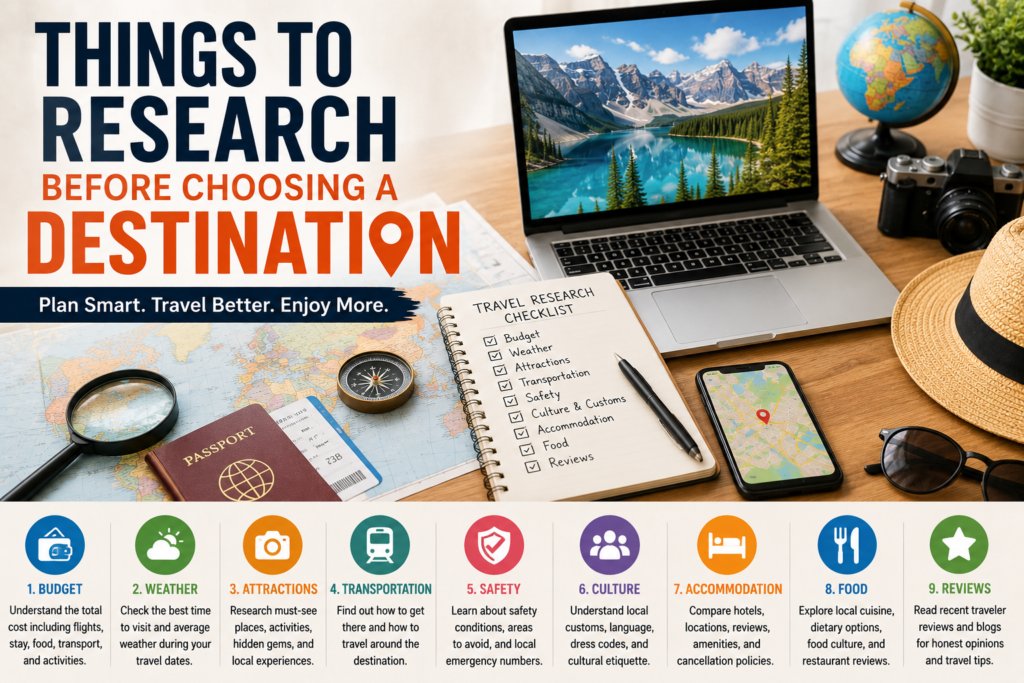
There are many things to research before choosing a destination, but the most important ones are budget, weather, attractions, transportation, accommodation, food, safety, culture, entry requirements, connectivity, and traveler reviews.
For me, destination research is not about making a vacation completely predictable. It is about understanding what I am choosing before spending money and making travel commitments.
I recommend starting with your personal interests and budget. Then compare the weather, attractions, transportation, accommodation, and local experiences. Check official information for entry requirements and safety, and use recent traveler reviews to understand what the destination is really like.
Most importantly, choose a destination because it offers the experience you want rather than simply because it is trending online.
A little research before booking can make your trip more comfortable, affordable, and enjoyable. It can also help you discover destinations that are a much better match for you than the places that simply look attractive in photographs.
When you know what to expect, you can spend less time worrying about practical problems and more time enjoying the journey.