 travelandlearns
Related Articles


Visiting a new country can be one of the most exciting experiences in life. You get the opportunity to see different places, taste new food, meet people from another culture, and learn how life works somewhere completely different from home. At the same time, traveling to a new country requires some preparation. A little research before your trip can save you from unnecessary stress and help you enjoy your vacation much more.
From my experience and knowledge, I believe that good preparation does not mean planning every single minute of your trip. It simply means understanding the important things about your destination before you arrive. Knowing the local culture, weather, transportation, money, safety rules, and basic travel requirements can make a big difference.
If you are wondering what to know before visiting a new country, this guide covers the most important things I recommend checking before your next international trip.
Research the Country Before You Travel
The first thing I always recommend is doing some basic research about the country you are planning to visit. You do not need to become an expert, but knowing a little about your destination can make your trip easier.
Start by learning about the country’s major cities, popular attractions, local customs, climate, transportation, and general lifestyle. Look at a map so you have a basic idea of where everything is located.
I also recommend reading travel blogs and recent traveler experiences. They can give you practical information that you may not find in a traditional guidebook.
Understanding the destination before arriving also helps you set realistic expectations. Every country has its own way of doing things, and being prepared can help you appreciate those differences rather than becoming frustrated by them.
Check Visa and Entry Requirements
One of the most important things to know before visiting a new country is whether you need a visa.
Visa requirements can vary depending on your nationality, the purpose of your visit, and the length of your stay. Some countries offer visa free entry, while others require travelers to apply for a visa before departure.
Always check the current requirements through the official government or embassy website before making final travel arrangements. Do not rely only on information from social media or old travel posts because entry requirements can change.
Also check your passport’s validity. Some countries require your passport to remain valid for a certain period beyond your planned departure date.
Taking care of these details early can prevent serious problems at the airport.
Learn About the Local Culture
One of my favorite parts of international travel is discovering how different cultures approach everyday life. Before visiting a new country, spend some time learning about local customs and traditions.
Things that are normal in your home country may be considered rude or inappropriate somewhere else. This can include clothing, greetings, table manners, photography, tipping, or behavior at religious places.
You do not need to know every cultural rule. Simply showing respect and being willing to learn can go a long way.
If you are visiting temples, mosques, churches, or other religious sites, check whether there are specific clothing or behavior requirements. A little preparation shows respect for the local community and can make your experience more enjoyable.
Learn a Few Local Words
You do not need to become fluent in the local language before traveling. However, learning a few basic words can be extremely helpful.
Simple phrases such as hello, thank you, please, excuse me, and goodbye are useful almost anywhere. Learning how to ask for directions or assistance can also be valuable.
I have found that people often appreciate travelers who make an effort to speak even a few words of their language. It can create a friendlier interaction and sometimes makes it easier to connect with locals.
If the language is completely unfamiliar, download an offline translation tool before leaving home. Having access to basic translations without an internet connection can be very useful.
Understand the Local Currency
Money is another important thing to understand before visiting a new country.
Find out what currency is used and learn its approximate value compared with your own currency. You do not need to memorize complicated exchange rates, but having a general idea can help you understand prices.
I also recommend checking whether credit cards are commonly accepted. In some destinations, cards are widely used, while smaller businesses, local markets, taxis, or rural areas may prefer cash.
Carrying a small amount of local currency can be useful when you first arrive. At the same time, avoid carrying more cash than you actually need.
Before traveling, check with your bank or card provider about international transaction fees and make sure your payment cards are suitable for overseas use.
Research Transportation
Getting around a new country can sometimes be confusing, especially during your first visit. Before arriving, research the main transportation options.
Depending on the destination, you may have access to trains, buses, taxis, metro systems, ferries, rental cars, or domestic flights.
Find out how you will travel from the airport to your accommodation. Having a basic plan for your arrival can make your first few hours much easier.
If you are planning to rent a car, check the local driving rules and whether your license is accepted. Learn about road conditions, traffic patterns, parking rules, and any additional documentation you may need.
For major cities, public transportation can often be a convenient and affordable way to explore.
Check the Weather
Weather can completely change your travel experience. Before packing your bags, check the typical weather for the exact dates of your trip.
Do not assume that every country has the same seasons as your home country. Some destinations have different seasonal patterns, while countries in the Southern Hemisphere experience opposite seasons from countries in the Northern Hemisphere.
Check expected temperatures, rainfall, humidity, and other conditions. Then pack clothing that matches the weather.
I always think comfortable shoes are important, especially if you plan to explore cities on foot. A light jacket or rain protection can also be useful depending on the destination.
Research Food and Local Dining
Trying local food is one of the best parts of visiting a new country. Before your trip, research some of the dishes the destination is known for.
If you have food allergies or dietary restrictions, learn how to communicate them in the local language. It can also be helpful to identify restaurants or food options that can accommodate your needs.
Do not be afraid to try something new, but use common sense when choosing where to eat. Busy local restaurants can often be a good sign because food is being prepared regularly.
I believe food can tell you a lot about a country’s culture, so leave some space in your travel plans for local dining experiences.
Understand Local Safety Rules
Safety should always be part of your travel preparation. Before visiting a new country, research areas that travelers should avoid and learn about common scams.
You should also know the local emergency numbers and keep important contact information accessible.
Make copies or secure digital versions of important documents such as your passport, visa, travel insurance information, and accommodation details.
I also recommend keeping your valuables secure and being aware of your surroundings in crowded places. Most trips are perfectly enjoyable, but basic awareness can prevent many common problems.
Consider Travel Insurance
Travel insurance is something many people overlook until they need it. Depending on your trip, insurance may provide coverage for certain medical emergencies, cancellations, lost luggage, or other unexpected situations.
The right coverage depends on your destination and activities, so read the policy carefully before purchasing it.
If you are planning adventure activities such as skiing, diving, hiking, or other higher risk activities, check whether your policy covers them.
For me, travel insurance is less about expecting something to go wrong and more about being prepared if something unexpected happens.
Know How to Stay Connected
Staying connected while traveling can make things much easier. Before leaving home, check your options for mobile data, international roaming, local SIM cards, or eSIM services.
Having internet access can help you use maps, translation tools, transportation apps, booking services, and emergency information.
I also recommend downloading important maps and travel information for offline use. Internet access can sometimes be unreliable, especially when traveling outside major cities.
Make sure your phone is unlocked if you plan to use a local SIM card.
Respect Local Laws
Every country has its own laws, and travelers are expected to follow them. Some rules may be very different from those in your home country.
Before traveling, research any laws that could affect visitors. This is especially important regarding photography, alcohol, medication, driving, public behavior, and restricted items.
Never assume that something is allowed simply because it is legal where you live.
Respecting local laws is one of the most important responsibilities you have as a traveler.
Do Not Overplan Your Trip
Preparation is important, but I do not think you need to plan every minute of your vacation.
Create a general itinerary with the places you really want to see, but leave some free time. You may discover a small restaurant, beautiful neighborhood, local market, or interesting attraction that was not part of your original plan.
Some of my favorite travel memories come from unexpected moments.
A flexible schedule also gives you time to rest. Traveling can be tiring, especially when you are changing cities frequently.
Final Thoughts
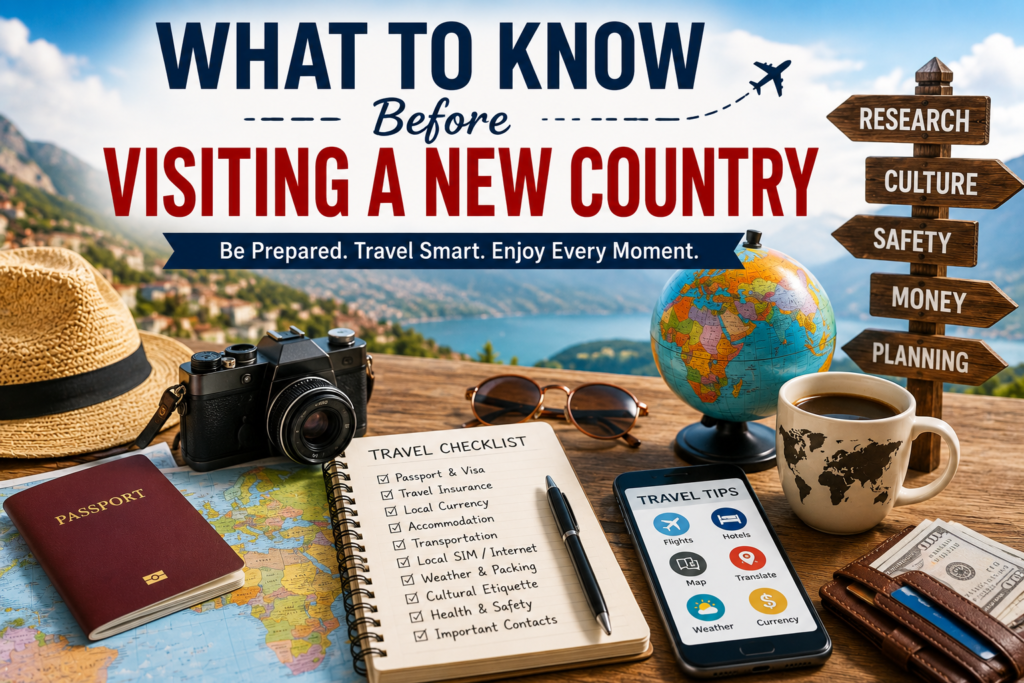
Knowing what to know before visiting a new country can make your international travel experience much smoother. Researching visa requirements, understanding local culture, learning basic language phrases, checking the weather, preparing your money, and researching transportation are all simple steps that can save you from unnecessary problems.
At the same time, remember that travel is about experiencing something new. You do not need to know everything before you arrive.
Go with an open mind, respect local people and traditions, stay aware of your surroundings, and give yourself time to enjoy the journey.
For me, the best international trips are the ones where preparation provides confidence but curiosity leaves room for discovery. A new country can teach you things that no guidebook can fully explain. The more prepared you are, the more freedom you have to relax, explore, and enjoy everything your destination has to offer.