 travelandlearns
Related Articles



When I am preparing for a long journey, one thing I never like to ignore is food. A long flight, road trip, train ride, or bus journey can become uncomfortable when you are hungry and there is nothing good available to eat. Airport food can also be expensive, and sometimes the choices are not exactly what I want.
That is why I prefer packing my own travel snacks. Having a few simple snacks in my bag gives me more control over what I eat and helps me stay comfortable throughout the journey.
In this guide, I am sharing some of the best travel snacks to pack for a long journey, based on practical choices that are easy to carry, filling, and convenient to eat.
Why Travel Snacks Are Important
Long journeys can last several hours, and meal times do not always match your schedule. You may experience a delayed flight, a long connection, heavy traffic, or a train journey with limited food options.
Packing healthy travel snacks can help you avoid getting extremely hungry. I also find that having small snacks available makes traveling less stressful because I do not have to immediately search for a restaurant or convenience store whenever I feel hungry.
The best travel snacks should be easy to pack, reasonably nutritious, and simple to eat without making a mess.
Nuts and Seeds
Nuts are one of my favorite snacks for long journeys because they are small, filling, and easy to carry. Almonds, cashews, walnuts, pistachios, and peanuts can all work well.
Nuts contain protein and healthy fats, which can help keep you satisfied for longer. I usually prefer unsalted or lightly salted nuts because they are easier to enjoy during a long trip.
You can also prepare a small homemade trail mix using nuts, seeds, and dried fruit. Keeping the portion moderate makes it easy to carry and prevents your bag from becoming overloaded with food.
Before traveling internationally, always check the food and customs rules of your destination because some countries have restrictions on bringing fresh or packaged foods across borders.
Fresh Fruits
Fresh fruit is another excellent option when it is suitable for your journey. Apples, oranges, bananas, and grapes can be convenient choices depending on how you pack them.
Apples are particularly useful because they are relatively firm and do not require cutting. Bananas are also convenient, although I prefer eating them earlier in the journey because they can become bruised inside a bag.
Fruit provides natural carbohydrates and can be a refreshing alternative to heavily processed snacks.
For longer trips, I recommend choosing fruits that can survive several hours without becoming messy. If you pack cut fruit, use a clean sealed container and keep it properly chilled when necessary.
Dried Fruit
Dried fruit is useful when you want something sweet without carrying bulky fresh fruit. Raisins, dried apricots, dates, cranberries, and prunes are easy to pack in a small container.
I especially like dates for travel because they are compact and satisfying. Dried fruit can also be mixed with nuts to make a simple homemade trail mix.
One thing I keep in mind is portion size. Dried fruit is concentrated, so it is easy to eat more than you intended. A small container is usually enough for a journey.
Granola Bars and Energy Bars
Granola bars are classic travel snacks for a reason. They are individually packaged, easy to store, and do not usually require refrigeration.
When choosing a granola bar, I prefer options with simple ingredients, some fiber, and a reasonable amount of sugar. Some bars can be closer to candy than a balanced snack, so checking the nutrition label is worth the few seconds it takes.
Energy bars can also be useful when you expect a physically demanding trip, such as hiking or exploring a new destination after arrival.
Crackers and Whole Grain Snacks
Crackers are another simple choice for travelers. Whole grain crackers can provide carbohydrates and some fiber while being easy to portion.
I like packing crackers in a small reusable container rather than carrying a large box. This saves space and protects them from breaking.
You can pair crackers with another suitable snack, such as nuts or a shelf stable spread, to make the snack more satisfying.
Popcorn
Popcorn can be a surprisingly good travel snack. It is lightweight, easy to portion, and gives you something crunchy to enjoy during a long journey.
I prefer lightly seasoned popcorn because heavily flavored varieties can leave your hands oily or create a strong smell in a crowded space.
Pack popcorn in a sealed bag or container so it does not get crushed inside your luggage.
Roasted Chickpeas
Roasted chickpeas are an excellent option if you want something crunchy and filling. They contain plant based protein and can be seasoned in different ways.
You can prepare them at home or buy a packaged version. I prefer keeping the seasoning moderate because very salty snacks can make me feel thirsty during travel.
They are particularly useful for road trips because they are easy to eat in small portions.
Sandwiches and Wraps
For a longer journey, sometimes a proper meal is more useful than several small snacks. A simple sandwich or wrap can solve that problem.
I recommend keeping the ingredients simple. Bread or a tortilla with a suitable filling can be convenient, but foods containing meat, dairy, eggs, or other perishable ingredients need appropriate temperature control.
If you are traveling for several hours, use an insulated lunch bag with suitable cold packs when needed. Food safety should always come before convenience.
For air travel, also remember that security and customs rules can vary depending on the airport and destination.
Protein Rich Snacks
Protein can make a snack more satisfying, especially when there will be a long gap between meals.
Nuts, roasted chickpeas, certain protein bars, and other shelf stable protein snacks can be useful choices.
I try not to depend entirely on sugary snacks during a long journey. They may provide quick energy, but I find that a combination of protein, fiber, and carbohydrates is generally more satisfying.
Vegetable Snacks
If you want something fresh and light, vegetables can be a good option. Carrot sticks, cucumber slices, and celery can work well when properly packed.
I recommend using a leakproof container because vegetables can release moisture during travel.
If you want a dip such as hummus, pack it carefully and consider the temperature requirements. For air travel, check current security rules before packing liquids, gels, or spreads.
Dark Chocolate
I always think it is fine to include one enjoyable treat in a travel snack bag. A small amount of dark chocolate can satisfy a sweet craving without taking much space.
However, chocolate can melt in warm conditions, so I would avoid packing it loosely in a hot car or an uncooled bag.
A small sealed container can protect it from getting damaged or making a mess.
Homemade Snack Mix
One of the easiest ways to create travel snacks is to make your own snack mix.
I usually combine a few ingredients that provide different textures and flavors. Nuts, seeds, dried fruit, whole grain cereal, and a small amount of dark chocolate can make a simple mixture.
The biggest advantage is that you can control the ingredients and portion size. You can also prepare several small bags before leaving home.
What I Avoid Packing
Not every food is suitable for a long journey. I generally avoid snacks that are extremely messy, have strong smells, or spoil quickly without proper refrigeration.
Very oily foods can make your hands uncomfortable, while foods with sauces can leak into your bag. I also avoid packing foods that are difficult to eat in a small seat or crowded vehicle.
If you are flying internationally, I pay particular attention to destination rules because fresh produce, meat, dairy products, seeds, and other foods may be restricted.
How I Pack Travel Snacks
Good snacks are only useful if they are packed properly. I prefer using small reusable containers or sealed bags to separate different foods.
I also keep the snacks somewhere easy to reach. There is nothing more frustrating than putting your snacks at the bottom of a packed suitcase and then trying to find them during the journey.
For road trips, I keep a small snack bag within reach. For flights and trains, I use a compact pouch that fits easily into my personal bag.
I also pack tissues and a few wet wipes because eating while traveling can become messy.
Do Not Forget Water
Snacks are important, but hydration matters too. I always make sure I have a plan for drinking enough water during a long journey.
A reusable water bottle can be useful, especially when traveling through places where you can refill it after security. During air travel, remember that airport security rules can limit the amount of liquid you can take through the checkpoint.
I also try not to rely too heavily on very salty snacks because they can make me feel thirstier.
Final Thoughts
Choosing the best travel snacks to pack for a long journey does not have to be complicated. I believe the best approach is to keep things simple and choose foods that are easy to carry, easy to eat, and suitable for the length of the trip.
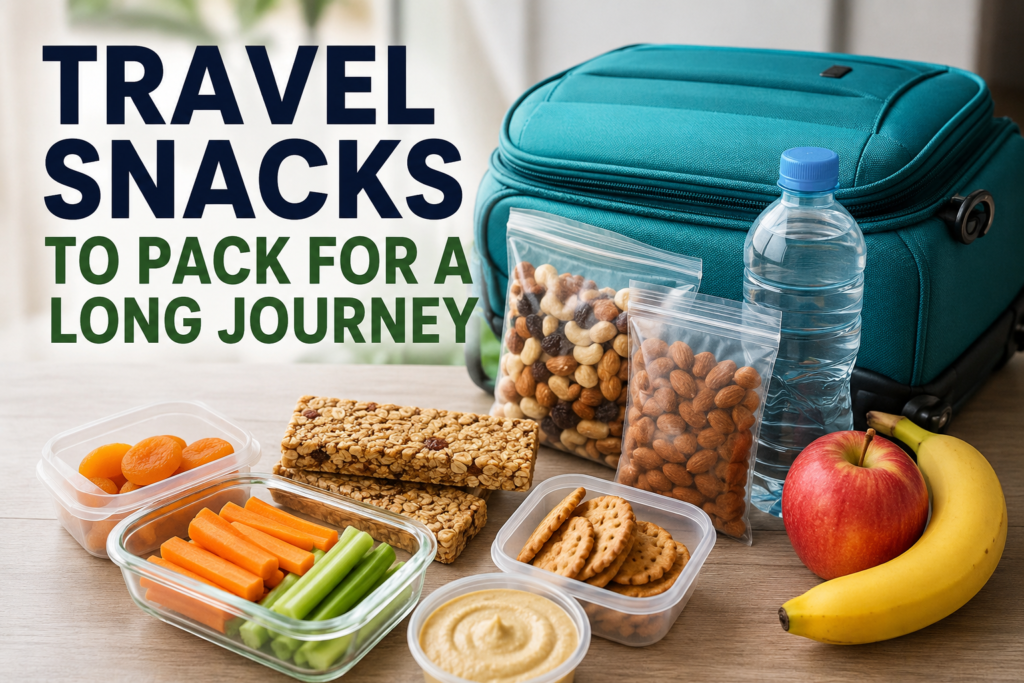
My basic combination would be nuts, fresh or dried fruit, a granola bar, crackers, and one more filling option such as a sandwich or roasted chickpeas. I would also include a small treat because traveling should be enjoyable, not just practical.
Most importantly, think about your destination, journey length, storage conditions, and food restrictions before packing. A little preparation at home can make a long journey much more comfortable.
When I know that I have good travel snacks in my bag, I feel more prepared and less dependent on whatever food happens to be available along the way. That small bit of preparation can make a surprisingly big difference to the overall travel experience.