 travelandlearns
Related Articles

Managing money in another country can feel confusing, especially when you are traveling internationally for the first time. You have to think about currency exchange, cash, bank cards, ATMs, payment fees, exchange rates, and keeping your money safe. I believe that understanding these things before leaving home can make your trip much more comfortable.
When I plan an international trip, I do not like depending on only one payment method. Having some local cash, a reliable bank card, and access to emergency funds gives me more confidence. Every destination works differently, so it is also important to understand how people normally pay for things where you are going.
This international money and payment guide for travelers explains the basics in simple language. From exchanging currency to using cards and ATMs, these tips can help beginners manage their travel money more confidently.
Understand the Local Currency
The first thing I recommend is learning about the currency used at your destination.
Before traveling, find out the currency name, common notes and coins, and approximate exchange rate compared with your home currency. You do not need to memorize every exchange rate, but having a rough idea can help you understand prices.
For example, if you know that a particular amount of local currency is approximately equal to a certain amount in your home currency, you can quickly estimate the cost of meals, transportation, hotels, and shopping.
A currency converter on your phone can also be helpful. Save one that works offline if possible so you can check prices even without an internet connection.
Check Exchange Rates Before Your Trip
Currency exchange rates change regularly. The rate you see online may not be exactly the rate you receive when exchanging cash or making a card payment.
Banks, currency exchange providers, and card networks can apply different rates and fees.
I recommend checking the general exchange rate before traveling rather than trying to find the absolute perfect moment to exchange all your money. For most travelers, understanding the approximate value is more important than trying to predict currency movements.
Knowing the exchange rate also helps you identify unusually expensive exchange offers.
Should You Carry Cash?
Even though card payments are common in many destinations, I believe carrying some local cash is still a good idea.
Small restaurants, local markets, taxis, public transportation, small shops, and other businesses may sometimes prefer cash.
You do not need to carry a large amount. A reasonable amount for your first day can be useful, especially when you have just arrived and still need to find your hotel.
Having some emergency cash can also help if a card machine is not working or you experience a temporary banking problem.
However, avoid carrying all your travel money in one place.
Where Should You Exchange Currency?
There are several ways to obtain foreign currency. You may exchange money before leaving home, withdraw local currency from an ATM after arrival, or use a currency exchange service.
The best option depends on the destination, available services, fees, and your bank.
Airport currency exchange counters are convenient, but convenience does not always mean you are receiving the most competitive rate.
Before exchanging a large amount, compare the rate and fees. If you are unsure, exchange only enough for immediate needs and consider other options later.
Using Debit Cards Abroad
A debit card can be useful for international travel because you can use it to pay for purchases or withdraw local currency from ATMs.
Before leaving home, check whether your bank allows international transactions and whether your card works in the destination country.
It is also important to understand your bank’s foreign transaction fees and ATM charges.
Some banks may charge a fee for international withdrawals, while the local ATM operator may charge an additional fee.
Knowing these costs before your trip can help you avoid unpleasant surprises.
Using Credit Cards While Traveling
Credit cards can be another convenient payment method for international travelers.
Hotels, airlines, restaurants, stores, and larger businesses often accept major international card networks. A credit card can also reduce the need to carry large amounts of cash.
However, not every card has the same international fees or exchange policies.
Before your trip, check the terms of your card. Look for foreign transaction fees, international ATM charges, and any travel related benefits.
It is also a good idea to notify your bank about your travel plans if your bank recommends doing so. This can reduce the chance of legitimate transactions being flagged as unusual activity.
Always Carry a Backup Payment Method
One of my strongest travel money tips is to avoid depending on one card.
Imagine that your only card stops working, gets lost, or is temporarily blocked. You could suddenly have difficulty paying for transportation, food, or accommodation.
For this reason, I prefer having more than one payment option.
You might carry a primary debit card, a backup card, and some local cash. Keep your backup card separately from your main wallet so that losing one does not mean losing everything.
Be Careful With ATMs
ATMs can be extremely useful when traveling internationally, but you should use them carefully.
Whenever possible, use ATMs located inside banks, airports, shopping centers, or other secure locations.
Before confirming a withdrawal, read the screen carefully. The ATM may offer to convert the transaction into your home currency. This can sometimes involve a less favorable exchange rate.
If you are given a choice between paying in your home currency and the local currency, understand the costs before making a decision.
Also check the withdrawal amount and any displayed fees before confirming.
Understand Dynamic Currency Conversion
Dynamic currency conversion can appear when you use a foreign ATM or card terminal.
It may give you the option to see the transaction in your home currency instead of the local currency.
Although seeing the familiar currency may seem convenient, the exchange rate offered by the merchant or ATM may not be as favorable as the rate used by your card provider.
For this reason, I always recommend reading the payment screen carefully before accepting a currency conversion.
Do not automatically choose the option that looks easiest.
Mobile Payments and Digital Wallets
Mobile payments are becoming increasingly common around the world.
Depending on the destination and your bank, you may be able to use a smartphone or smartwatch for contactless payments.
Digital wallets can be convenient because you do not always need to take your physical card out of your wallet.
However, I would not recommend relying entirely on mobile payments. Your phone could run out of battery, be lost, or experience a technical problem.
Keep a physical payment option available as a backup.
Create a Travel Budget
Before leaving, create a basic travel budget.
Think about accommodation, food, transportation, sightseeing, shopping, and emergencies.
You do not need to predict every single expense. A simple daily estimate can help you understand how much money you are likely to need.
For example, you might set separate amounts for daily meals, transportation, entertainment, and unexpected expenses.
Having a budget also makes it easier to notice when you are spending more than expected.
Keep Emergency Money Separate
Emergency money should be treated differently from your everyday spending money.
I recommend keeping a small emergency reserve somewhere secure and separate from your main wallet.
If your wallet is lost or stolen, having another payment method and emergency funds can be extremely helpful.
Do not tell strangers how much money you are carrying. Keep your financial information private.
Protect Your Cards and Cash
Travelers can become targets for theft in crowded tourist areas, public transportation, and busy markets.
Keep your wallet in a secure location and avoid displaying large amounts of cash in public.
When using an ATM, pay attention to your surroundings. Cover your PIN when entering it and take your card and cash before leaving the machine.
If your card is lost, contact your bank as soon as possible.
It is also useful to save your bank’s international customer service number before traveling.
Keep Track of Your Spending
International travel can make it difficult to understand how quickly you are spending money.
Small purchases can add up, especially when you are constantly converting between currencies.
I recommend checking your transactions regularly through your banking application.
Keeping a simple spending record can also help. You can write down major expenses or use a budgeting application.
Regularly checking your account can help you identify unauthorized transactions quickly.
What Money Should You Carry on Your First Day?
When you arrive in another country, you may immediately need money for transportation, food, or other basic expenses.
For this reason, I like to have a small amount of local currency available before leaving the airport or reaching my accommodation.
You do not need to exchange your entire travel budget immediately.
A small amount for your first day is usually more practical, while the rest can remain safely stored or be accessed through your payment methods.
Final Thoughts
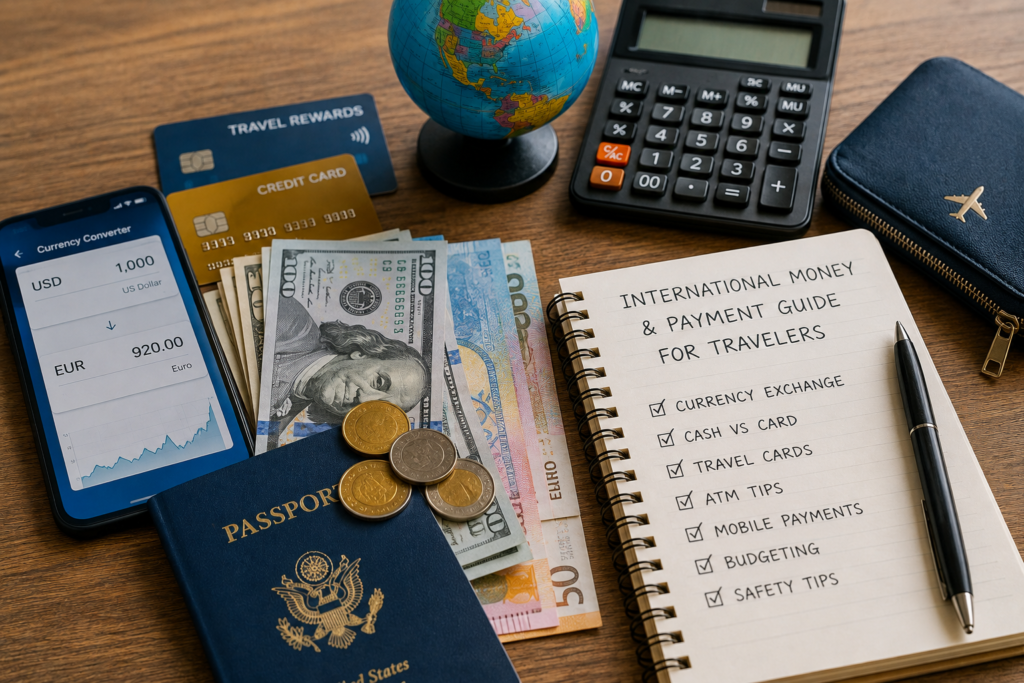
Managing money internationally becomes much easier when you prepare before your trip. Learn the local currency, understand the approximate exchange rate, check your bank fees, and make sure your cards work internationally.
I believe the safest approach is to use a combination of payment methods instead of depending on only cash or only cards. Carry a reasonable amount of local currency, keep a primary card available, and have a backup payment option stored separately.
Be careful with ATMs, check payment screens before confirming transactions, and understand currency conversion options. Most importantly, keep your money and financial information secure.
International travel should be about enjoying new places and experiences, not constantly worrying about payments. With a little preparation, you can handle your travel money confidently and focus on making the most of your journey.