 travelandlearns
Related Articles

Planning an international trip is exciting, but I believe the best trips begin long before reaching the airport. When you are traveling to another country, there are several things to organize, from passports and visas to flights, accommodation, money, packing, travel insurance, and local information.
In my experience, spending a little extra time preparing before departure can prevent many common travel problems. It also gives you more confidence because you already know what to expect when you arrive.
This complete pre travel guide for international trips covers the important things I recommend checking before leaving home. Whether it is your first international trip or you have traveled abroad many times, these practical steps can help you prepare properly.
Check Your Passport
The passport is one of the most important documents for international travel. Before making your final plans, check that your passport is valid for your destination and travel dates.
Some countries require travelers to have several months of passport validity remaining after their planned arrival or departure. Requirements can vary, so I always recommend checking the official requirements for the country you are visiting.
Also check whether your passport has enough blank pages if your trip requires entry or exit stamps.
Make a secure digital copy of your passport and keep another copy somewhere separate from the original. You should still carry the physical passport because a digital copy does not replace it, but having a backup can be helpful if the original is lost.
Check Visa Requirements
Visa requirements are another important part of international travel preparation.
Never assume that you can enter a country without a visa simply because someone you know traveled there without one. Entry rules can depend on your nationality, passport type, destination, purpose of travel, and length of stay.
Some countries offer visa free entry for certain travelers, while others require an electronic travel authorization, visa on arrival, or a traditional visa obtained before departure.
I recommend checking the official immigration or embassy information for your destination before booking non refundable travel arrangements.
If you need a visa, read the application requirements carefully and allow enough time for processing.
Confirm Your Flight Details
After your passport and visa requirements are clear, review your flight information.
Check your departure date, departure airport, arrival airport, flight number, connection details, and baggage allowance.
If your journey includes connecting flights, make sure you understand where you need to transfer and whether you need to collect and recheck your baggage.
Keep your flight confirmation available on your phone and save an offline copy if possible.
I also recommend checking your airline’s website shortly before departure because flight schedules can change.
Research Your Destination
One of the most enjoyable parts of preparing for an international trip is learning about the destination.
Before traveling, research the local culture, weather, transportation system, currency, common customs, and important areas.
You do not need to know everything about the country. However, understanding basic local information can make your first few days much easier.
Learn a few simple words or phrases in the local language if possible. Even basic greetings, thank you, and directions can be useful.
I also like to research the neighborhood where I will be staying. Knowing where the hotel is located and what is nearby can make arrival much less stressful.
Book Your Accommodation
Having a confirmed place to stay is important, especially when arriving in a new country.
Before booking a hotel or other accommodation, check its location, check in time, cancellation policy, reviews, available facilities, and transportation options.
Location can make a big difference. A cheaper hotel that is far from major transportation may not always be the best value.
Save your accommodation confirmation and address on your phone. It can also be helpful to keep the address written somewhere in case your phone battery becomes unavailable.
If you are arriving late at night, confirm that the property accepts late arrivals.
Understand Your Travel Insurance
Travel insurance is something many travelers overlook until they need it.
Depending on the policy, travel insurance can provide coverage for certain unexpected situations such as trip interruptions, baggage problems, emergency medical expenses, or other covered events.
Coverage differs significantly between insurance providers and policies, so read the terms carefully instead of choosing a policy based only on price.
I think travel insurance is especially worth considering for expensive international trips where an unexpected problem could create significant costs.
Keep your policy details and emergency contact information accessible while traveling.
Plan Your Budget
Money planning can make a major difference to your travel experience.
Before leaving, estimate how much you expect to spend on accommodation, transportation, food, attractions, shopping, communication, and unexpected expenses.
Research the local currency and understand approximately how much common purchases may cost.
Do not plan your budget so tightly that you have no room for unexpected expenses. Flights can be delayed, transportation can cost more than expected, or you may discover an activity you want to experience.
I prefer having an emergency fund separate from my normal daily travel budget.
Prepare Your Bank Cards
Before international travel, check whether your debit or credit cards can be used in your destination country.
Some banks require customers to enable international transactions or notify them about overseas spending.
Check your bank’s policies regarding foreign transaction fees, ATM withdrawals, and currency conversion.
It is also wise to have more than one payment method. If one card stops working, having another option can save you from a difficult situation.
Avoid keeping all your money in one place.
Carry Some Local Currency
Cards and digital payments are widely accepted in many destinations, but cash can still be useful.
You may need cash for small purchases, transportation, tips, markets, or businesses that do not accept cards.
You do not necessarily need to exchange a large amount before departure. The right approach depends on your destination and access to ATMs.
Before traveling, learn about the local currency and basic denominations so you are more comfortable handling money after arrival.
Check Your Phone and Internet Access
Your smartphone can become one of your most useful travel tools.
Before leaving, make sure your phone is unlocked if necessary and determine how you will access mobile data abroad.
Depending on your destination, you may choose international roaming, a local SIM card, or an eSIM.
Download important travel apps and save maps for offline use when available.
Make sure you have the chargers and adapters required for your destination.
I also recommend carrying a portable charger so you are less dependent on finding a power outlet.
Check the Weather
Weather can completely change what you need to pack.
Check the expected weather conditions for your destination during your travel dates.
Do not rely only on the weather at home. A destination may have completely different temperatures or seasonal conditions.
If you are visiting several cities or countries during the same trip, check the weather for each location.
This will help you choose appropriate clothing without filling your suitcase with things you will never use.
Pack According to Your Trip
Packing is easier when you know exactly what you need.
Start with essential clothing and then add items based on the destination, weather, activities, and length of your stay.
Check your airline’s carry on and checked baggage rules before packing.
Keep important documents, money, electronics, medication, and other essential items in your carry on rather than your checked suitcase.
I also recommend leaving some empty space in your luggage. If you buy souvenirs during your trip, you will appreciate having room to bring them home.
Organize Your Travel Documents
Create a simple travel document folder before departure.
Depending on your trip, this may include your passport, visa documents, flight confirmation, accommodation confirmation, travel insurance details, transportation bookings, and important contact information.
Keep digital copies securely stored on your phone or cloud storage, while keeping the original documents accessible.
For international travel, organization is especially important because you may need to present different documents at different stages of your journey.
Research Airport Procedures
If you are traveling internationally for the first time, airport procedures can feel overwhelming.
Learn about check in, baggage drop, airport security, immigration, boarding, and connecting flights before departure.
Arrive at the airport with enough time to complete these steps without rushing.
International airports can be large and busy, and the time required for check in and security can vary.
Knowing the general process beforehand can make you feel much more comfortable.
Learn Basic Safety Information
Before visiting another country, research basic safety information.
Understand which areas are best avoided, how local transportation works, and what common tourist scams may exist.
Keep your important documents secure and avoid displaying large amounts of cash in public.
It is also useful to know the location of your country’s embassy or consular services in the destination country.
You do not need to travel with fear. The purpose of preparation is simply to know what to do if something unexpected happens.
Prepare for Emergencies
I always believe it is better to prepare for an emergency before it happens.
Keep important emergency contacts available offline. This can include your accommodation, airline, insurance provider, bank, and relevant local emergency services.
If you take regular medication, make sure you have enough for the trip and understand any rules related to carrying it internationally.
Keep essential medication in your carry on rather than checked luggage.
It is also useful to share your basic itinerary with someone you trust, especially when traveling alone.
Confirm Everything Before Departure
A few days before your trip, review everything one more time.
Check your passport, visa, flights, accommodation, baggage allowance, travel insurance, payment methods, phone plan, weather forecast, and transportation arrangements.
Make sure your luggage is packed and your documents are organized.
Check your flight status before leaving for the airport.
This final review can catch small problems before they become major problems.
Final Thoughts
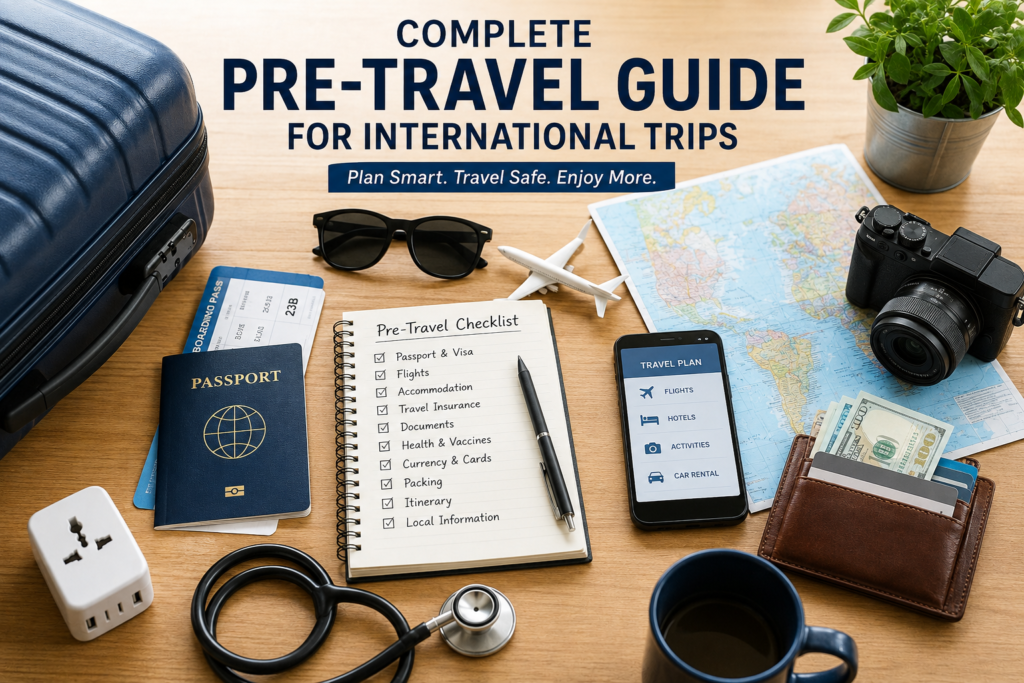
Preparing for an international trip does not have to be complicated. The main goal is to organize the important details early so you can enjoy your journey with fewer worries.
For me, the most important parts of a pre travel checklist are passport validity, visa requirements, flight details, accommodation, travel insurance, money, communication, packing, and destination research.
Do not wait until the night before departure to handle everything. Start early and work through your preparation one step at a time.
International travel can introduce you to new cultures, places, food, people, and experiences. With proper planning, you can spend less time worrying about practical problems and more time enjoying the journey.
A good trip starts before you leave home. When your documents are ready, your bags are packed, your plans are organized, and you understand your destination, you can walk into the airport feeling prepared and confident.