 travelandlearns
Related Articles



Planning an international or local trip can be exciting, but it can also feel confusing when you do not know where to start. When I plan a trip, one of the things I find most useful is creating a simple travel itinerary. An itinerary helps me organize my days, understand where I need to be, and avoid wasting too much time deciding what to do after I arrive.
A travel itinerary does not mean every minute of your vacation needs to be scheduled. In my opinion, the best itinerary gives you enough structure to enjoy the trip while still leaving room for unexpected experiences. If you are planning your first trip, learning how to create a travel itinerary for beginners can make the entire journey easier.
What Is a Travel Itinerary?
A travel itinerary is a simple plan that shows where you will go, where you will stay, what you want to see, and how you expect to spend your time during a trip.
A basic travel itinerary can include your flight details, hotel information, transportation plans, sightseeing activities, restaurant ideas, important addresses, and departure information.
You do not need an expensive travel planning application to create one. A notebook, spreadsheet, document, or phone note can work perfectly well.
The purpose of an itinerary is to keep important information organized in one place. It should make your trip easier, not create extra stress.
Start With Your Destination and Travel Dates
The first step in creating a travel itinerary is deciding where you are going and how long you will stay.
Write down your departure date, arrival date, and return date. If you are visiting several destinations, write down how many nights you plan to spend in each location.
For example, if you have seven days available, you could spend four days in one city and three days in another. The exact arrangement depends on your interests and transportation options.
I recommend being realistic about the amount of time you have. Beginners sometimes try to visit too many places during one trip. Moving between destinations takes time, and frequent travel can leave you exhausted.
A slightly slower trip can often be more enjoyable.
Decide What You Want From the Trip
Before filling every day with activities, think about what you actually want from your vacation.
Some travelers enjoy museums and history. Others prefer beaches, nature, food, shopping, adventure, photography, or simply relaxing.
I find it helpful to write down the experiences that matter most to me before building the daily schedule.
For example, if visiting a particular museum is one of your main goals, make sure it gets a place in your itinerary. If relaxing is your priority, do not fill every afternoon with activities.
Your travel itinerary should reflect your interests rather than simply copying someone else’s vacation.
Make a List of Places You Want to Visit
Once you know what you want from the trip, create a list of attractions and places you would like to see.
At this stage, do not worry about putting everything into a schedule. Simply create a list.
You might include famous landmarks, museums, markets, parks, restaurants, shopping areas, beaches, historical locations, and local neighborhoods.
After creating the list, divide the places into three groups. The first group can contain the places you absolutely want to visit. The second can include places you would like to see if you have enough time. The third can contain optional ideas.
This makes your itinerary much easier to manage.
Group Nearby Attractions Together
One of the best travel itinerary planning tips I have learned is to organize activities based on location.
If several attractions are close to each other, try visiting them on the same day. This can reduce transportation time and make your day more efficient.
For example, instead of traveling across a city several times in one day, you can explore one neighborhood in the morning, have lunch nearby, visit another attraction in the afternoon, and enjoy dinner in the same area.
This approach saves time and can also reduce transportation costs.
Looking at a map while creating your itinerary is extremely useful because places that look close on a list may actually be far apart.
Check Opening Hours and Availability
Before adding an attraction to your travel itinerary, check its opening hours.
Some museums close on particular days. Some attractions require advance reservations. Certain restaurants may only accept bookings during specific hours.
This is especially important when your trip is short.
Imagine planning your entire day around visiting a museum and discovering after arrival that it is closed. A few minutes of research before the trip can prevent this kind of disappointment.
Always check current information closer to your travel date because opening hours and reservation policies can change.
Plan Your Transportation
Transportation should be an important part of your travel itinerary.
Think about how you will get from the airport to your accommodation, how you will move around the destination, and how you will travel between different cities if necessary.
Research available options such as trains, buses, taxis, rental cars, public transportation, and walking routes.
When creating your daily schedule, remember that transportation takes time. Do not schedule an activity immediately after another activity without considering the journey between them.
I prefer leaving some extra time between important plans. This gives me room for traffic, delays, long queues, or simply getting lost in an unfamiliar place.
Choose Your Accommodation Carefully
Your hotel location can have a major effect on your itinerary.
A cheaper hotel located far away from the places you want to visit may not actually save money or time if you spend hours traveling every day.
When choosing accommodation, look at its location relative to attractions, public transportation, restaurants, and the airport or train station.
Once your accommodation is booked, add its name, address, phone number, and booking details to your itinerary.
Having this information available can be extremely useful when you arrive in a new city.
Create a Daily Travel Schedule
Now you can start building your actual daily itinerary.
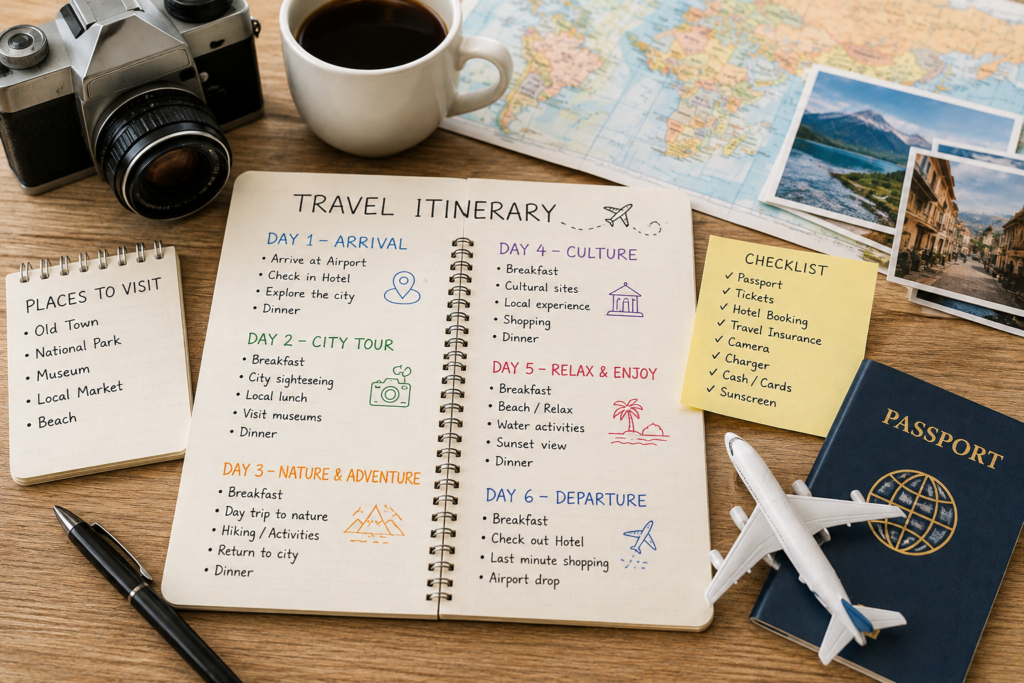
A simple structure might look like this:
Morning: Breakfast and first activity
Late morning: Main attraction
Afternoon: Lunch and nearby sightseeing
Evening: Relaxation, shopping, or dinner
You do not have to follow this structure exactly. The important thing is to create a comfortable flow for each day.
I recommend choosing one or two major activities per day rather than trying to see everything at once.
A relaxed schedule usually gives you more opportunity to enjoy the destination.
Leave Free Time in Your Itinerary
One of the biggest mistakes beginners make is creating an itinerary that is too full.
Travel does not always go according to plan. Flights can be delayed, transportation can take longer than expected, and attractions can have unexpected queues.
You may also discover a beautiful street, local market, café, or viewpoint that was never part of your original plan.
That is why I always believe an itinerary should include free time.
Leaving a few hours open gives you flexibility. You can rest, explore spontaneously, or change your plans if something interesting comes up.
Plan Around Your Energy
Not every day of a vacation needs to be equally busy.
If you have a long sightseeing day planned, consider making the following morning slower. If you arrive late at night, do not schedule an early morning activity immediately after arrival.
Think about your energy levels when creating your itinerary.
A trip should be enjoyable rather than feeling like a race from one attraction to another.
For first time travelers, a comfortable itinerary is usually better than an ambitious one.
Add Important Travel Information
Your itinerary should include more than sightseeing activities.
Keep important travel information in one place, including flight numbers, hotel reservations, transportation bookings, emergency contacts, passport information, and other essential details.
For international travel, you may also want to keep information about visa requirements, travel insurance, embassy contacts, and local emergency services.
You do not need to share sensitive information unnecessarily. Store important documents securely and keep backup copies where appropriate.
Plan Your Travel Budget
Money should also be considered when creating a travel itinerary.
Estimate the expected cost of accommodation, transportation, meals, entrance fees, shopping, and other activities.
This helps you understand whether your planned trip fits your budget.
If you have several expensive activities planned for one day, you might balance them with free attractions on another day.
A travel budget does not mean you cannot enjoy yourself. It simply helps you make informed decisions.
Keep Your Itinerary Flexible
A good travel itinerary is a guide, not a strict contract.
If the weather changes, you may need to move an outdoor activity to another day. If you discover that an attraction is not as interesting as expected, you can leave and do something else.
Flexibility is especially important when traveling for several days.
I prefer creating a plan that tells me what I can do rather than a schedule that tells me exactly what I must do.
This mindset makes travel much more enjoyable.
Use a Simple Itinerary Format
Your travel itinerary does not need to look complicated.
For each day, include the date, location, planned activities, transportation information, meal ideas, and important notes.
You can create it in a document or spreadsheet and keep a digital copy on your phone.
I also recommend having access to important booking confirmations even when you do not have an internet connection. Downloading documents before departure can be helpful if mobile service is limited.
Review Your Itinerary Before Departure
A few days before your trip, review the entire itinerary.
Check your flight times, hotel reservations, attraction opening hours, transportation arrangements, and important documents.
Look for scheduling problems. Make sure you have not accidentally planned activities that overlap.
This final review can give you peace of mind and allow you to make changes before leaving home.
Final Thoughts
Learning how to create a travel itinerary for beginners is much easier when you keep the process simple. Start with your destination and travel dates, decide what experiences matter most, research attractions, group nearby places together, plan transportation, and create a realistic daily schedule.
Most importantly, do not try to control every moment of your vacation.
In my experience, the best travel itinerary provides direction while still leaving space for discovery. Some of the most memorable travel experiences can happen when you take an unexpected turn, discover a local place, or simply slow down and enjoy your surroundings.
Plan the important things, keep your schedule realistic, leave some free time, and stay flexible. With these simple steps, you can create a travel itinerary that keeps your trip organized without taking away the fun of traveling.