 travelandlearns
Related Articles



Planning an international trip can feel exciting, but it can also become confusing when you do not know where to start. From choosing a destination and setting a budget to booking flights, arranging accommodation, checking visa requirements, and packing your luggage, there are many things to consider before leaving home.
In my experience, the best way to plan an international trip is to take everything step by step instead of trying to organize everything at once. A little preparation can save you from unnecessary stress and unexpected expenses later.
This guide explains how to plan an international trip in a simple and practical way, especially if you are traveling abroad for the first time.
1. Choose Your International Travel Destination
The first step in planning an international trip is deciding where you want to go. Your destination should match your budget, travel dates, interests, and comfort level.
Think about what kind of experience you want. You may want to explore historic cities, relax on beaches, enjoy nature, experience different cultures, or visit famous landmarks.
I recommend researching several destinations before making your final decision. Compare flight prices, accommodation costs, local transportation, food prices, weather conditions, and activities.
Also consider the best time to visit. Some destinations can be expensive during peak tourist seasons, while others may have extreme weather during certain months.
Choosing the right destination at the right time can make your international trip more enjoyable and affordable.
2. Set a Realistic Travel Budget
One of the most important parts of international trip planning is creating a realistic budget.
Do not calculate only the cost of your flight and hotel. An international travel budget should include transportation, meals, sightseeing, travel insurance, visa fees, shopping, airport transfers, and emergency expenses.
I usually recommend dividing the budget into different categories so it becomes easier to understand where your money will go.
For example, you can have separate amounts for flights, accommodation, food, transportation, activities, shopping, and emergencies.
It is also smart to keep some extra money aside for unexpected situations. Flight changes, additional transportation, lost luggage, or last minute expenses can happen.
A good travel budget gives you freedom to enjoy your trip without constantly worrying about money.
3. Check Your Passport
Before booking anything, check your passport carefully.
Make sure your passport is valid for your entire journey and meets the validity requirements of your destination. Many countries require travelers to have several months of passport validity remaining after their planned arrival or departure.
Also check whether your passport has enough blank pages if your destination requires them.
If your passport is close to expiring, renewing it before making major travel arrangements can prevent problems later.
I also recommend keeping a digital copy of your passport in a secure location. You should still carry the original document, but having a backup copy can be useful if your passport is lost.
4. Check Visa Requirements
Visa requirements are one of the most important things to check when planning an international trip.
Every country has its own entry requirements. Depending on your nationality and destination, you may need a tourist visa, electronic travel authorization, visa on arrival, or no visa at all.
Always check the current requirements through the official immigration or embassy website of the country you plan to visit.
Pay attention to application processing times, required documents, passport validity, photographs, proof of accommodation, return tickets, financial documents, and travel insurance requirements if applicable.
Do not wait until the last few days to apply for a visa. Delays can affect your entire travel plan.
5. Choose Your Travel Dates
After confirming that you can legally enter the destination, choose your travel dates.
Your dates can have a major effect on the overall cost of an international trip. Flights and hotels are often more expensive during holidays, festivals, and peak tourist seasons.
If your schedule is flexible, compare different departure and return dates. Even changing your trip by a few days can sometimes make a noticeable difference in airfare and accommodation prices.
You should also research the weather. A destination may look attractive in photographs, but the experience can be very different during rainy seasons, extreme heat, or winter conditions.
6. Book Your Flights Carefully
Once your destination and dates are confirmed, start looking for flights.
Compare different airlines, departure times, baggage allowances, layovers, and total travel time. The cheapest ticket is not always the best option.
For example, a slightly cheaper flight with a very long layover may not be worthwhile if it makes your journey uncomfortable.
Check what is included in your fare before booking. Some airlines charge separately for checked baggage, seat selection, meals, or other services.
I also recommend checking the airport names carefully, especially when a city has more than one airport.
After booking, save your confirmation details and check your flight information again before departure.
7. Book Suitable Accommodation
Finding the right place to stay is another important part of international trip planning.
Hotels are not your only option. Depending on your destination and preferences, you can consider guesthouses, hostels, serviced apartments, or other reputable accommodation options.
When choosing accommodation, look beyond the price. Check the location, guest reviews, transportation access, cancellation policy, check in times, and included facilities.
A cheaper hotel far away from the main attractions may actually cost more after paying for daily transportation.
For a first international trip, I prefer accommodation in a convenient and well connected area. It makes exploring the destination easier and reduces unnecessary travel time.
8. Create a Simple Travel Itinerary
You do not need to plan every minute of your international trip.
A simple itinerary is usually better because it gives you structure while leaving enough time to relax and explore.
Start by listing the main places you want to visit. Then group nearby attractions together so you do not waste hours traveling from one side of the city to another.
For each day, choose a few important activities rather than creating an unrealistic schedule.
Leave some free time for unexpected discoveries, rest, shopping, local food, and changes in your plans.
If you are visiting multiple cities, carefully calculate the travel time between them before making hotel reservations.
9. Research Local Transportation
Before traveling internationally, learn how you will move around after arriving.
Research airport transfers, trains, buses, taxis, ride sharing services, and local public transportation.
Find out whether you need a transportation card or whether tickets can be purchased through an app.
It is also helpful to understand approximately how long it takes to travel from the airport to your accommodation.
Knowing your transportation options before arrival can make your first few hours in a foreign country much easier.
10. Get Travel Insurance
Travel insurance is something many beginners ignore, but I consider it an important part of international travel planning.
Depending on the policy, travel insurance may help with certain unexpected situations such as medical emergencies, trip cancellations, delays, or lost baggage.
The coverage varies between insurance providers, so read the policy carefully before purchasing it.
Make sure you understand what is covered, what exclusions apply, and how to contact the insurance company while abroad.
11. Plan Your Money and Payments
Before leaving, think about how you will pay for things at your destination.
Carry some local currency if practical, but avoid carrying all your travel money in cash.
Take a reliable payment card and inform your bank about international travel if required.
It is also useful to have a backup payment method. If one card stops working, having another option can save you from a difficult situation.
Research common payment methods in your destination as well. Some places prefer cards, while smaller businesses may accept only cash.
12. Download Important Travel Apps
Your smartphone can become one of your most useful travel tools.
Before your international trip, download maps, translation tools, airline apps, hotel apps, transportation applications, and any other useful services for your destination.
Download important maps for offline use when possible.
Keep copies of your flight booking, hotel reservation, travel insurance information, and important contact details on your phone.
However, do not depend entirely on your phone. Keep important information accessible in another form in case your battery dies or you lose internet access.
13. Learn Basic Local Information
You do not need to become an expert on your destination before visiting.
However, learning a few basic things can make your trip smoother.
Research local customs, common greetings, public transportation rules, tipping practices, opening hours, and basic safety advice.
Learning a few useful words in the local language can also be helpful. Simple phrases such as hello, thank you, please, excuse me, and where is this can make communication easier.
Understanding local culture also helps you avoid accidentally behaving in a way that may be considered disrespectful.
14. Pack Smartly
Packing is easier when you start early.
Make a packing list based on the weather, length of your trip, planned activities, and airline baggage rules.
Pack essential documents, clothing, toiletries, medications if applicable, chargers, travel adapters, comfortable shoes, and any personal items you genuinely need.
Avoid packing too much. Heavy luggage can make airports, public transportation, and hotel changes more difficult.
I have found that packing versatile clothing is much better than taking a separate outfit for every possible situation.
Keep your passport, travel documents, money, electronics, and other important items somewhere secure and easily accessible.
15. Prepare for Airport and Immigration
Before departure, learn what to expect at the airport.
Arrive with enough time for check in, baggage drop, security screening, immigration, and reaching your boarding gate.
Keep your passport and required travel documents ready.
At immigration, answer questions honestly and clearly. Officers may ask about your purpose of travel, accommodation, length of stay, or return plans.
Do not panic if you are asked questions. This is a normal part of international travel.
16. Prepare for Emergencies
Even with careful planning, unexpected situations can happen.
Before leaving, save emergency contacts, your accommodation address, airline contact information, travel insurance details, and the contact information for your country’s embassy or consulate where appropriate.
Keep your important documents backed up securely.
You should also know what to do if your passport, wallet, or phone is lost.
Having an emergency plan does not mean expecting something bad to happen. It simply means you are prepared if something goes wrong.
17. Review Everything Before Departure
A few days before your international trip, review your entire plan.
Check your passport, visa or entry authorization, flight booking, accommodation, transportation arrangements, travel insurance, payment methods, and luggage.
Check your flight status again because schedules can change.
Make sure your phone is charged and your important documents are accessible.
This final review can give you peace of mind and help you start your journey with confidence.
Final Thoughts
Learning how to plan an international trip does not have to be complicated. The key is to start early and handle each part of the journey one step at a time.
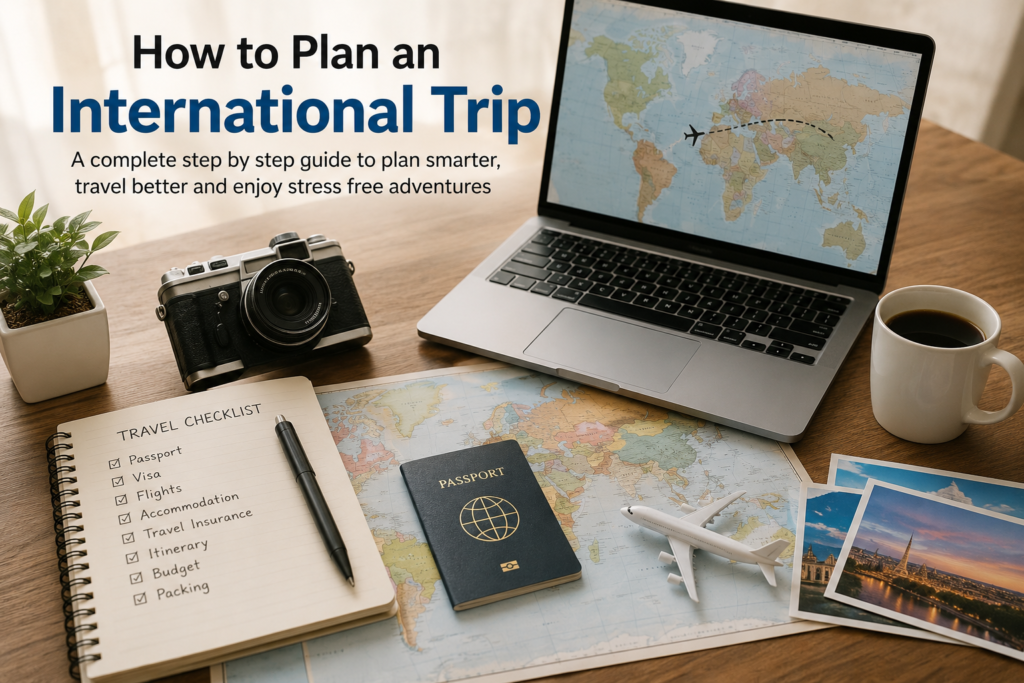
Choose your destination, create a realistic budget, check your passport and visa requirements, book your flights and accommodation, prepare a flexible itinerary, arrange transportation, organize your money, pack carefully, and prepare for unexpected situations.
In my opinion, good travel planning is not about creating a perfect schedule. It is about being prepared enough to enjoy the journey without unnecessary stress.
Your first international trip may feel overwhelming at the beginning, but once you understand the basic process, it becomes much easier. With proper preparation, you can travel with greater confidence and focus on what really matters, enjoying new places, meeting new people, and creating memories that you will remember for years.