 travelandlearns
Related Articles



Planning a one week vacation can be exciting, but it can also feel confusing when you have many things to arrange. You need to choose the right destination, set a realistic budget, book transportation, find a comfortable place to stay, and decide what you actually want to do during your trip. In my experience, the best vacation plan is not the one that includes the most activities. It is the one that gives you enough time to enjoy your destination without feeling rushed.
If you are planning your first short vacation or simply want to organize your next trip better, this guide will help you understand how to plan a one week vacation from start to finish.
Choose the Right Destination
The first step in planning a one week vacation is choosing a destination that makes sense for the amount of time you have.
For a seven day trip, I usually recommend avoiding destinations that require extremely long travel times unless the journey itself is part of the experience. Spending two days traveling for a seven day vacation can leave you with very little time to enjoy the place.
Think about what type of vacation you want. Do you want beaches and relaxation, sightseeing and culture, outdoor adventures, shopping, food experiences, or a combination of everything?
Also consider the weather, local attractions, transportation options, accommodation prices, and travel requirements. If you are traveling internationally, check passport validity, visa requirements, entry rules, and other important travel documents before making final bookings.
Set a Vacation Budget
A realistic budget can make your vacation much more enjoyable. Before booking anything, calculate approximately how much you can comfortably spend.
Your one week vacation budget should include transportation, accommodation, food, local transportation, activities, shopping, travel insurance if needed, and emergency expenses.
I prefer dividing my travel budget into categories instead of keeping one large amount. For example, you can create separate amounts for flights, hotel, food, sightseeing, transportation, and personal spending.
Do not forget unexpected expenses. A small emergency fund can be very useful if your transportation changes, you need additional accommodation, or you discover an activity that was not included in your original plan.
The goal is not to spend as little as possible. The goal is to create a vacation that fits comfortably within your financial limits.
Book Your Transportation Early
Once you know your destination and approximate travel dates, look at transportation options.
For air travel, compare different departure times, baggage allowances, airport locations, and connection times instead of looking only at the ticket price. A cheaper flight may not actually be cheaper if it includes inconvenient connections or expensive baggage fees.
For road trips, consider fuel costs, tolls, parking, vehicle condition, and driving time.
For train or bus travel, check schedules and arrival locations. Sometimes a transportation option that takes slightly longer can save money and provide a more comfortable experience.
For a one week vacation, I think convenience matters because you have limited time. Spending a little more for a convenient schedule can sometimes give you several extra useful hours at your destination.
Find the Right Accommodation
Your hotel or accommodation can have a major impact on your vacation experience.
Before booking, think about the location first. A cheaper hotel far away from the main attractions may cost more once you add transportation expenses. A slightly more expensive hotel in a convenient area may actually save both money and time.
Check the room type, cancellation policy, available facilities, guest reviews, breakfast options, parking, and transportation access.
I also recommend checking the actual location on a map before booking. A hotel description may say it is close to attractions, but the real walking distance can be different from what you expect.
Choose accommodation based on your travel style. If you plan to spend most of your day exploring, you may not need an expensive luxury hotel. If relaxation is the main purpose of your vacation, comfortable accommodation may deserve a larger part of your budget.
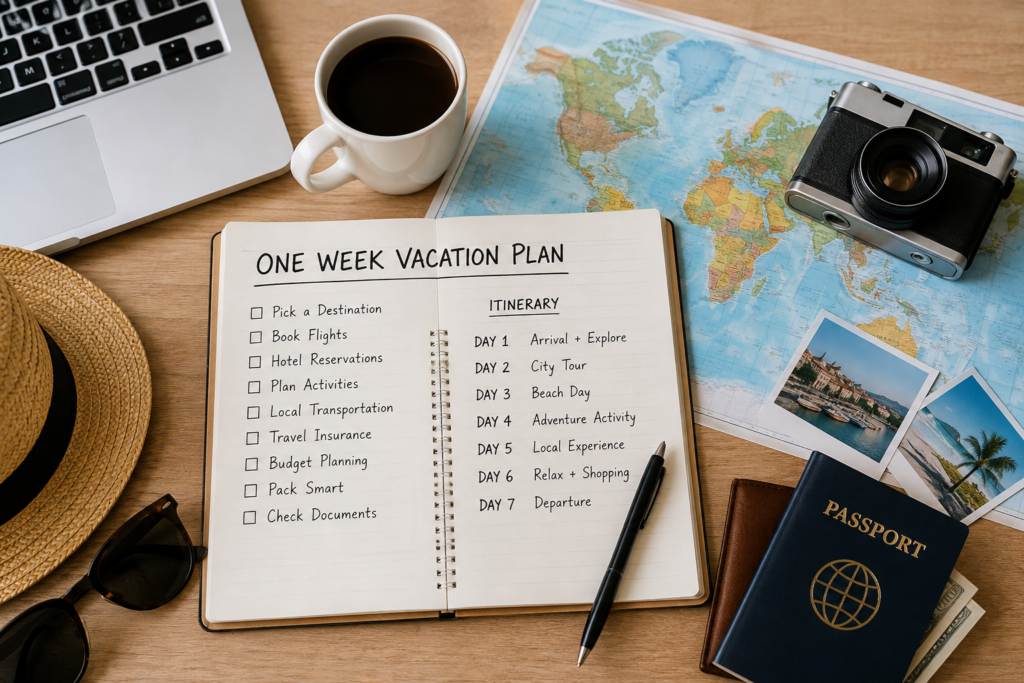
Create a Simple Seven Day Itinerary
A good one week vacation itinerary should provide structure without controlling every minute of your trip.
I recommend dividing your seven days into simple sections.
Day one can be your arrival and settling in day. Avoid planning too many activities because travel can be tiring.
Day two can focus on the most popular attractions in the destination.
Day three can include another major attraction, local food experience, museum, shopping area, or cultural activity.
Day four can be used for a day trip or outdoor adventure if your destination offers one.
Day five can focus on local neighborhoods, markets, restaurants, or experiences away from the main tourist areas.
Day six can be a relaxed day. You can revisit a favorite place, enjoy the hotel, spend time at the beach, go shopping, or simply explore without a strict schedule.
Day seven should usually be reserved for departure. Keep the final day simple and allow enough time to reach the airport, station, or road departure point.
This approach gives you a basic structure while still leaving room for unexpected experiences.
Do Not Overload Your Schedule
One of the biggest mistakes I see when people plan a one week vacation is trying to see everything.
It is tempting to create a long list of attractions and activities. However, moving from one location to another all day can make your vacation exhausting.
Instead, choose a few experiences that are genuinely important to you. Give yourself enough time to enjoy each one.
For example, if you are visiting a large city, you do not necessarily need to visit ten attractions in one day. Choose two or three important places and spend the rest of your time enjoying the local atmosphere.
A vacation should feel like a break, not another busy work schedule.
Research Local Transportation
Before you arrive, learn how you will move around the destination.
Find out whether the city has reliable buses, trains, taxis, ride sharing services, rental cars, or walking friendly areas.
If public transportation is available, check ticket options and operating hours. If you plan to rent a car, research parking and fuel costs before booking.
I also recommend knowing how you will travel from the airport or station to your accommodation. Having this information before arrival can make the first day much easier.
Plan Your Meals
Food is an important part of any vacation, but you do not need to reserve every meal in advance.
Research a few popular local restaurants and save their locations. If a particular restaurant is famous or requires reservations, book it ahead of time.
For other meals, leave some flexibility. Some of my favorite travel food experiences can happen when I simply find a local restaurant while exploring.
Also consider your daily food budget. Eating at expensive restaurants for every meal can quickly increase your travel expenses. A combination of local restaurants, casual meals, cafes, and occasional special dining can give you a better balance.
Prepare Your Travel Documents
If your one week vacation involves international travel, document preparation should be one of your priorities.
Check your passport expiration date and make sure it meets your destination’s entry requirements. Depending on your destination and nationality, you may need a visa, electronic travel authorization, proof of accommodation, return travel information, or other documents.
Keep digital copies of important documents in a secure location and carry the originals when necessary.
I also recommend keeping emergency contact information and important booking details easily accessible. Spending a few minutes organizing these details before leaving can save you considerable stress later.
Pack According to Your Destination
Packing for one week does not have to mean bringing a huge suitcase.
Check the weather forecast and expected conditions before packing. Choose clothing that can be combined easily so you can create several outfits from a small number of items.
Remember essentials such as comfortable shoes, toiletries, chargers, travel documents, medications if applicable, and any destination specific items you need.
Do not pack things simply because you think you might need them. Extra luggage can make airports, hotels, and transportation more difficult.
A simple packing approach usually works best for a one week vacation.
Leave Room for Free Time
Free time is one of the most valuable parts of a good vacation plan.
If your itinerary is completely full, you may miss opportunities to relax or discover something interesting.
Leave at least a few hours throughout the week without a fixed plan. You can use this time to sit at a cafe, walk through a local area, enjoy your hotel, visit a market, or simply rest.
Sometimes these unplanned moments become the most memorable parts of a trip.
Confirm Everything Before Departure
A few days before your vacation, review your complete travel plan.
Confirm transportation times, accommodation reservations, important activities, airport transfers, travel documents, and payment methods.
Check the weather again and make any necessary changes to your packing.
I also recommend checking your phone plan and making sure you have access to important information while traveling. Download maps or booking details if you expect limited internet access.
This final review can help you identify small problems before they become major travel issues.
Final Thoughts
Learning how to plan a one week vacation does not require complicated travel skills. The key is to keep your plan realistic, organize the important details early, and leave enough space to enjoy the experience.
Start by choosing a destination that suits your available time and budget. Book convenient transportation and accommodation, create a flexible seven day itinerary, research local transportation, prepare your documents, and pack only what you really need.
Most importantly, do not measure the success of your vacation by the number of places you visit. A successful one week vacation is one where you return home with good memories instead of feeling exhausted from trying to do everything.
With a little preparation and a flexible mindset, even seven days can be enough to enjoy a meaningful and memorable travel experience.