 travelandlearns
Related Articles



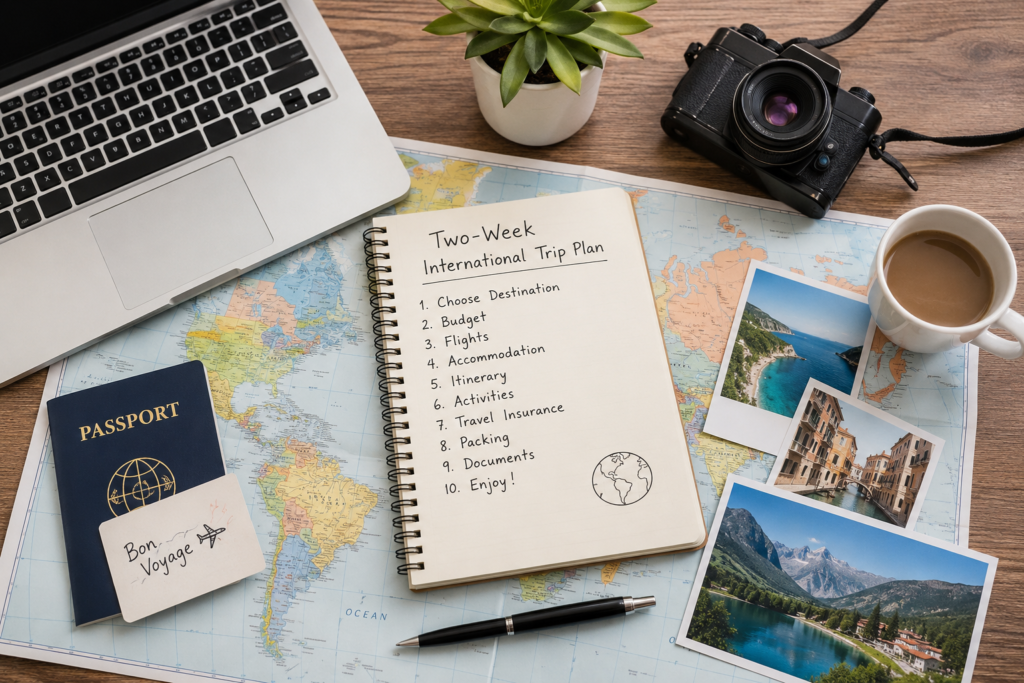
Planning a two week international trip can feel exciting and overwhelming at the same time. When I plan a longer trip, I try not to fill every hour with activities. Instead, I focus on choosing the right destinations, setting a realistic budget, arranging important documents, and leaving enough time to enjoy the journey.
A two week international trip gives you enough time to explore more than one place, experience local culture, and still have some relaxed days. However, good planning is important because international travel involves flights, accommodation, immigration requirements, transportation, money, and many small details.
In this guide, I will explain how I would plan a two week international trip from the beginning to the return journey.
Choose Your Destination Carefully
The first step is deciding where you want to go. For a two week international trip, I recommend choosing destinations that match your interests, budget, and travel style.
Think about what you actually want from the trip. You may want beaches, mountains, historical places, shopping, food, nightlife, or a combination of these experiences.
I also recommend checking the weather before booking anything. A destination can look perfect in photographs, but the experience can be very different during its rainy season or extreme summer months.
If this is your first international trip, I would avoid choosing too many countries. Visiting two or three nearby destinations is usually easier than trying to see five or six countries in fourteen days.
Set a Realistic Travel Budget
Before booking flights or hotels, I like to create a complete travel budget. This helps prevent unexpected expenses later.
Your budget should include international flights, accommodation, local transportation, food, sightseeing, travel insurance, visa costs, shopping, and emergency money.
I also recommend keeping a separate emergency fund. You may never need it, but having extra money gives you peace of mind if your flight changes, luggage is delayed, or an unexpected expense appears.
When comparing destinations, do not look only at the flight price. A cheaper flight may take you to a destination where hotels and transportation are much more expensive.
Check Your Passport and Visa Requirements
International travel requires careful attention to documents. Before making non refundable bookings, check your passport validity and the entry requirements for every country you plan to visit.
Some countries require a visa before departure, while others may offer visa free entry, an electronic travel authorization, or a visa on arrival depending on your nationality.
I always recommend checking official government or embassy information because visa rules can change.
Make digital copies of your passport, visa, flight reservations, hotel bookings, and travel insurance documents. Keep the copies somewhere secure so you can access them if the original documents are lost.
Book Your International Flights
Once the destination and dates are decided, you can start looking for flights.
When I compare flights, I consider more than the ticket price. I check the total travel time, number of connections, baggage allowance, airport locations, and layover duration.
A flight that costs slightly more can sometimes save many hours and make the trip much easier.
For a two week international trip, I also prefer to arrive at a reasonable time when possible. Arriving very late at night can make transportation and hotel check in more complicated, especially in an unfamiliar country.
If you have connecting flights, make sure you understand whether you need to collect and recheck your baggage and whether you need a transit visa.
Plan Your Two Week Itinerary
The itinerary is one of the most important parts of planning an international trip.
For fourteen days, I recommend dividing the trip into manageable sections instead of changing hotels every day.
For example, you could spend five days in one major city, four days in a second destination, and four days in a third location, with the remaining time used for travel.
Try to group nearby attractions together. If several museums, markets, historical sites, and restaurants are located in the same area, visit them on the same day.
I also believe every itinerary should include free time. You do not need to wake up early and visit attractions until midnight every day. Some of my favorite travel moments can happen while walking around a neighborhood, sitting in a local cafe, or simply enjoying the surroundings.
Book Accommodation in Advance
Accommodation is another major part of your travel budget.
For a two week international trip, choose hotels, apartments, or guesthouses based on location as well as price. Staying close to public transportation can make daily travel much easier.
Before booking, I check recent reviews, cancellation policies, check in times, available facilities, and the distance from major attractions or transport stations.
If your itinerary includes multiple cities, write down every check in and check out date. This simple step can prevent booking mistakes.
I also prefer accommodation with flexible cancellation when the price difference is reasonable. International plans can change, and flexibility can be valuable.
Plan Your Local Transportation
Do not wait until you arrive to think about transportation.
Research how you will travel from the airport to your accommodation and how you will move around during your stay.
Depending on the destination, public transportation may be the easiest and cheapest option. In other places, taxis, ride sharing services, trains, or rental cars may make more sense.
For trips involving multiple cities, research trains, buses, domestic flights, or other transportation options before finalizing your itinerary.
Knowing your transportation options in advance reduces stress when you arrive.
Prepare Your Travel Money
Money management is especially important during international travel.
Before leaving, find out which payment methods are commonly accepted at your destination. Carrying a suitable combination of cards and some local currency can be helpful.
I would not depend on a single bank card. Having a backup payment method can save you from a serious problem if your main card is lost, blocked, or declined.
Check whether your bank charges foreign transaction fees or international withdrawal fees.
I also recommend keeping some emergency cash separately from your wallet. You may not use it, but it can be useful in situations where cards are not accepted.
Get Travel Insurance
Travel insurance is worth considering for an international trip, especially when you are traveling for two weeks and have already paid for flights and accommodation.
Depending on the policy, travel insurance may provide coverage for certain medical emergencies, trip interruptions, cancellations, baggage problems, and other unexpected situations.
Before purchasing a policy, read the terms carefully. Do not assume that every situation is automatically covered.
The right insurance depends on your destination, activities, personal circumstances, and the type of coverage you need.
Make a Practical Packing Plan
Packing for two weeks does not mean taking your entire wardrobe.
I prefer to pack clothes that can be mixed and matched. Choose comfortable shoes because you may spend much more time walking than you expect.
Check the weather forecast before leaving and pack according to the conditions.
Important items can include travel documents, medications you normally use, chargers, adapters, toiletries, comfortable clothing, and basic personal items.
Remember to check your airline baggage allowance before packing. Extra baggage fees can be surprisingly expensive.
Prepare Your Phone and Technology
Your phone can become one of your most useful travel tools.
Before departure, download maps, translation tools, airline applications, hotel information, and important travel documents.
Check whether your mobile network offers international roaming or whether you will need a local SIM or eSIM.
I also recommend carrying a suitable power adapter if the destination uses different electrical outlets.
Save important addresses offline. If your internet connection stops working after landing, you will still know where you need to go.
Research the Destination Before Leaving
You do not need to become an expert before your trip, but learning basic information can make your experience much smoother.
Research local customs, public transportation, common foods, opening hours, tipping practices, and basic safety information.
Learning a few simple local phrases can also make everyday interactions more enjoyable.
I find it useful to research the neighborhoods where I will stay rather than only reading about famous attractions. Knowing where supermarkets, pharmacies, restaurants, and transportation stations are located can be very helpful.
Keep Your Itinerary Flexible
One mistake I see many travelers make is creating an itinerary that is too strict.
International travel rarely goes exactly according to plan. Flights can be delayed, weather can change, attractions can close, and sometimes you simply discover something interesting that was not on your original list.
For a two week trip, leave some flexibility in your schedule.
You can prepare a list of optional activities instead of booking something for every available hour. This gives you freedom without leaving your entire trip unplanned.
Prepare Before Departure
A few days before leaving, review everything one more time.
Check your passport, visa, flight reservations, accommodation, travel insurance, transportation plans, bank cards, phone service, and baggage.
Confirm your departure airport and flight time. Make sure you know how you will get to the airport and how much time you need to reach it.
I also recommend sharing your basic itinerary with someone you trust. They should know your major destinations and accommodation details.
Enjoy the Journey
Once everything is organized, the most important thing is to enjoy your trip.
A two week international trip should not feel like a race. You are traveling to experience another place, not simply to collect photographs of attractions.
Give yourself time to eat local food, explore ordinary neighborhoods, meet people, and enjoy unexpected moments.
My approach is simple: plan the important things carefully, but leave enough space for the trip to surprise you.
Final Thoughts
Learning how to plan a two week international trip becomes much easier when you break the process into smaller steps. Start with your destination and budget, check your passport and visa requirements, book suitable flights and accommodation, create a realistic itinerary, prepare your money and documents, and pack according to the weather.
Most importantly, do not try to do everything. Two weeks can be an excellent amount of time for an international adventure when your itinerary is realistic and organized.
Good travel planning is not about controlling every minute. It is about preparing well enough that you can relax when you arrive. With the right preparation, your two week international trip can become a comfortable, memorable, and enjoyable experience.