 travelandlearns
Related Articles
When I travel, I always try to choose clothing that gives me comfort without taking up too much space in my luggage. A good travel jacket is one of those items that can make a noticeable difference during a trip. It can protect you from changing weather, give you extra storage for small essentials, and keep you comfortable when temperatures change throughout the day.
In my experience, choosing the right travel jacket is not simply about finding the most expensive option or buying a jacket with the most features. The better approach is to think about where you are going, what kind of weather you expect, how often you will wear the jacket, and how easily you can pack it.
If you are searching for the best travel jacket, there are several important things worth considering before making a purchase.
Choose the Right Material
The material is one of the first things I look at when choosing a travel jacket. Different materials provide different levels of warmth, comfort, breathability, and protection.
Lightweight synthetic fabrics are popular because they are usually easy to pack and dry relatively quickly. These jackets can be useful when traveling through places with unpredictable weather.
For colder destinations, insulated materials can provide much more warmth. Down insulation is known for being lightweight and warm, while synthetic insulation can be a practical choice for travelers who expect damp conditions.
I personally prefer a material that feels comfortable against the skin and does not become too heavy when I carry it for several hours. A jacket may look great in a store, but if it feels uncomfortable after wearing it all day, it may not be a good travel companion.
Look for a Lightweight Travel Jacket
Weight matters more than many travelers realize. When I am packing for a trip, I want every item to have a purpose. A heavy jacket can quickly become inconvenient, especially when I am already carrying a backpack or suitcase.
A lightweight travel jacket is easier to wear, carry, and pack. It can also be useful when traveling by airplane because I can wear it instead of placing it inside my luggage.
This does not mean the lightest jacket is always the best choice. The jacket still needs to provide the level of protection required for your destination. The goal is to find a good balance between weight, warmth, durability, and weather resistance.
Check Weather Protection
Weather can change quickly during travel. A sunny morning can become rainy in the afternoon, while a warm city can feel surprisingly cool after sunset.
For this reason, I think weather protection should be one of the main factors when selecting a travel jacket.
If you are traveling somewhere rainy, look for a jacket with water resistant or waterproof properties. A water resistant jacket can handle light rain and occasional moisture, while a waterproof jacket is designed for more serious wet conditions.
Wind protection is also useful. A jacket that blocks strong wind can feel much warmer without requiring thick insulation.
If your destination has unpredictable weather, I recommend choosing a jacket that provides reasonable protection against both wind and light rain.
Consider Breathability
A jacket can protect you from rain and wind, but it should also allow your body to release heat and moisture.
This is especially important when walking around a new city, hiking, or carrying a backpack. A jacket that does not breathe well can quickly become uncomfortable.
Breathable fabrics allow moisture vapor to move away from your body. This can help you stay more comfortable during physical activity.
For me, breathability becomes even more important when I plan to wear a jacket for several hours at a time. Comfort is not just about warmth. It is also about avoiding that hot and sweaty feeling inside the jacket.
Think About the Fit
A travel jacket should fit comfortably without restricting movement.
I recommend checking how the jacket feels when you move your arms, sit down, walk, and carry a backpack. These simple movements can reveal whether the jacket is actually comfortable.
The fit should also leave enough room for a shirt or light sweater underneath if you are traveling somewhere cool.
A jacket that is too tight can become uncomfortable when layered. On the other hand, an oversized jacket can take up more luggage space and may not provide efficient protection from cold air.
A comfortable regular or slightly relaxed fit is often practical for travel.
Check the Pockets
Pockets can be extremely useful when traveling. I like jackets that provide enough storage for small items without making the jacket feel bulky.
Useful pockets can hold things such as a phone, passport, wallet, boarding pass, keys, or travel documents.
Secure pockets are especially valuable. Zippered pockets can provide additional peace of mind when walking through crowded airports, train stations, markets, and tourist areas.
However, I would not choose a jacket simply because it has a large number of pockets. Too many pockets can make the jacket heavier and sometimes uncomfortable. What matters is whether the pockets are positioned in useful places and are easy to access.
Look for Secure Storage
Security is another feature worth considering in a travel jacket.
When I travel, I prefer to keep important items close to me rather than placing everything in an outside backpack pocket. A jacket with secure internal or zippered pockets can provide an additional layer of convenience.
Some travel jackets are designed specifically with travelers in mind and include hidden compartments for important items.
These features can be useful, but I still would not rely entirely on a jacket for security. It is always important to remain aware of your surroundings and keep valuable belongings secure.
Consider Packability
A good travel jacket should be easy to carry when you do not need to wear it.
Some jackets can be folded into their own pocket or compressed into a small space. This can be particularly useful for travelers who want to save room in their luggage.
Packability is especially important if you are visiting several destinations with different climates. You may need the jacket in the morning and evening but not during the warmer part of the day.
A jacket that folds easily can be placed inside a backpack without taking up too much room.
Check the Zippers and Hardware
Small details can make a big difference in travel clothing.
Before buying a jacket, I recommend checking the zippers, buttons, snaps, drawcords, and other hardware. They should feel sturdy and operate smoothly.
The main zipper should open and close easily without catching the fabric. Pocket zippers should also feel reliable because they may be used frequently during a trip.
I pay attention to these details because travel clothing often receives more use than normal everyday clothing. A jacket may be worn for long walks, airport journeys, sightseeing, and outdoor activities.
Look for Durability
A travel jacket should be able to handle regular use.
Durability becomes especially important if you travel frequently. Constant packing, unpacking, wearing, and washing can put stress on fabric and stitching.
Look at the quality of the seams and overall construction. A well made jacket may cost more initially, but it can be a better investment if it lasts through many trips.
I would rather buy one dependable travel jacket than repeatedly replace cheaper jackets that do not perform well.
Choose the Right Level of Warmth
Not every trip requires a thick winter jacket.
If you are traveling to a mild destination, a lightweight shell or thin insulated jacket may be enough. For colder destinations, you may need more insulation.
I prefer the layering approach when possible. Instead of relying on one extremely thick jacket, I can combine a base layer, sweater, fleece, and outer jacket depending on the weather.
This gives me more flexibility because I can remove or add layers throughout the day.
When choosing a travel jacket, think about the lowest temperatures you are likely to experience rather than simply choosing the warmest jacket available.
Consider a Hood
A hood can be a useful feature, especially when traveling in rainy or windy areas.
I like having a hood available because it can protect my head when unexpected rain starts. A removable hood can also be useful if you prefer a cleaner look when the weather is dry.
If you choose a hooded travel jacket, check whether the hood fits comfortably and whether it can be adjusted. A hood that constantly falls over your eyes can become annoying while walking.
Pay Attention to Style
Practicality is important, but I also believe a travel jacket should look good enough to wear in different situations.
A simple design can work well because you can wear it while traveling, sightseeing, visiting restaurants, or spending time outdoors.
Neutral colors are often easy to combine with different outfits. This can reduce the number of clothing items you need to pack.
For me, versatility is one of the biggest advantages of a good travel jacket. If one jacket works with several outfits, it earns its place in my luggage.
Consider Easy Care
Travel clothing should not require complicated maintenance.
A jacket that can be cleaned easily is useful when you are away from home for several days or weeks. Check the care instructions before buying it and consider how practical those instructions will be during travel.
Quick drying can also be helpful if you need to wash the jacket during a longer trip.
I prefer clothing that can handle normal travel conditions without requiring special treatment.
Think About Your Destination
The best travel jacket depends heavily on where you are going.
For a rainy destination, I would prioritize waterproof protection. For a cold destination, insulation becomes more important. For a warm but windy location, a lightweight shell may be enough.
If you are traveling between several climates, versatility should become a priority.
Before buying a jacket, check the typical weather for your destination and think about the activities you will actually do. A jacket designed for mountain hiking may be unnecessary for a city break, while a basic city jacket may not provide enough protection for outdoor adventures.
Is an Expensive Travel Jacket Worth It?
Price is always worth considering.
A high price does not automatically mean that a jacket is the right choice for you. I would focus on the features that match your travel needs rather than paying for features I will never use.
A good travel jacket should provide a reasonable combination of comfort, durability, weather protection, storage, and packability.
If you travel regularly, spending more on a durable jacket can make sense. If you only travel occasionally, a simpler option may be perfectly adequate.
Final Thoughts
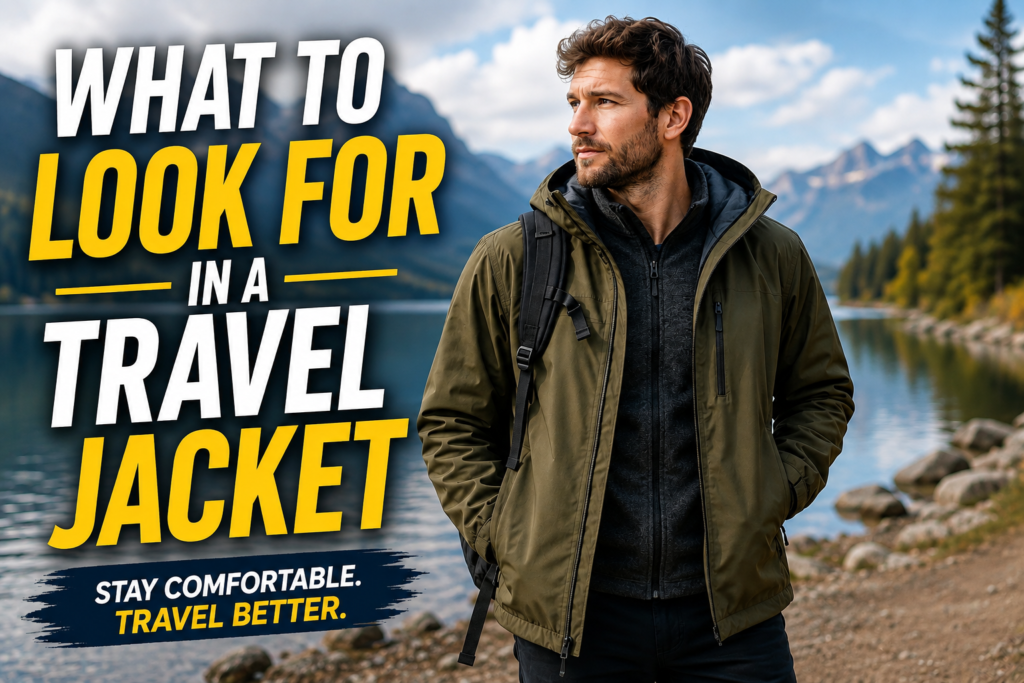
Choosing the right travel jacket is mainly about understanding your own travel habits. I do not think there is one perfect jacket for every traveler or every destination.
For me, the most important features are lightweight construction, comfortable fit, useful pockets, weather protection, breathability, durability, and easy packing. I also want a jacket that looks simple enough to wear with different outfits.
Before making a purchase, think about your destination, climate, activities, luggage space, and the amount of time you expect to wear the jacket. A little planning can help you choose a travel jacket that is comfortable and practical throughout your trip.
The best travel jacket is not necessarily the one with the longest list of features. It is the one that fits your needs, protects you from the conditions you expect, and makes traveling a little easier.
That is what I would look for before adding any travel jacket to my packing list.