 travelandlearns
Related Articles



Going to the airport for the first time can feel confusing. There are check in counters, baggage areas, security checks, departure screens, boarding gates, and many signs that can make the airport seem more complicated than it really is. From my point of view, the airport check in process becomes much easier when you know what to expect before you arrive.
If you are a first time traveler, you do not need to know everything about the airport. You simply need to understand the basic steps and keep your travel documents organized. In this Airport Check In Guide for First Time Travelers, I will explain the complete check in process in simple language so you can travel with more confidence and less stress.
What Is Airport Check In?
Airport check in is the process of confirming that you are traveling on a particular flight. During check in, the airline confirms your booking, checks your travel documents when required, and provides your boarding pass.
If you have checked baggage, the airline also accepts your luggage during this process. After completing check in, you normally continue to security and then make your way to the departure gate.
Depending on the airline and airport, you may be able to check in online before arriving at the airport. You can also check in at an airline counter or use a self service machine.
Check Your Flight Before Leaving Home
One of the first things I recommend is checking your flight information before leaving for the airport. Look at your flight number, departure time, terminal, and airline name.
Flight information can sometimes change, so checking your airline application, website, or booking information before leaving home can help you avoid confusion.
Make sure you know which airport you are traveling from, especially if your city has more than one airport. It is also a good idea to consider traffic and travel time when deciding when to leave.
Arrive at the Airport Early
Arriving early is one of the simplest ways to make your first airport experience easier.
The amount of time you need depends on the airport, airline, destination, and whether you are traveling internationally or domestically. International flights generally require more preparation because you may need passport checks, immigration procedures, and additional document verification.
I personally think arriving early is much better than arriving in a hurry. When you have enough time, you can find the correct terminal, locate the check in area, organize your luggage, and complete security without unnecessary pressure.
Always follow the arrival time recommended by your airline.
Find Your Airline Check In Area
After entering the airport, look for the departure information screens. These screens normally show flight numbers, destinations, departure times, terminals, and check in counter information.
Find your flight number and check which counter or area is assigned to your flight.
Airports can be large, so do not worry if you cannot immediately find your airline. Look for airport staff or information desks if you need help.
Once you find the correct check in area, follow the signs for your airline and flight type.
Online Check In
Many airlines allow passengers to complete online check in before reaching the airport. This can save time, especially if you are traveling with only carry on luggage.
During online check in, you may be asked to confirm your personal details, select a seat, and review your flight information. After completing the process, you may receive a digital boarding pass.
However, online check in does not always mean you can skip every airport procedure. If you have checked baggage, you may still need to visit the baggage drop area. Some international travelers may also need document verification before receiving permission to proceed.
Always follow the instructions provided by your airline.
Checking In at the Airport Counter
If you have not checked in online, you can normally check in at the airline counter.
When you reach the counter, keep your passport and booking information ready. The airline employee may ask for your travel documents and confirm your destination.
If you are traveling internationally, additional documents may be checked depending on your destination.
The staff member will normally confirm your flight details and may ask about your luggage. If everything is in order, you will receive your boarding pass.
Do not hesitate to ask questions if you are unsure about the next step. Airport staff are there to help passengers.
Understanding Checked Baggage
If you have a suitcase that you want to place in the aircraft baggage compartment, you will need to check it in.
The airline normally weighs checked baggage and confirms that it meets the airline’s size and weight requirements. Baggage allowances vary between airlines and ticket types, so check your booking before going to the airport.
It is important not to assume that every airline provides the same baggage allowance.
If your suitcase is too heavy, you may have to remove some items or pay an additional baggage charge, depending on the airline rules.
After your luggage is accepted, you should receive a baggage receipt or baggage information connected to your booking. Keep this information until you collect your luggage at your destination.
What Is Carry On Baggage?
Carry on baggage is the luggage you take with you into the aircraft cabin. Airlines usually have specific rules about its size, weight, and contents.
Before traveling, check your airline’s baggage policy. Avoid packing restricted items in your carry on luggage.
Important personal items such as travel documents, medication that you are allowed to carry, electronic devices, money, and other essential belongings are generally better kept with you rather than placed in checked baggage.
For international travel, remember that airport security rules also apply to liquids and other items in your cabin luggage.
Keep Your Important Documents Ready
One of my biggest airport tips for first time travelers is to keep important documents somewhere easy to reach.
Your passport, boarding pass, visa or other required travel documents should not be buried inside your suitcase.
You may need to show your documents several times during your journey. Keeping them accessible makes the process much easier.
For international travel, check your destination’s entry requirements before reaching the airport. Make sure you have the documents required for your specific trip.
After Check In, Follow the Signs
Once check in is complete, your next step depends on your airport and journey.
If you have checked baggage, make sure it has been accepted before leaving the baggage counter. Then follow the signs toward security.
At some airports, international travelers may have additional passport control or immigration procedures.
Do not simply follow the crowd. Check the signs and airport screens to make sure you are going in the correct direction.
Going Through Airport Security
Airport security is another important part of the travel process.
At security, you may need to place your carry on belongings into trays for screening. You may also be asked to remove certain items depending on the airport’s procedures.
Follow the instructions given by security staff. Avoid carrying prohibited items and check the airport’s security rules before your trip.
After security, collect all of your belongings and make sure you have your passport, phone, wallet, and other important items before walking away.
Finding Your Boarding Gate
After security, check the departure screens again.
Your boarding gate may be displayed on the screen, but gate information can sometimes change. This is why I recommend checking the screens regularly instead of relying only on the first information you see.
Once you know your gate, follow the airport signs.
Some airports have gates that are quite far from security, so allow enough time to reach yours. If the airport provides a walking time or directions, pay attention to them.
Wait for Boarding
When you reach your gate, check that the flight number and destination match your boarding pass.
You can then wait for boarding to begin.
The airline may call passengers in different groups or sections. Listen carefully to announcements and watch the boarding information screen.
Have your boarding pass and passport ready when you are called.
Common Airport Check In Mistakes
First time travelers often make simple mistakes that can easily be avoided.
One common mistake is arriving too late. Another is forgetting to check baggage rules before traveling.
Some travelers also go to the wrong terminal or stand at the wrong airline counter because they did not check their flight information.
Another mistake is putting important documents inside checked luggage. If you need your passport or travel documents during the journey, they should remain with you.
I also recommend checking your flight status before leaving home and again after reaching the airport.
Simple Tips for a Stress Free Check In
The airport experience becomes much easier when you prepare before arriving.
Keep your passport and travel documents accessible. Know your airline and flight number. Check your baggage allowance. Complete online check in if available and useful. Arrive at the airport with enough time. Pay attention to departure screens and follow official airport signs.
If you become confused, do not panic. Look for an airport information desk or ask an airline employee for assistance.
There is no need to feel embarrassed about asking for directions. Every experienced traveler was a first time traveler at some point.
Final Thoughts
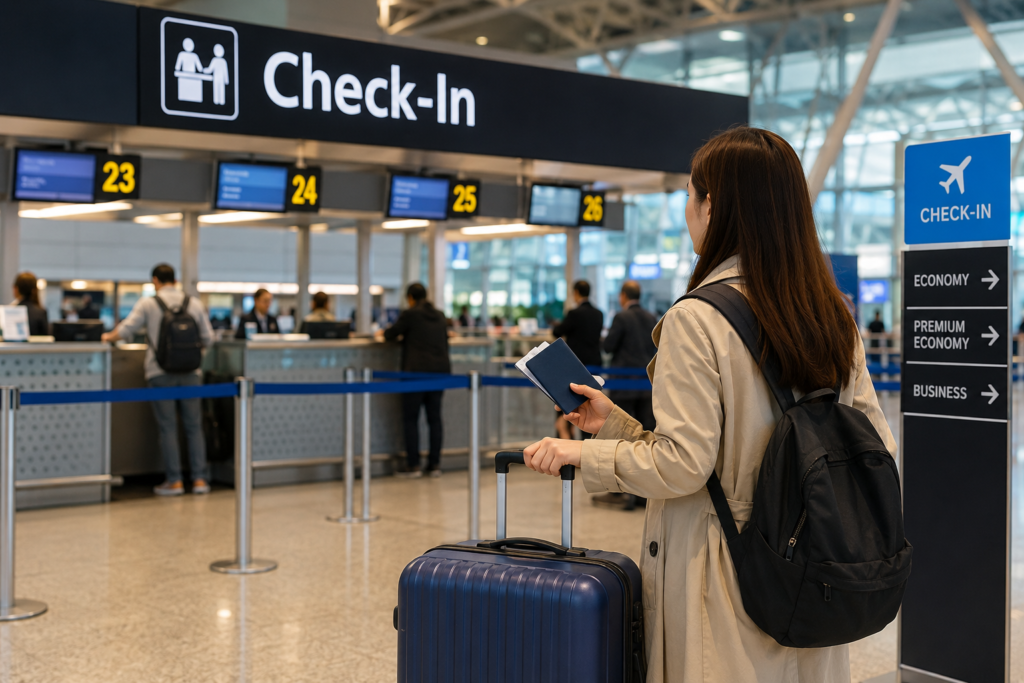
The airport check in process for first time travelers may seem complicated at first, but it is actually a series of simple steps.
You arrive at the airport, find your airline, complete check in, drop off your checked baggage if necessary, go through security, find your boarding gate, and wait for boarding.
My advice is to prepare your documents before leaving home and give yourself plenty of time. Do not rush through the airport or worry about doing everything perfectly.
Pay attention to signs, check your flight information regularly, and ask airport staff whenever you need help. With a little preparation, your first airport check in experience can be much easier and more comfortable than you might expect.
Once you understand the basic process, you will likely find that airports become much less intimidating. Your first trip is a learning experience, and every journey will make you more comfortable with air travel.