 travelandlearns
Related Articles

Going through airport security can feel confusing when you are traveling for the first time. I remember that one of the biggest concerns for new travelers is not knowing what will happen after reaching the security checkpoint. People often wonder what they should take out of their bag, whether they need to remove their shoes, what happens to their electronics, and how long the entire process will take.
The good news is that airport security is usually much easier when you know what to expect. The process is designed to keep passengers safe, and most of the confusion comes from being unfamiliar with the procedure.
In this airport security guide for beginners, I will explain the process in simple language and share practical tips that can help make your airport experience more comfortable. Security procedures can vary between airports and countries, so always follow the instructions given by airport security staff.
What Is Airport Security?
Airport security is the process used to check passengers and their belongings before they enter the secure area of an airport.
The main purpose of airport security is to prevent prohibited or dangerous items from entering aircraft or restricted airport areas.
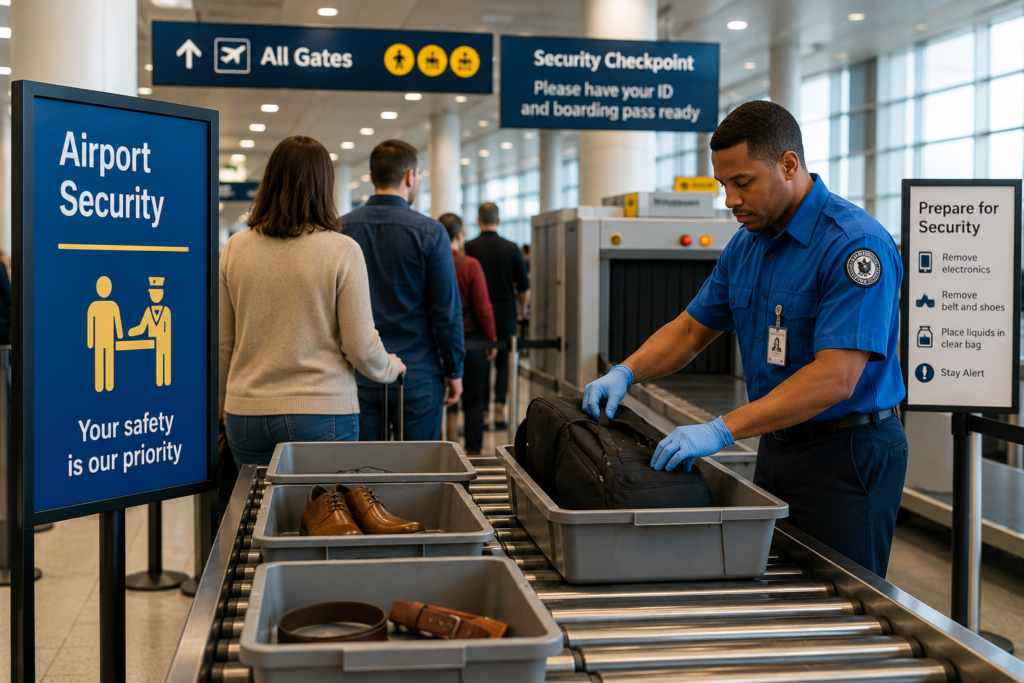
Depending on the airport, you may go through several steps. These can include showing your identification and boarding pass, placing belongings in security trays, passing through a screening machine, and collecting your items afterward.
For first time travelers, the process may look complicated, but once you understand the basic steps, it becomes much easier.
What Should You Have Ready?
Before joining the airport security line, I recommend organizing the important things you will need.
Keep your boarding pass and required identification somewhere that is easy to reach. You do not want to search through your backpack while people are waiting behind you.
If you are traveling internationally, keep your passport easily accessible.
It is also a good idea to check the security rules for the airport you are using before leaving home. Different countries and airports can have different requirements for liquids, electronics, clothing, and other belongings.
Being prepared before reaching the checkpoint can save time and reduce stress.
What Happens at the Security Checkpoint?
When you reach the security area, you will normally join a designated line.
Depending on the airport, you may first show your boarding pass or identification to airport staff. You will then move toward the screening area.
You may be asked to place your carry on bag, jacket, shoes, electronics, and other belongings into trays.
Your items will then pass through an X ray or other screening system while you go through passenger screening.
The exact procedure can vary, so listen carefully to the instructions from security officers.
There is no need to rush. Move at a normal pace and ask politely if you are unsure about something.
How to Prepare Your Carry On Bag
One of the easiest ways to make airport security faster is to organize your carry on bag before you arrive.
I prefer keeping commonly requested items in easy to reach places. Avoid filling your bag with random items that you may need to remove later.
Keep electronic devices organized and make sure your liquids are packed according to the applicable airport rules.
Before leaving home, check the current security requirements for your departure airport. Rules can change, and the requirements may not be identical everywhere.
An organized bag also makes it easier to find your belongings after screening.
Airport Liquids Rules
Liquids are one of the most confusing parts of airport security for beginners.
Many airports have restrictions on the amount and type of liquids passengers can carry through security in their cabin baggage. The exact rules can vary by airport and country.
Common examples of liquids include drinks, shampoo, toothpaste, creams, gels, lotions, and some cosmetics.
Before traveling, check the official rules for your departure airport and follow the required container and packing instructions.
If you are carrying medication, baby food, or other special liquids, check the applicable airport requirements before traveling.
I always think it is better to check these rules at home than to discover a problem when standing at the security checkpoint.
What About Electronics?
Electronics may receive special attention during airport security screening.
Depending on the airport and screening technology being used, you may be asked to remove certain larger electronic devices from your bag.
These can include laptops, tablets, cameras, or other devices.
Keep your electronics somewhere accessible rather than burying them underneath clothes.
Some modern security checkpoints may allow passengers to leave certain electronics inside their bags. However, you should always follow the instructions given at the specific airport.
Do not assume that the rules at one airport will be exactly the same at another.
Do You Need to Remove Your Shoes?
This is another common question from first time flyers.
The answer depends on the airport, country, and security procedure being used.
At some checkpoints, passengers may be asked to remove their shoes. At others, they may be allowed to keep them on.
If you are asked to remove your shoes, place them in the tray as instructed.
Wearing simple and comfortable footwear can make this part of the process easier, especially if you are traveling through multiple airports.
What Happens During Passenger Screening?
After placing your belongings in the appropriate trays, you will go through passenger screening.
Depending on the airport, this may involve a metal detector or a body scanning system.
Follow the instructions from the security officer and stand where you are asked to stand.
If additional screening is required, try not to panic. Sometimes security staff may need to check something further, and this does not automatically mean that you have done anything wrong.
Remain calm, answer questions honestly, and cooperate with the instructions.
What Items Should You Avoid Carrying?
Before packing your cabin bag, check the prohibited and restricted item rules for your airline and airport.
Do not assume that an item is allowed simply because you have carried it before.
Certain weapons, dangerous objects, flammable materials, and other restricted items are not permitted in cabin baggage.
Some everyday items can also have restrictions depending on their size, purpose, or location in your luggage.
Checking the rules before you leave home can prevent delays and the possibility of having an item removed.
What If Security Finds Something in Your Bag?
If security staff find something that needs further inspection, stay calm.
They may ask you to open your bag or remove a particular item. Follow their instructions and provide any information they request.
If an item is not permitted, security staff will explain what happens next according to the applicable airport rules.
The best way to avoid this situation is to check your belongings carefully before leaving home.
I personally think a five minute packing check can save much more time at the airport.
How Long Does Airport Security Take?
There is no fixed answer because security waiting times can change throughout the day.
Busy travel periods, holidays, weekends, weather problems, airport staffing, and passenger numbers can all affect the line.
This is why I recommend arriving at the airport with enough time to complete check in, baggage drop, security screening, and the walk to your gate.
First time travelers should usually give themselves extra time because the airport environment can take longer to navigate.
Being early is much less stressful than running toward your gate after a long security line.
Tips for a Faster Security Experience
There are several simple things you can do to make airport security easier.
First, organize your documents before reaching the checkpoint.
Second, follow the current rules for liquids and restricted items.
Third, keep electronics accessible when required.
Fourth, remove jackets, belts, or other items only when instructed.
Fifth, listen carefully to security staff instead of watching what another passenger is doing.
Finally, check your trays carefully after screening. It is surprisingly easy to leave a phone, watch, passport, or other small item behind when you are in a hurry.
What Should You Do After Security?
Once you pass airport security, take a moment to collect everything.
Check your pockets, backpack, electronics, passport, boarding pass, and other personal belongings.
After that, look at the airport screens to confirm your gate and flight information.
Do not assume your gate will remain the same throughout the day. Airports can sometimes change gates, so checking the information screens is a good habit.
If you have plenty of time, find your gate first and then explore the airport, purchase food, or relax.
Common Airport Security Mistakes Beginners Make
One common mistake is arriving at the checkpoint without knowing where their passport or boarding pass is.
Another is packing liquids incorrectly.
Some travelers also place electronics at the bottom of their bags, making them difficult to remove when required.
Another mistake is carrying prohibited items without checking the rules.
Some passengers become nervous when security staff ask additional questions. There is usually no reason to panic. Simply follow the instructions and cooperate respectfully.
The biggest mistake, in my opinion, is not giving yourself enough time.
Final Thoughts
Airport security does not need to be stressful, even if you are traveling for the first time.
The key is preparation. Know the rules before leaving home, organize your carry on bag, keep your important documents accessible, and pay attention to security instructions.
Remember that airport security procedures can differ depending on the airport and country. Rules can also change as airports introduce new screening technology.
If you are unsure about a particular item or procedure, check the official information for your airport or ask airport staff.
Once you go through airport security a few times, the process will probably feel routine. Until then, the best approach is to stay organized, arrive early, remain calm, and follow instructions.
Your airport journey becomes much easier when you know what to expect. With a little preparation, even first time flyers can move through the security checkpoint confidently and continue their journey without unnecessary stress.