 travelandlearns
Related Articles

Traveling for the first time can feel exciting, confusing, and a little stressful at the same time. When I started learning about travel, I realized that most of the stress comes from not knowing what to expect. Where should I go? What should I pack? How do airports work? How much money should I carry? What documents do I need?
The good news is that traveling becomes much easier when you prepare properly. In my experience, you do not need to know everything before your first trip. You simply need a clear plan, the right documents, sensible luggage, and an open mind.
This complete travel guide for first time travelers covers the basic things you should know before, during, and after your journey. Whether you are planning a local trip or an international vacation, these travel tips can help you feel more confident.
Start With Choosing the Right Destination
The first step is choosing a destination that matches your comfort level, budget, and interests. For your first trip, I recommend choosing a place that is relatively easy to navigate rather than trying to plan an extremely complicated journey.
Think about the weather, transportation, language, local culture, accommodation, food, and general travel costs before making your decision.
You should also consider how long you want to travel. A short three day trip can be a good way to gain confidence before planning a longer international vacation.
Researching your destination is one of the most important first time travel tips. Learn about popular attractions, local customs, transportation options, currency, weather, and areas where tourists commonly stay.
Check Your Travel Documents
Documents should be one of the first things you organize after choosing your destination. For international travel, check your passport validity and determine whether you need a visa.
Do not wait until the last few days to check these requirements. Visa processing times can vary, and some countries require your passport to remain valid for a certain period beyond your planned arrival.
Keep digital copies of important documents such as your passport, visa, travel insurance information, hotel reservations, and flight tickets. I also recommend keeping a separate physical copy of essential information in your luggage.
Having backup copies can save you from unnecessary stress if your phone is lost or your original documents become difficult to access.
Create a Realistic Travel Budget
One of the biggest mistakes first time travelers can make is planning only for flights and hotels. A complete travel budget should include transportation, food, attractions, shopping, travel insurance, airport expenses, and unexpected costs.
Before booking anything, estimate your daily spending. Ask yourself how much you are comfortable spending on accommodation, meals, local transportation, and activities.
I prefer having an emergency amount separate from my regular travel money. You may never need it, but knowing that you have extra funds available can make you feel much more comfortable.
Also check how you will pay at your destination. Some places rely heavily on cards, while others may require cash for smaller purchases.
Book Your Flights Carefully
When booking flights, do not look only at the cheapest ticket. Check baggage allowances, departure times, connection periods, airport locations, and cancellation or change policies.
A very cheap flight with a long overnight connection may not actually be the best deal.
For first time international travelers, I generally prefer simpler routes. A direct flight or a connection with enough time between flights can make the journey less stressful.
After booking, save your confirmation details somewhere you can access without an internet connection.
Choose Comfortable Accommodation
Your hotel or accommodation can have a major effect on your travel experience. You do not always need an expensive hotel, but you should choose a place with good reviews, a convenient location, and the facilities you actually need.
When reading reviews, pay attention to recent comments about cleanliness, safety, transportation, noise, and customer service.
Location is especially important. A slightly more expensive hotel in a convenient area can sometimes save money and time because you will spend less on transportation.
For a first trip, I would rather choose a simple and reliable place in a good location than a luxurious hotel far away from everything I want to see.
Plan Your Basic Itinerary
You do not need to plan every minute of your vacation. In fact, overplanning can make a trip exhausting.
Instead, create a basic daily plan. Decide which attractions you want to visit, how you will reach them, and approximately how much time you want to spend there.
Group attractions that are close to each other. This saves transportation time and gives you more time to actually enjoy the destination.
I also recommend leaving some free time in your schedule. You might discover a beautiful local market, a small restaurant, or an interesting neighborhood that was not part of your original plan.
Pack Smart Instead of Packing Everything
Packing is one area where first time travelers often make things harder than necessary. It is easy to think that you need an outfit for every possible situation.
In reality, most trips require fewer things than you expect.
Pack clothing according to the weather and activities you have planned. Choose comfortable shoes because you may walk much more than you normally do.
Your basic travel essentials may include clothing, underwear, comfortable shoes, toiletries, medication that you normally use, phone accessories, identification documents, and any destination specific items you need.
A small day bag can also be useful for carrying your phone, wallet, water bottle, documents, and other essentials while exploring.
Learn Basic Airport Procedures
Airports can seem confusing when you have never traveled before. The process becomes much easier when you understand the basic steps.
For an international flight, you will normally need to check in, drop off checked baggage if you have any, pass through security, complete immigration procedures where applicable, and find your departure gate.
Arrive at the airport with enough time to handle unexpected delays. International airports can be large, and finding the correct terminal or gate may take longer than expected.
Keep your passport, boarding pass, and other important documents easily accessible.
Pay attention to airport announcements and departure screens because gates and boarding information can sometimes change.
Understand Local Transportation
Before arriving, research how transportation works at your destination. Depending on the location, you may use trains, buses, taxis, ride sharing services, rental cars, or walking.
Learn how to reach your accommodation from the airport before you arrive. Knowing your first transportation step can make your arrival much calmer.
If public transportation is available, learn how tickets work and whether you need a travel card or mobile application.
Always confirm taxi prices or use trusted transportation services. Taking a few minutes to understand local transportation can prevent confusion and unnecessary expenses.
Keep Your Valuables Secure
You do not need to be afraid while traveling, but you should remain aware of your surroundings.
Keep your passport, wallet, phone, and other valuable items secure. Avoid carrying large amounts of cash and do not display expensive items unnecessarily.
I recommend keeping important documents and money in secure places rather than putting everything in one pocket or bag.
You should also have your accommodation address saved on your phone. This can be especially helpful if you are unfamiliar with the local language or transportation system.
Respect Local Culture
One of the best parts of traveling is experiencing a culture that may be different from your own.
Learn a few basic local words if possible. Understand appropriate clothing requirements for religious or cultural sites. Follow local rules and ask before photographing people when appropriate.
Being respectful can completely change how locals respond to you.
Remember that you are a visitor. You do not need to agree with every local custom, but understanding and respecting differences makes travel more enjoyable.
Be Careful With Food and Water
Trying local food is one of my favorite parts of traveling, but it is still important to make sensible choices.
Choose restaurants that appear clean and busy. Be careful with food that has been sitting outside for long periods, especially in very hot weather.
Water safety also depends on the destination. Research whether tap water is considered safe to drink. If you are unsure, use sealed bottled water.
Do not let food concerns stop you from experiencing local cuisine. Just use common sense and pay attention to hygiene.
Get Travel Insurance
Travel insurance is something many first time travelers overlook. I consider it an important part of international travel preparation.
Depending on the policy, travel insurance may help with certain medical expenses, trip interruptions, lost baggage, delays, or other covered problems.
Read the policy carefully before purchasing it. Make sure you understand what is covered, what is excluded, and how to contact the provider during an emergency.
The cheapest policy is not always the best option. Look for coverage that makes sense for your destination and activities.
Stay Connected
Having reliable communication while traveling can make everything easier. Before leaving, check your mobile network options and determine whether international roaming, a local SIM, or an eSIM is suitable for you.
Download important maps and travel information before your trip so you can access them when your internet connection is weak.
Keep your phone charged and consider carrying a power bank when you expect to spend long hours outside.
You should also save important phone numbers and accommodation details in your phone.
Do Not Try to See Everything
One lesson I have learned about travel is that you cannot experience an entire destination in one visit.
First time travelers sometimes create schedules that are packed from morning until night. This can leave you exhausted instead of enjoying the journey.
Choose a few important experiences and give yourself enough time to appreciate them.
Travel should not feel like a race. Some of the best memories can come from sitting in a local cafe, walking through a neighborhood, watching a sunset, or simply exploring without a strict schedule.
Keep an Emergency Plan
Even when everything is planned carefully, unexpected situations can happen.
Keep copies of your important documents and know where your country’s embassy or consulate is located when traveling internationally.
Know how to contact your accommodation and travel provider. Keep emergency funds available and tell someone you trust about your basic travel plans.
If you lose your passport, money, phone, or luggage, try to remain calm and follow the appropriate official procedures.
Having a simple emergency plan makes problems easier to manage.
Common First Time Travel Mistakes to Avoid
There are several mistakes that can make your first trip unnecessarily difficult.
One common mistake is overpacking. Carrying too much luggage can make airports, public transportation, and hotel changes more difficult.
Another mistake is booking everything without checking the details. Always review baggage rules, cancellation policies, hotel locations, and transportation arrangements.
Some travelers also forget to check the weather before packing. Weather can have a huge effect on your clothing choices and daily plans.
Finally, avoid spending your entire trip worrying about whether everything is going perfectly. Small problems are normal when traveling.
Final Thoughts
Your first trip does not need to be perfect to be memorable. The goal is to prepare enough that you can handle the basic challenges while leaving room for unexpected experiences.
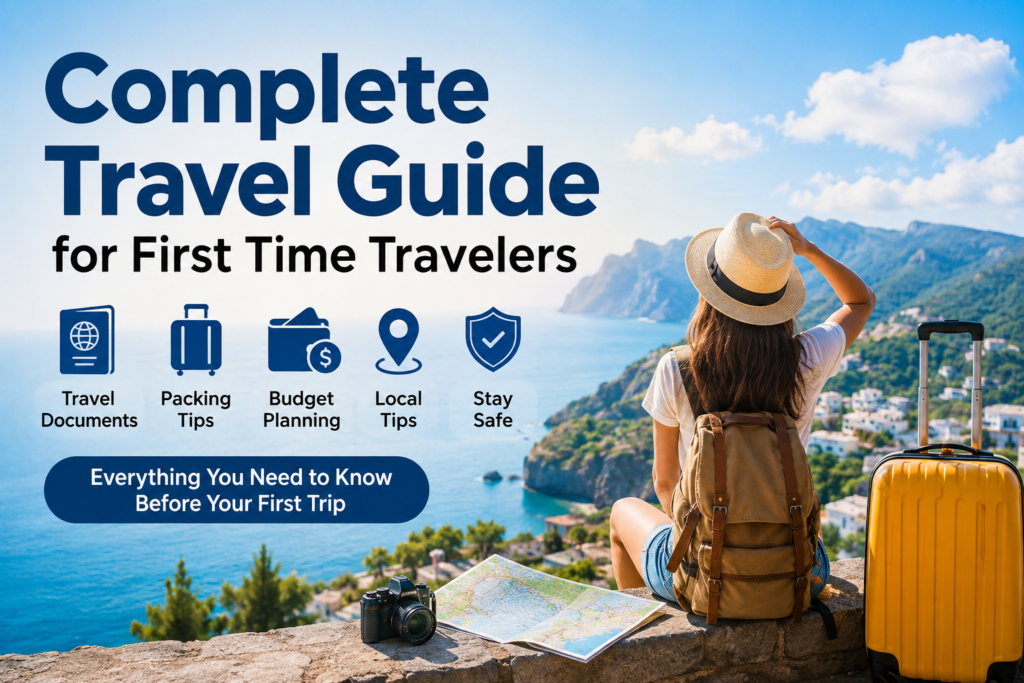
Choose a suitable destination, organize your documents, create a realistic budget, pack carefully, book reliable accommodation, understand transportation, and protect your valuables.
Most importantly, stay flexible. Travel teaches you things that cannot always be learned from a guidebook. You learn how to solve problems, communicate with different people, understand other cultures, and become more confident.
From my point of view, the best first time travel advice is simple: prepare carefully, pack practically, stay aware, and enjoy the experience. Once you complete your first trip, many things that seemed difficult before will suddenly feel much easier.
Your first journey is not just about visiting a new place. It is also about discovering how comfortable you can become outside your normal routine.