 travelandlearns
Related Articles

Flying for the first time can feel exciting, but it can also be confusing. An airport is a busy place with check in counters, security lines, departure gates, baggage areas, signs, and many different procedures happening at the same time. When you do not know what to expect, even simple steps can seem stressful.
In my opinion, the best way to enjoy your first flight is to understand the airport process before you arrive. Once you know what happens from the moment you enter the terminal until you board the aircraft, the entire experience becomes much easier.
This complete airport guide for first time flyers explains the important steps you need to know, from preparing your documents and luggage to finding your gate and boarding your flight.
Prepare Before Going to the Airport
A smooth airport experience starts before you leave home. First, check your flight details carefully. Look at the departure time, airport name, terminal, flight number, and destination.
For international travel, make sure your passport is valid and that you have any required visa or travel documents. It is also a good idea to keep digital and physical copies of important documents.
I recommend keeping your passport, identification, boarding pass, wallet, phone, and other essential items somewhere easy to reach. You do not want to search through your luggage every time you need your documents.
You should also check your airline baggage allowance before packing. Different airlines can have different rules for checked luggage and cabin baggage.
Arrive Early at the Airport
One of the most important airport tips for first time flyers is to arrive early. Being late can turn an exciting trip into a stressful experience.
For international flights, arriving around three hours before departure is a common recommendation. For domestic flights, the required time may be shorter, but arriving early still gives you extra time for unexpected delays.
Airports can become especially busy during weekends, holidays, and peak travel periods. Traffic on the way to the airport can also take longer than expected.
I personally believe arriving early is much better than trying to save thirty minutes and spending the entire time worrying about missing your flight.
Find Your Airline and Check In
After entering the airport, look for the departure screens. These screens normally show flight numbers, destinations, departure times, and information about check in counters or gates.
Find your flight number and check the information carefully.
If you have already checked in online and only have cabin baggage, you may be able to go directly toward security. If you have checked luggage, you will usually need to visit your airline’s bag drop or check in counter.
At the counter, the airline staff may check your passport or identification, confirm your booking, weigh your luggage, and provide your boarding pass if you do not already have one.
Keep your boarding pass and identification easily accessible because you may need them several times.
Understand Checked Baggage and Cabin Baggage
Knowing the difference between checked baggage and cabin baggage is important for first time flyers.
Checked baggage is handed to the airline before security and placed in the aircraft’s luggage compartment. You normally collect it after landing at the baggage claim area.
Cabin baggage stays with you during the flight. Depending on airline rules, you may be allowed to bring a small suitcase and a personal item such as a handbag or backpack.
Before leaving home, check the airline’s current size and weight restrictions. Packing according to those rules can prevent problems at the airport.
Keep valuable items, important documents, medication if applicable, electronics, and other essential belongings in your cabin baggage rather than your checked suitcase.
Go Through Airport Security
After check in, follow the signs for security. This is one of the airport procedures that can feel intimidating the first time, but it is usually straightforward.
You will normally place your cabin baggage and certain personal items into trays for screening. Depending on the airport and current security procedures, you may need to remove items such as jackets, belts, or electronic devices.
Follow the instructions given by security staff because procedures can differ between airports.
Liquids and other restricted items are also subject to security rules. Before packing, check the official rules of the airport and airline you are using.
The best approach is to stay organized. Keep your documents and belongings together and avoid putting small items loose in your pockets.
Find Your Departure Gate
After security, check the departure screens again. Your gate may already be displayed, or it may be announced later.
Airports can be large, so do not assume your gate is just a few steps away. Some airports require passengers to walk significant distances or use trains, buses, or shuttle systems between terminals.
Follow the signs and give yourself enough time to reach the gate.
Once you find the gate, check the information on the screen nearby. Make sure the destination and flight number match your boarding pass.
This is also a good time to use the restroom, fill your water bottle if permitted, and organize your belongings before boarding begins.
Pay Attention to Flight Announcements
Airport announcements can contain important information about your flight. Listen for changes to the gate, boarding time, or other instructions.
Sometimes a flight can move to another gate. That is why I recommend checking the departure screens regularly instead of simply sitting down and forgetting about your flight.
If you are unsure about anything, ask an airport employee or airline representative. Asking one simple question can save you from walking in the wrong direction or missing an important announcement.
Understand the Boarding Process
When boarding begins, the airline will usually call passengers according to groups, zones, rows, or other categories.
Do not worry if other passengers stand up immediately. You normally do not need to rush toward the gate the second boarding starts.
Check your boarding pass and wait for your group to be called.
At the gate, your boarding pass will be scanned and you may need to show identification. After that, you will follow the signs or staff instructions toward the aircraft.
Once inside the plane, find your seat number and place your cabin baggage in the appropriate storage area.
What Happens After Landing
The airport process does not end when the plane lands.
If you have checked baggage, follow the signs for baggage claim. Look at the screens to find the carousel assigned to your flight.
Check your luggage carefully before leaving the baggage area. Many suitcases look similar, so confirming the luggage tag can help you avoid taking someone else’s bag.
For international arrivals, you may also need to go through immigration and customs. Keep your passport and travel documents ready.
Follow the signs for arrivals, transportation, taxis, buses, trains, or other services depending on your destination.
Common Mistakes First Time Flyers Should Avoid
There are several simple mistakes that can make airport travel more stressful.
One common mistake is arriving too late. Another is packing restricted items without checking the rules. Some travelers also forget to check their gate after security.
Another mistake is putting important documents inside checked luggage. Your passport, identification, boarding pass, money, phone, and other essential items should remain accessible.
I also recommend avoiding an overly complicated travel bag. The easier it is to find your belongings, the easier the airport experience will feel.
Do not be afraid to ask for help. Airport staff deal with first time travelers every day, and asking for directions is completely normal.
Airport Tips for a Stress Free First Flight
There are a few habits that can make your first flight much easier.
Arrive early and give yourself extra time. Keep your documents organized. Wear comfortable clothing and shoes because you may walk a lot. Keep your phone charged and carry a charging option that complies with airline rules.
Take screenshots of important travel information so you can access it even when your internet connection is unreliable.
Most importantly, stay calm. Airports may look complicated because they are large and busy, but the process is designed around a series of simple steps.
Final Thoughts
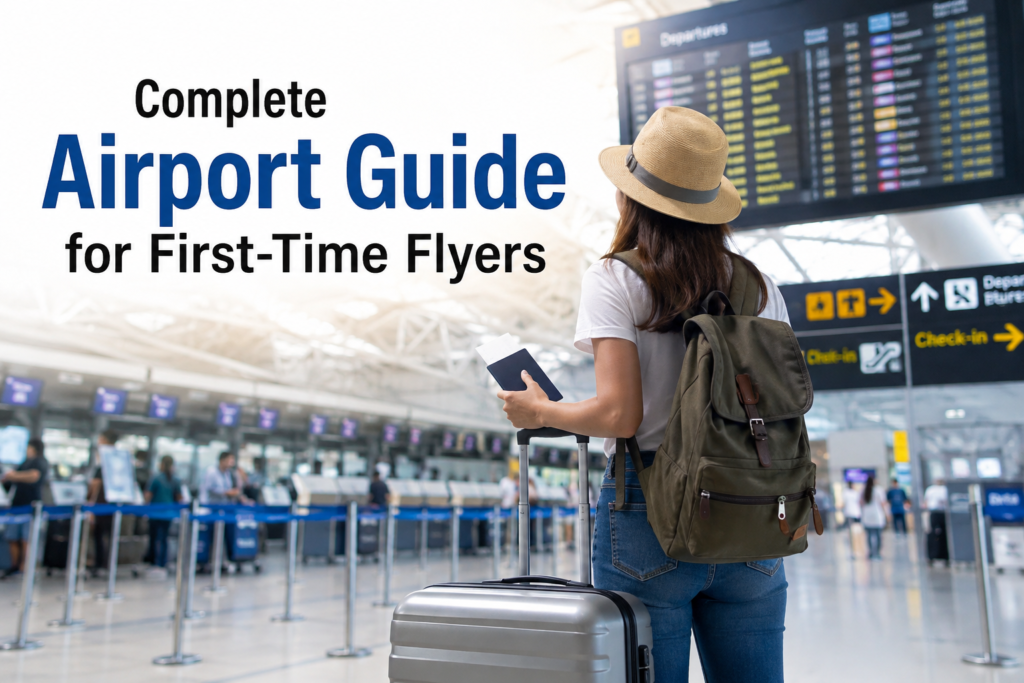
Your first airport experience does not have to be stressful. Once you understand the basic airport process, you will know what to expect and where you need to go.
From preparing your documents and arriving early to checking in, passing through security, finding your departure gate, boarding the aircraft, and collecting your luggage after landing, each stage has a clear purpose.
My biggest airport tip for first time flyers is to prepare in advance and give yourself enough time. You do not need to know everything perfectly before your first flight. Pay attention to the signs, listen to announcements, follow airport instructions, and ask for help whenever you need it.
After your first flight, many of these procedures will become familiar. What initially feels confusing can quickly become a normal part of traveling. With a little preparation and a calm attitude, you can walk through the airport with much more confidence and enjoy the journey from the very beginning.