 travelandlearns
Related Articles


Applying for a visa can feel confusing when you are doing it for the first time. There are forms to complete, documents to collect, fees to pay, and sometimes an interview to attend. I believe the process becomes much easier when you understand what is expected before you start. Instead of treating a visa application as something complicated, it is better to look at it as a step by step process that requires careful preparation.
In this Visa Application Guide for Beginners, I will explain the basic process in simple language. My goal is to help first time travelers understand how to prepare a visa application, avoid common mistakes, organize documents, and improve their chances of having a smooth experience.
What Is a Visa?
A visa is an official permission that allows a person to request entry into another country for a specific purpose and period. Depending on the country and type of visa, it may allow you to visit for tourism, study, work, business, family visits, or other approved activities.
A visa is different from a passport. Your passport identifies you as a citizen of your country, while a visa is permission connected to your intended visit to another country.
Visa requirements can be very different from one destination to another. For this reason, I always recommend checking the official immigration or embassy website of the country you plan to visit before preparing your application.
Choose the Right Visa Type
The first important step in the visa application process is choosing the correct visa category. This may sound simple, but selecting the wrong category can create unnecessary problems.
For example, a tourist visa is generally designed for people visiting for holidays or sightseeing. A student visa is intended for people studying at an educational institution, while a work visa is designed for approved employment.
Before starting your application, think about why you are traveling, how long you intend to stay, and what activities you will perform during your visit. Then check which visa category matches your situation.
Do not choose a visa simply because you think it will be easier to obtain. The information in your application should match the real purpose of your trip.
Check the Visa Requirements
Once you know the visa category, make a list of the requirements. This is one of the most important parts of preparing a visa application for beginners.
Common requirements may include a valid passport, completed application form, recent photographs, proof of accommodation, travel information, financial documents, and evidence explaining the purpose of your trip.
Some countries may also request travel insurance, invitation letters, employment information, educational documents, or other supporting evidence.
Requirements can change, so avoid depending completely on information from friends, social media, or old articles. Official government and embassy sources should be your main reference.
Make Sure Your Passport Is Valid
Your passport is one of the most important documents in a visa application. Before applying, check its expiration date and the condition of the document.
Some countries require your passport to remain valid for a certain period after your planned arrival or departure. Some may also require available blank pages.
I recommend checking these details before paying application fees or making non refundable travel arrangements. If your passport does not meet the destination country’s requirements, you may need to renew it first.
Complete the Application Form Carefully
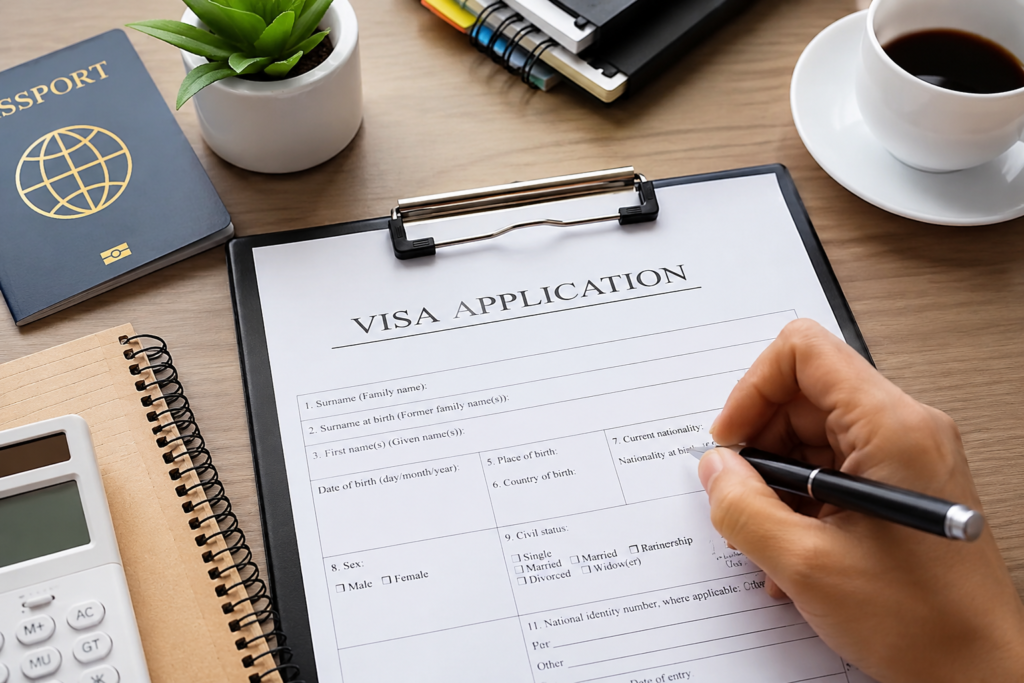
The visa application form is another area where beginners can make avoidable mistakes. Take your time when entering your information.
Your name, date of birth, passport number, address, employment details, travel history, and other information should be accurate and consistent with your supporting documents.
Do not rush through the form just because many questions appear simple. If a question does not apply to you, follow the instructions provided rather than leaving the field blank when an answer is required.
Before submitting the form, read everything again. A few minutes of checking can help you identify incorrect dates, spelling mistakes, or missing information.
Prepare Your Supporting Documents
Supporting documents help explain and verify the information in your application. The exact documents depend on the visa category and destination.
For a tourist visa, applicants may commonly be asked for evidence of their travel plans, accommodation, financial ability, employment or study status, and other information that supports the purpose of the visit.
Keep your documents organized. I find it helpful to create separate folders for identity documents, financial documents, employment or education documents, travel information, and application records.
If documents need to be translated, legalized, certified, or submitted in a specific format, follow the official instructions carefully.
Show Evidence of Financial Ability
Many visa applications require evidence that you can financially support yourself during your trip. The exact financial requirements vary by country.
Bank statements may be requested, but financial evidence can sometimes include other documents depending on the visa rules. The important thing is that your financial information should be genuine and consistent with your circumstances.
Do not suddenly move unexplained money into an account simply to make the balance look higher. Unusual financial activity can create questions about the source of the funds.
Instead, provide legitimate documents that clearly explain your financial situation.
Provide Genuine Travel Information
If you are applying for a tourist visa, your travel plans should make sense. You may need to provide information about where you plan to stay, your expected travel dates, and the general purpose of your visit.
Your application should tell a consistent story. For example, if you state that you are visiting for a short holiday, your supporting documents should reasonably match that purpose.
You do not need to create an unnecessarily complicated itinerary. A clear and realistic travel plan is usually easier to understand.
Pay the Visa Application Fee
Most visa applications involve a fee. The amount and payment method depend on the destination and visa category.
Before making a payment, check whether the fee is refundable. In many situations, visa application fees are not refunded even if an application is refused.
Keep your payment receipt or confirmation. It may be required later or useful for your records.
Schedule Your Appointment
Some visa applications require an appointment at an embassy, consulate, visa application center, or another authorized location.
Appointments may involve document submission, biometric information, photographs, or an interview.
Try to schedule your appointment early, especially during busy travel seasons. Waiting until the last minute can create unnecessary stress if appointment availability is limited.
Take all required documents with you and follow the instructions provided by the official visa service.
Prepare for the Visa Interview
Not every visa requires an interview, but if yours does, preparation can make you feel more confident.
A visa interview is usually an opportunity for the officer to ask questions about your application and travel plans. Questions may involve your destination, reason for travel, employment, education, finances, accommodation, or previous travel.
Answer honestly and clearly. You do not need to memorize long speeches.
I believe the best approach is to understand your own application. If you know why you are traveling, where you plan to stay, how long you intend to remain there, and how you will finance your trip, you should be able to answer basic questions naturally.
Avoid Common Visa Application Mistakes
Many visa problems happen because of simple mistakes rather than complicated issues.
One common mistake is submitting incomplete documents. Another is providing information that does not match across different documents.
Some applicants also submit false information because they believe it will improve their chances. This can create serious problems and may affect future applications.
Another mistake is waiting too long to apply. Processing times vary, so it is better to research the expected timeline before finalizing your travel plans.
Finally, do not rely on unofficial agents or websites without checking their information. If you use professional assistance, make sure you understand what they are doing on your behalf.
What Happens After You Apply?
After submitting your application, the processing period begins. The length of this period depends on the destination, visa type, season, application volume, and individual circumstances.
Some applications are processed quickly, while others may require additional review or documents.
You may be able to track your application through the official application system. If authorities request additional information, respond according to their instructions and within the specified time.
Try not to make assumptions based on how long your application takes. A longer processing period does not automatically mean approval or refusal.
What Should You Do If Your Visa Is Refused?
A visa refusal can be disappointing, but it does not necessarily mean you can never travel to that country.
If your application is refused, carefully read the refusal information provided by the relevant authority. Try to understand the reason rather than immediately submitting another application with exactly the same information.
If the rules allow you to appeal or apply again, determine what needs to be addressed. Depending on the circumstances, you may need stronger supporting evidence, clearer information, or corrections to an earlier application.
Most importantly, never submit false documents in an attempt to overcome a refusal.
Final Tips for First Time Applicants
My biggest advice for beginners is to start early and stay organized. A visa application becomes much less stressful when you are not collecting everything at the last moment.
Create a document checklist, verify every requirement, check your passport, review the application form carefully, and keep copies of everything you submit.
Always use official sources for current requirements because visa policies can change. Also remember that meeting the requirements does not automatically guarantee approval. The final decision belongs to the relevant immigration or visa authority.
Conclusion
A Visa Application Guide for Beginners does not need to be complicated. The process becomes easier when you understand each stage and prepare carefully.
Start by identifying the correct visa type, checking the latest requirements, preparing your passport and supporting documents, completing the application accurately, paying the required fee, and attending your appointment if necessary. If an interview is required, answer questions honestly and confidently.
From my point of view, good preparation is the most important part of a successful visa application. Take your time, keep your information consistent, avoid shortcuts, and rely on official information. With careful planning and attention to detail, first time travelers can approach the visa application process with much more confidence.