 travelandlearns
Related Articles

Introduction
If you are planning your very first international trip, one of the biggest challenges you will probably face is applying for a visa. I still remember how confusing the whole process looked when I started learning about it. There were so many documents, different rules for different countries, and plenty of advice from people that often made things even more confusing. The good news is that getting a visa is not as difficult as it seems when you understand the process step by step.
I have learned that a successful visa application is not about luck. It is about preparation, honesty, and paying attention to every detail. Once you understand what immigration officers expect from applicants, the process becomes much easier. In this guide, I will share everything I believe every beginner should know before applying for a visa for the first time.
Understanding What a Visa Is
A visa is an official permission that allows you to enter another country for a specific purpose and for a limited period. Depending on your reason for traveling, you may need a tourist visa, business visa, student visa, work visa, or transit visa.
Every country has its own immigration policies. Some countries offer visa free entry to certain nationalities, while others require applicants to complete a detailed visa application before traveling. This is why it is always important to check the visa requirements for your destination before booking your trip.
Decide the Purpose of Your Visit
Before filling out any application form, I think the first thing you should do is clearly define why you are traveling. Your purpose of travel determines which visa category you should apply for.
If you are planning a holiday, then a tourist visa is usually the correct option. If you are attending meetings or conferences, a business visa may be required. Students need study visas, while those who have secured employment abroad generally need work visas.
Applying for the wrong visa category can lead to delays or even rejection.
Check the Visa Requirements Carefully
One mistake many beginners make is assuming every country has the same requirements. In reality, every embassy has its own checklist.
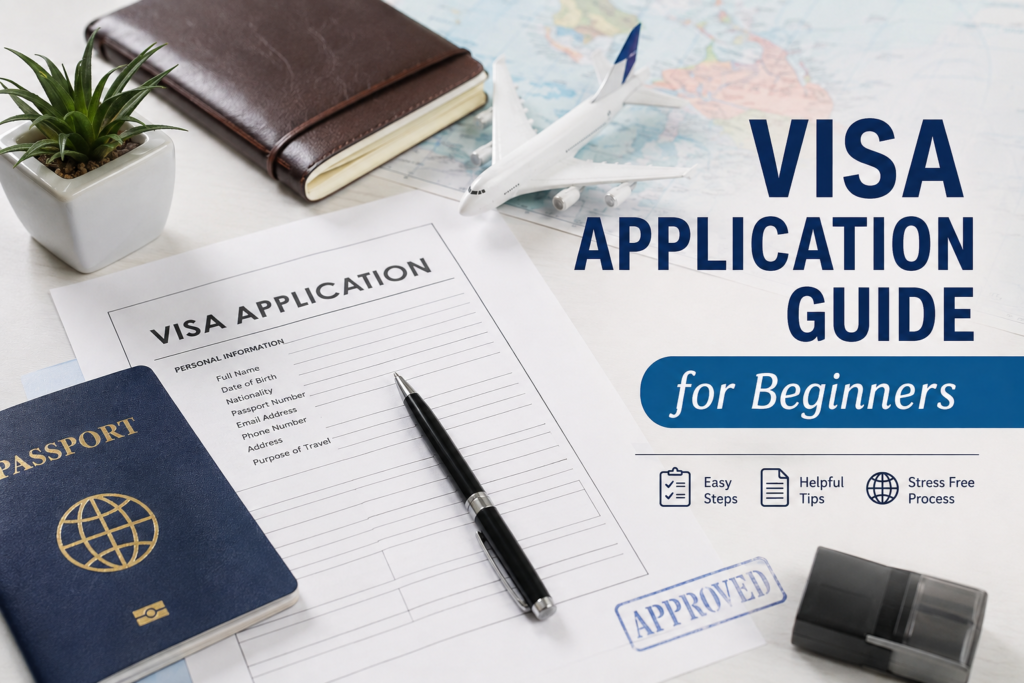
Most visa applications usually require the following documents.
A valid passport with sufficient remaining validity.
Recent passport size photographs.
A completed visa application form.
Proof of financial support.
Hotel booking confirmation.
Flight reservation.
Travel itinerary.
Travel insurance if required.
Employment or business documents.
Invitation letter if applicable.
I always recommend reading the embassy’s official checklist more than once before preparing your documents.
Make Sure Your Passport Is Valid
Your passport is the most important document during the entire application process.
Many countries require your passport to remain valid for at least six months beyond your intended travel date. If your passport is damaged, nearly full, or close to expiration, renew it before applying for a visa.
Double check that all your personal information is correct.
Fill Out the Application Form Carefully
The visa application form may seem simple, but even small mistakes can create unnecessary problems.
Always write accurate information that matches your passport and supporting documents.
Check the spelling of your name.
Enter the correct passport number.
Use accurate travel dates.
Provide your real address.
Mention truthful employment details.
Never leave required sections blank unless instructed.
I usually review every page at least twice before submitting it.
Prepare Strong Financial Documents
One of the most common reasons for visa refusal is weak financial evidence.
Immigration officers want to know that you can support yourself during your stay without becoming a financial burden.
Depending on the country, you may need to provide.
Recent bank statements.
Salary slips.
Tax records.
Business registration documents.
Savings certificates.
Financial sponsorship documents if someone else is paying for your trip.
Try to maintain a stable bank balance instead of depositing a large amount just before applying.
Book Accommodation and Flights Wisely
Many embassies ask applicants to provide travel plans.
This usually includes hotel reservations and flight bookings.
I personally prefer refundable hotel bookings whenever possible because visa approval is never guaranteed.
Avoid purchasing expensive non refundable airline tickets until your visa has been approved unless the embassy specifically requires confirmed tickets.
Write an Honest Travel Itinerary
A travel itinerary explains your travel plans.
You do not need to create an overly detailed schedule. Simply mention the cities you plan to visit, the expected travel dates, and the major attractions or activities you hope to enjoy.
A clear itinerary shows that your travel plans are genuine.
Travel Insurance Can Be Very Helpful
Some countries make travel insurance mandatory.
Even if it is optional, I believe it is worth having because unexpected situations can happen during international travel.
Travel insurance may cover medical emergencies, trip cancellations, lost baggage, and travel delays.
Having insurance also demonstrates that you are a responsible traveler.
Be Honest Throughout the Process
Honesty is probably the most important part of every visa application.
Never submit fake documents.
Never hide important information.
Never provide false employment details.
Embassies often verify documents, and dishonest information can lead to visa refusal or even future travel restrictions.
I always believe honesty gives applicants the strongest chance of success.
Prepare for the Visa Interview
Not every country requires a visa interview, but some do.
If you receive an interview appointment, remain calm and answer questions confidently.
Common interview questions include.
Why are you visiting this country.
How long will you stay.
Who is paying for your trip.
Where will you stay.
What do you do for work.
Do you plan to return home.
Keep your answers simple, honest, and consistent with your application.
Dress Professionally
Your appearance may not determine the visa decision, but presenting yourself professionally creates a positive impression.
Wear clean and decent clothing.
Arrive early.
Carry all required documents in an organized folder.
Remain polite throughout the interview.
Professional behavior always leaves a better impression.
Double Check Every Document
Before submitting your application, create your own checklist.
I like arranging documents in the exact order requested by the embassy.
Check that every photocopy is clear.
Verify every signature.
Confirm every date.
Make sure every required document is included.
Small mistakes can cause unnecessary delays.
Understand Processing Times
Visa processing does not happen instantly.
Some tourist visas are approved within days, while others may take several weeks or even months.
I always recommend applying well before your planned departure date.
Waiting until the last minute creates unnecessary stress.
Common Reasons Visa Applications Are Rejected
Many beginners worry about visa rejection.
Although rejection is possible, understanding the common reasons can help you avoid mistakes.
Incomplete documents.
Incorrect information.
Weak financial proof.
Insufficient travel history.
Unclear travel purpose.
Fake documents.
Previous immigration violations.
Poor interview performance.
Lack of strong ties to your home country.
Preparing carefully greatly reduces these risks.
What to Do After Receiving Your Visa
Receiving your visa does not mean your preparation is finished.
Check every detail printed on your visa.
Verify your name.
Passport number.
Visa type.
Number of entries.
Validity period.
Length of stay.
If you notice any mistake, contact the embassy immediately.
Keep Copies of Important Documents
I always keep both printed and digital copies of my important travel documents.
Passport.
Visa.
Travel insurance.
Flight tickets.
Hotel bookings.
Emergency contacts.
Bank cards.
Having backup copies can save a lot of stress if documents are lost during the trip.
Respect Immigration Rules
Getting a visa is only the beginning of your journey.
When you arrive at your destination, immigration officers may still ask questions about your visit.
Carry supporting documents with you.
Answer questions politely.
Respect local laws.
Do not overstay your visa.
Following immigration rules helps maintain a positive travel record for future applications.
Learn From Every Application
Even if your first visa application feels stressful, every experience teaches you something valuable.
After completing one successful application, future visa processes become much easier because you already understand how documents are prepared and what immigration officers expect.
Travel experience also improves your confidence when applying for visas to other countries.
Final Thoughts
Applying for a visa for the first time may seem overwhelming, but I genuinely believe it becomes manageable when you approach it step by step. Instead of rushing through the process, take your time to understand the requirements, organize your documents, and submit honest information. Careful preparation can make a huge difference in your chances of approval.
In my experience, patience and attention to detail are the keys to a successful visa application. Every country has different rules, but the basic principles remain the same. Be truthful, stay organized, apply early, and always follow the official instructions provided by the embassy. Once your visa is approved, you can focus on the exciting part of your journey, exploring a new destination and creating unforgettable memories with confidence.