 travelandlearns
Related Articles


Whenever I plan a trip, I get excited about choosing destinations, booking flights, and making a list of places I want to visit. Like many travelers, I used to believe that travel insurance was something only people going on expensive international vacations needed. I thought it was an unnecessary extra cost that travel companies tried to sell. However, after learning more about it, I realized that travel insurance is not a luxury. It is a practical way to protect both my money and my peace of mind.
Travel insurance is often misunderstood because many people never need to use it. But when something unexpected happens, it can make a huge difference. Whether it is a medical emergency, a canceled flight, or lost luggage, travel insurance helps reduce the financial stress that comes with these situations. In this article, I want to explain travel insurance in the simplest way possible so anyone can understand why it matters.
What Is Travel Insurance
Travel insurance is a type of protection that covers certain unexpected problems that may happen before or during a trip. You pay a small amount before your journey, and in return, the insurance company agrees to help cover specific expenses if something goes wrong.
I like to think of travel insurance as a safety net. I hope I never need it, but it is comforting to know it is there if I do. Just like I wear a seatbelt even though I do not expect an accident, travel insurance works in a similar way. It prepares me for situations that I cannot predict.
Why Travel Insurance Is Important
Travel plans do not always go as expected. Flights get delayed, weather changes suddenly, luggage gets lost, and people sometimes become sick while traveling.
Without travel insurance, I might have to pay for these unexpected costs from my own pocket. Depending on the situation, those costs could be much higher than the price of the insurance itself.
One medical emergency in another country can cost thousands of dollars. Missing a flight because of bad weather could mean buying another expensive ticket. Even replacing essential items after losing luggage can become costly.
That is why I believe travel insurance is an investment rather than an unnecessary expense.
What Does Travel Insurance Usually Cover
Most travel insurance policies include several types of coverage. Although every policy is different, many offer similar protections.
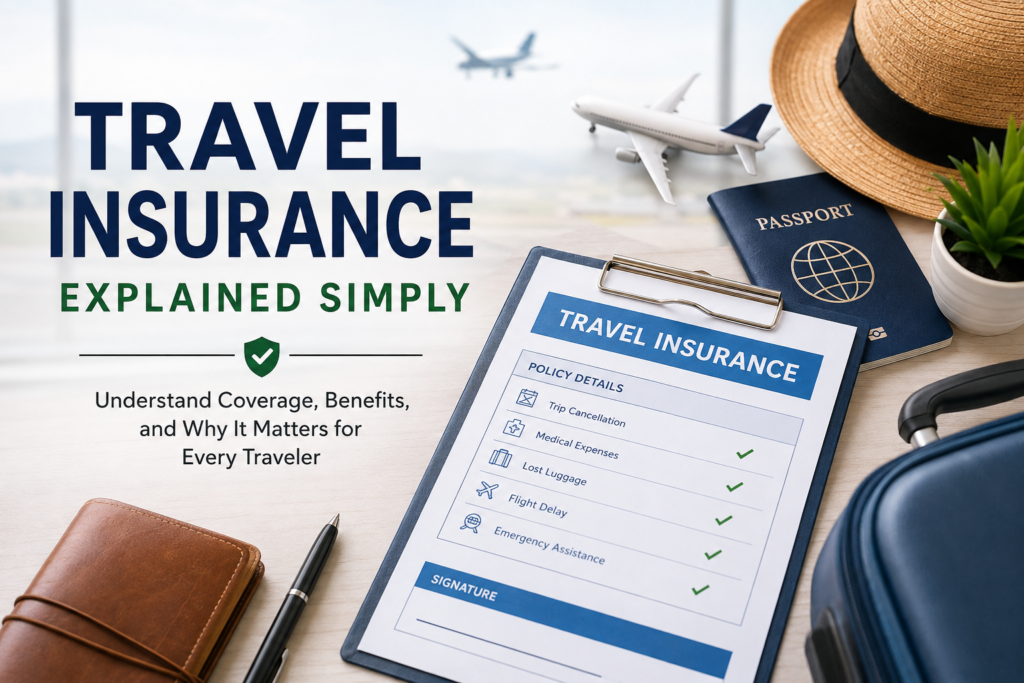
Medical emergencies are one of the biggest reasons people buy travel insurance. If I become sick or injured while traveling, the insurance may help pay hospital bills, doctor visits, medication, and emergency treatment.
Trip cancellation coverage is another valuable benefit. If I have to cancel my trip because of illness, family emergencies, or other covered reasons, I may recover some or all of the money I already spent on flights, hotels, or tours.
Trip interruption coverage helps if my vacation is cut short because of an emergency. Instead of losing everything I paid for, I may receive compensation for the unused part of my trip.
Lost luggage protection provides financial assistance if my bags are lost, stolen, or damaged during travel. This allows me to replace important items without spending too much.
Flight delay coverage helps pay for meals, transportation, or hotel stays if my flight is delayed for a long time.
Emergency evacuation coverage can also be included. If I become seriously ill or injured in a remote location, transportation to a suitable hospital can be extremely expensive. Insurance may cover these costs.
What Travel Insurance Does Not Cover
Many people assume travel insurance covers every possible problem, but that is not true.
Most insurance policies do not cover situations caused by reckless behavior. For example, if someone travels against government travel warnings or participates in dangerous activities without proper coverage, their claim may be rejected.
Pre existing medical conditions may also have limited coverage unless they are specifically included in the policy.
Losses caused by carelessness, such as leaving expensive belongings unattended, may not always be covered.
That is why I always recommend reading the policy carefully before purchasing it. Understanding what is included and excluded helps avoid disappointment later.
Different Types of Travel Insurance
Travel insurance comes in different forms depending on the type of traveler.
Single trip insurance covers one specific vacation. Once the trip ends, the policy expires.
Annual travel insurance is useful for people who travel several times each year. Instead of buying separate policies for every trip, one annual plan can provide coverage for multiple journeys.
Family travel insurance covers parents and children under one policy, making it more affordable for family vacations.
Student travel insurance is designed for students studying abroad. It often includes medical coverage along with protection for educational interruptions.
Business travel insurance is created for professionals who travel frequently for work.
Choosing the right type depends on personal travel habits.
How Much Does Travel Insurance Cost
One of the biggest misconceptions is that travel insurance is expensive.
In reality, it usually costs only a small percentage of the total trip price. The exact amount depends on several factors including destination, age, trip length, coverage amount, and medical history.
When I compare the cost of insurance with the money I spend on flights, hotels, transportation, and activities, the insurance premium feels relatively small.
Paying a little before the trip can save a lot if an unexpected situation occurs.
When Should You Buy Travel Insurance
I believe the best time to buy travel insurance is soon after booking the trip.
Buying early provides protection in case something happens before departure. For example, if I become seriously ill before traveling and have to cancel, early coverage may help recover my prepaid expenses.
Waiting until the last minute may reduce some of the available benefits.
How To Choose The Right Policy
Not every travel insurance policy is the same.
I always compare different plans before making a decision. Instead of looking only at the cheapest option, I focus on the coverage provided.
Medical coverage should be high enough for the destination I am visiting.
The policy should clearly explain cancellation benefits, baggage protection, emergency assistance, and claim procedures.
Reading customer reviews also helps me understand how reliable an insurance company is when handling claims.
A lower price does not always mean better value.
Common Mistakes Travelers Make
Many travelers skip travel insurance because they believe nothing bad will happen.
Others purchase the cheapest plan without checking what it actually covers.
Some people never read the policy documents and later discover that their situation was not included.
Another common mistake is forgetting to report lost luggage or accidents immediately. Insurance companies usually require proper documentation before approving claims.
Keeping copies of receipts, travel documents, and medical reports makes the claim process much easier.
Is Travel Insurance Worth It
From my perspective, travel insurance is definitely worth considering.
Every trip involves some level of uncertainty. While I cannot control the weather, airline schedules, or unexpected health problems, I can prepare for them.
The financial protection alone makes travel insurance valuable, especially for international travel where medical treatment can be very expensive.
More importantly, it gives me confidence to enjoy my journey without constantly worrying about what might go wrong.
Tips For Using Travel Insurance
Before traveling, I always save a digital copy of my insurance policy on my phone.
I also keep emergency contact numbers available in case I need assistance.
If an incident occurs, I contact the insurance provider as soon as possible instead of waiting until I return home.
Keeping receipts for medical expenses, transportation, accommodation, and other emergency purchases helps support my claim.
Following the instructions provided by the insurance company can make the reimbursement process much faster.
Travel Insurance And Peace Of Mind
One thing I have learned is that travel is supposed to be enjoyable. Spending every moment worrying about possible problems takes away from the experience.
Travel insurance cannot stop flights from being canceled or prevent luggage from getting lost. However, it can reduce the financial burden that follows these situations.
Knowing I have support available allows me to focus on creating memories instead of worrying about unexpected expenses.
That peace of mind is something I truly appreciate whenever I travel.
Final Thoughts
Travel insurance may seem confusing at first, but its purpose is actually very simple. It protects travelers from unexpected financial losses caused by situations they cannot control. Whether it is a medical emergency, canceled vacation, delayed flight, or missing luggage, having the right insurance can save both money and stress.
In my opinion, travel insurance should be part of every travel plan, especially for international trips. The cost is usually small compared to the protection it provides. While everyone hopes for a smooth journey, unexpected events can happen to anyone.
After understanding how travel insurance works, I no longer see it as an optional expense. Instead, I see it as an important travel companion that helps me travel with confidence. Preparing for the unexpected allows me to enjoy every destination with greater peace of mind, knowing that if something goes wrong, I have a reliable safety net to support me.